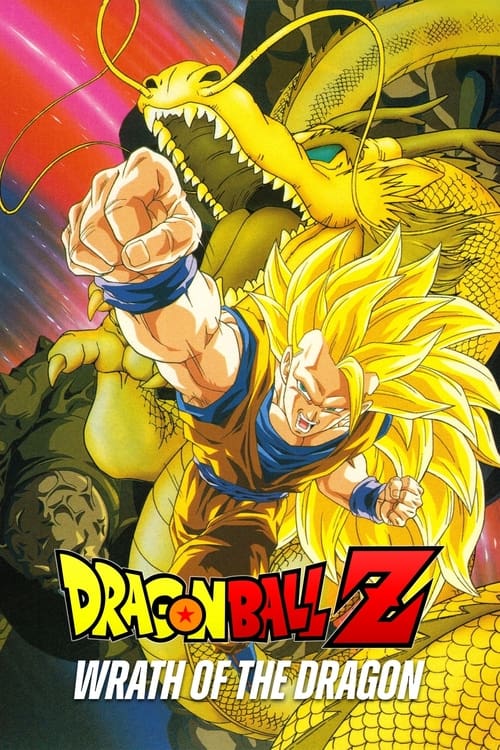
Dragon Ball Z: Wrath of the Dragon (1995)
Directed by Mitsuo Hashimoto
No — Dragon Ball Z: Wrath of the Dragon is not woke, scoring 0 out of 100 on our wokeness meter.
Dragon Ball Z: Wrath of the Dragon arrives from 1995 as the thirteenth theatrical entry in a franchise that had already perfected its own grammar.
Consciousness Markers
The film features a Japanese voice cast for fictional anime characters, with no deliberate modern diversity casting or representation commentary.
There are no LGBTQ+ characters, themes, or subtext in the story.
Female characters such as Videl and Bulma appear, but the film contains no feminist agenda or gender-justice messaging.
The film does not engage with race, racism, or racial consciousness in any form.
There is no environmental or climate-crisis theme; the conflict is a martial-arts monster battle.
The film has no critique of capitalism, wealth, or class structures.
Body positivity is not a theme; character designs and storytelling do not address body image or acceptance.
No neurodivergent characters or themes are present or explored.
The film is a fantasy anime story with no historical revisionism or reimagining of real events.
The film is an action-oriented Dragon Ball Z feature and does not pause for social or political lecturing.
Why it received this score
Dragon Ball Z: Wrath of the Dragon arrives from 1995 as the thirteenth theatrical entry in a franchise that had already perfected its own grammar. A music box refuses to open. A warrior named Tapion is freed. A monster named Hirudegarn is halved, sealed, and eventually reconstituted so that Goku can hit it with a Dragon Fist. The film is a martial arts fantasy with ocarinas, swords, and Super Saiyan transformations. It does not pause to explain how anyone should vote. It pauses so that Trunks can hold a sword and look sad. That is the entire moral universe on offer.
Surveying the cultural markers yields a clean sheet. The film has no identity politics to speak of, no environmental sermon, no economic critique, no body-image discourse, no neurodiversity angle, no historical revision, and no lecturing. The voice cast is Japanese, performing fictional anime characters, and no representation commentary accompanies their work. Videl and Bulma appear, but the film advances no gender-justice argument. Hoi is an evil sorcerer, not a critique of capital. The history is invented cosmology. The film never stops for a sermon. It has no interest in our modern moral vocabulary. It wants to show a boy and his alien friend defeat a demon.
For a critic who spends his days sorting social consciousness like a sommelier sorting soil, this is a vintage of zero degrees. That is not an insult. It is a measurement. Wrath of the Dragon is uncomplicated shonen entertainment from a time before every blockbuster was expected to carry a syllabus. Its agenda is Goku. Its thesis is the Dragon Fist. Its only representation is the representation of a very large monster being punched. The classification is unambiguous, and the film remains what it always was: loud, sincere, and entirely unconcerned with the culture wars that would later be projected onto it.
Analysis generated by our Consciousness Algorithm
Part of


Synopsis
The Z Warriors discover an unopenable music box and are told to open it with the Dragon Balls. The contents turn out to be a warrior named Tapion who had sealed himself inside along with a monster called Hildegarn. Goku must now perfect a new technique to defeat the evil monster.
Questions about Dragon Ball Z: Wrath of the Dragon
Is Dragon Ball Z: Wrath of the Dragon woke?
No — Dragon Ball Z: Wrath of the Dragon is not woke, scoring 0 out of 100 on our wokeness meter. That earns it a verdict of Ultra Based.
Does Dragon Ball Z: Wrath of the Dragon have any woke elements?
No. All 10 markers score zero.
How does Dragon Ball Z: Wrath of the Dragon compare to other 1995 movies?
It ranks #98 of the 108 films from 1995 we've scored; their average is 12. The wokest is Total Eclipse (60).
Is Dragon Ball Z: Wrath of the Dragon the most woke Dragon Ball Z movie?
No. It ranks #3 of the 15 Dragon Ball Z films we've scored; the wokest is Dragon Ball Z: The Return of Cooler (2).