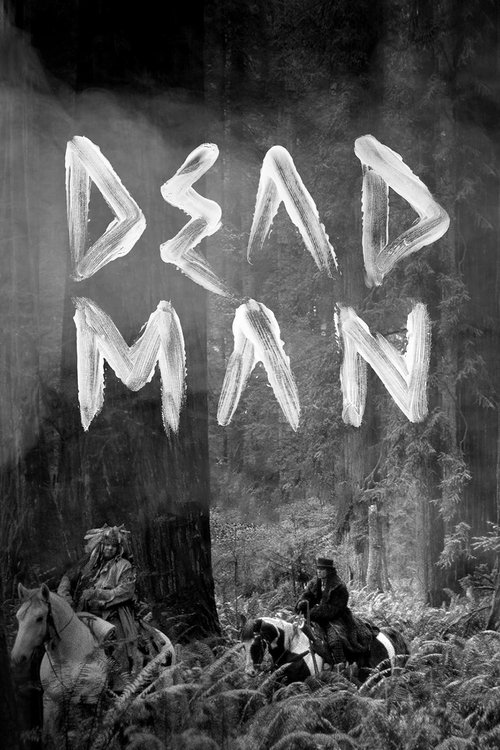
Dead Man (1995)
Directed by Jim Jarmusch
Partly — Dead Man is somewhat woke, scoring 41 out of 100 on our wokeness meter.
Jim Jarmusch's Dead Man arrives as a monochrome acid western, which is to say a western that has taken something and is now viewing the frontier through a pleasant haze of Neil Young's guitar.
Consciousness Markers
The film directly indicts Euro-American racism: Nobody is abducted as a 'model savage,' mocked by both white settlers and his own people, and delivers the blunt 'stupid fucking white man' refrain. The frontier's violence is framed as white colonial predation.
Gary Farmer, a Cayuga First Nations actor, anchors the film as Nobody, a lead role written with deliberate nuance and tribal specificity (Piikáni and Apsáalooke parentage). The casting is genuinely ahead of its 1995 moment, though it is a single prominent instance rather than a broad ensemble statement.
The company town of Machine, run by the ferocious industrialist Dickinson who drives Blake off at gunpoint, frames industrial capitalism as a dehumanizing, murderous force. The critique is atmospheric rather than programmatic.
The film is explicitly a revisionist western, dismantling the genre's heroic frontier myth and replacing it with a Native-centered spiritual journey. It reframes the American West's story rather than rewriting documented history per se.
Jarmusch favors poetry, ambiguity, and Neil Young's droning guitar over sermonizing; the film's messages are embedded in imagery and allusion rather than delivered as direct address. The occasional blunt line ('stupid fucking white man') is the exception.
Thel exists briefly as a sympathetic figure who shields Blake and dies, but the film offers no sustained feminist critique or female interiority. The women are largely symbolic (Thel as a Blake allusion).
Nature spirits and the killing of a fawn carry ecological reverence, and the metal works town of Machine stands against the wild, but there is no climate-change argument or environmental crusade.
No LGBTQ+ characters, themes, or subtext are present in the narrative.
No body-positivity themes or diverse body representation are present.
No neurodivergence themes or characters are present.
Why it received this score
Jim Jarmusch's Dead Man arrives as a monochrome acid western, which is to say a western that has taken something and is now viewing the frontier through a pleasant haze of Neil Young's guitar. Johnny Depp plays William Blake, an accountant, a man so unsuited to the nineteenth century that the century kills him over two hours. The film is a deliberate revision of the genre, trading the heroic frontier for a Native-centered journey toward the spirit world, and it commits to that reframing with a straight face and no interest in our comfort.
Gary Farmer's Nobody carries the picture. The role was written with tribal specificity (Piikani and Apsaalooke parentage, Cree and Blackfoot dialogue left untranslated for the people who earned the joke), and Farmer, a Cayuga actor, anchors a lead part that refuses both the savage and the noble innocent. It is a single instance of forward-thinking casting in a 1995 film, and it lands. The racial critique is direct: Nobody is abducted as a model savage, mocked by settlers and by his own people, and delivers the refrain about stupid white men with the weariness of a man who has tested the hypothesis. Machine, the company town, frames industrial capital as a dehumanizing force that drives a man off at gunpoint. This is atmosphere, not a program.
What the film does not do is lecture. Jarmusch prefers allusion, poetry, and the occasional dead fawn to anything resembling a sermon, and the messages sit inside the imagery. There is no LGBTQ+ material, no body-positivity concern, no neurodivergent characterization. Thel exists as a Blake reference and a shield, then dies. Nature is revered without becoming a climate argument. A quiet, strange, unrepentant piece of work, and one that has aged better than its first reviews.
Analysis generated by our Consciousness Algorithm


Synopsis
On the run after committing murder, an accountant encounters a strange Native American man who prepares him for his journey into the spiritual world.
Questions about Dead Man
Is Dead Man woke?
Partly — Dead Man is somewhat woke, scoring 41 out of 100 on our wokeness meter. That earns it a verdict of Woke-Adjacent.
What makes Dead Man woke?
4 of the 10 markers register at 30 or above, led by Racial Consciousness (72), Representation Casting (65) and Eat the Rich (45). On Racial Consciousness: The film directly indicts Euro-American racism: Nobody is abducted as a 'model savage,' mocked by both white settlers and his own people, and delivers the blunt 'stupid fucking white man' refrain.
How does Dead Man compare to other 1995 movies?
It ranks #7 of the 108 films from 1995 we've scored; their average is 12. The wokest is Total Eclipse (60).
How is the Woke Score calculated?
An AI-assisted process researches the film and its reception, scores it 0–100 on ten markers, then combines those into one 0–100 Woke Score. It measures a specific set of 2020s cultural themes, not film quality.