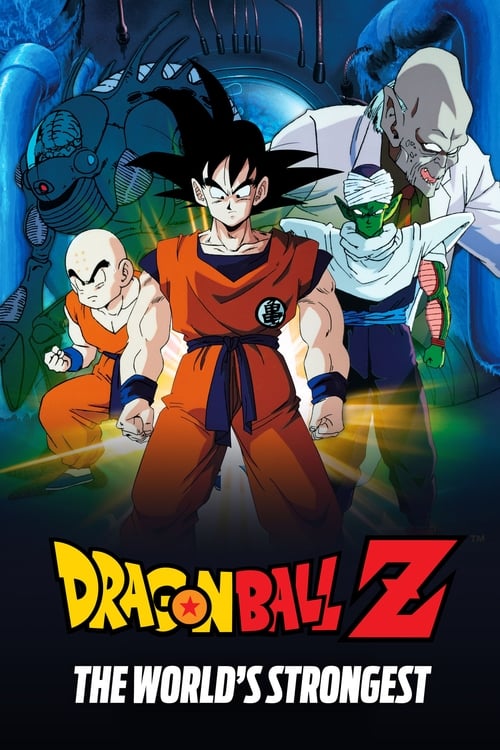
Dragon Ball Z: The World's Strongest (1990)
Directed by Daisuke Nishio
No — Dragon Ball Z: The World's Strongest is not woke, scoring 0 out of 100 on our wokeness meter.
Dr. Wheelo is a brain in a jar.
Consciousness Markers
The cast is entirely Japanese voice actors for Japanese characters; no modern diversity casting agenda is present.
No LGBTQ+ themes or characters appear in the film.
Bulma is largely a kidnapping plot device; the film has no feminist agenda.
No racial or social justice commentary is present.
No environmental or climate themes are present.
The villain is a mad scientist seeking a powerful body, not a critique of capitalism.
No body positivity themes are present.
No neurodivergence themes are present.
No historical revisionism is present.
The film is pure martial arts action with no preachy lecture energy.
Why it received this score
Dr. Wheelo is a brain in a jar. Dr. Kochin is the lackey who fetches it a body. Somewhere between these two facts lies the entire dramatic architecture of Dragon Ball Z: The World's Strongest, a 1990 feature that treats exposition the way a boxer treats a chair. Bulma gets abducted. Roshi surrenders himself. Goku arrives, freezes, thaws, and throws a Spirit Bomb. The film has no interest in anything except the next collision of fists, and it is honest about that in a way that feels almost restful.
A cultural audit of this material returns a page of zeroes, and not because the material is evasive. It simply predates the vocabulary. Bulma exists to be carried off so that the men have a reason to travel. Her rescue is a logistical problem, not a statement. The villain wants a superior body and world domination, which is a motive older than cinema and carries no commentary on markets, empires, or extraction. The snow, the ice wall, the thawed laboratory: these are set dressing, not a planet in peril. Nobody in this film learns anything about themselves. They learn where the enemy's weak point is.
There is craft and appetite here, and little else. The animation has a blunt, muscular confidence, and the voice cast shouts with the commitment of people who know exactly what they are selling. Martial arts, wish fulfillment, mad science: the keywords read like a menu from a restaurant that has never once changed its recipes. There is no sermon here, no lesson, no moment where a character turns to the audience and explains how to feel. The film wants only to show us a boy glowing with borrowed energy and a brain in a jar losing an argument with the atmosphere. For a certain kind of viewer, that is enough. For the purposes of this ledger, it is a clean sheet.
Analysis generated by our Consciousness Algorithm
Part of


Synopsis
The evil Dr. Kochin uses the dragon balls to resurrect his mentor, Dr. Wheelo, in an effort to take over the world. Dr. Wheelo, his body having been destroyed by the avalanche that killed him fifty years before, desires the body of the strongest fighter in the world as his new vessel. Believing Roshi to be the world's strongest warrior, Dr. Kochin abducts Bulma and forces Roshi to surrender himself to save her. When Goku hears of their abduction, he goes to their rescue.
Questions about Dragon Ball Z: The World's Strongest
Is Dragon Ball Z: The World's Strongest woke?
No — Dragon Ball Z: The World's Strongest is not woke, scoring 0 out of 100 on our wokeness meter. That earns it a verdict of Ultra Based.
Does Dragon Ball Z: The World's Strongest have any woke elements?
No. All 10 markers score zero.
How does Dragon Ball Z: The World's Strongest compare to other 1990 movies?
It ranks #54 of the 68 films from 1990 we've scored; their average is 9. The wokest is Nightbreed (60).
Is Dragon Ball Z: The World's Strongest the most woke Dragon Ball Z movie?
No. It ranks #3 of the 15 Dragon Ball Z films we've scored; the wokest is Dragon Ball Z: The Return of Cooler (2).