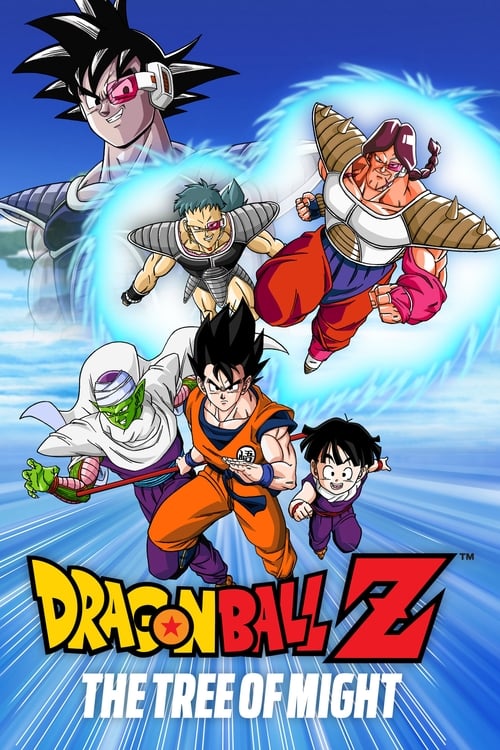
Dragon Ball Z: The Tree of Might (1990)
Directed by Daisuke Nishio
No — Dragon Ball Z: The Tree of Might is not woke, scoring 0 out of 100 on our wokeness meter.
We approach Dragon Ball Z: The Tree of Might not as a landmark in progressive cinema, but as a curious cultural artifact.
Consciousness Markers
The cast is entirely Japanese voice actors voicing established characters; there is no modern representation-casting agenda at play in this 1990 anime feature.
No LGBTQ+ characters, themes, or subtext appear anywhere in the film.
Bulma and other women appear in supporting roles, but the film advances no feminist thesis or gender commentary.
The conflict is between Saiyan space pirates and Earth's defenders; race as a social concept is never engaged.
The Tree of Might draining the planet's life force is a fantasy plot device, not an environmentalist allegory or climate message.
Turles is a marauding space pirate, not a capitalist villain; the film offers no critique of wealth or class.
No body-image, size, or self-acceptance themes are present.
No neurodivergent characters or themes are depicted or discussed.
The film is a standalone original story with no historical revisionism.
The film is a straightforward martial-arts action spectacle with no moralizing or didactic messaging.
Why it received this score
We approach Dragon Ball Z: The Tree of Might not as a landmark in progressive cinema, but as a curious cultural artifact. This 1990 anime series delivers a straightforward narrative: space pirates plant a mystical fruit that drains planetary vitality. The film offers a pure spectacle of martial arts and high-stakes science fiction, yet it provides absolutely none of the nuanced social commentary we have come to expect in contemporary feature films. There is no exploration of systemic inequality, no revision of established racial dynamics, and no thematic engagement with contemporary progressive sensibilities. The conflict is purely external, a battle of energy blasts against a consuming, supernatural flora.
This is a cinematic experience built on action, not agenda. Goku and his compatriots engage in elaborate power-ups and cosmic brawls against a villain who is preoccupied only with galactic conquest and energy absorption. The narrative operates within a standard framework of good versus evil, lacking any of the specific, pointed cultural awareness that currently defines serious prestige television. The film refuses to pivot into commentary on climate change, class struggle, or modern identity politics. It is a movie about a planet losing its power, which is a very literal interpretation of environmental degradation, not an allegory for it.
To categorize this as a work of high cultural consciousness would be a disservice. It is a straightforward exercise in animated combat, a glorification of escalating power levels. It possesses none of the subtle subtext, it lacks any meaningful exploration of diverse lived experiences, and it serves its audience purely through kinetic energy. The Tree of Might is simply a plot mechanism for a spectacular final confrontation. We view it now as a monument to uncomplicated heroism, a period before the industry decided that every conflict must also serve a progressive thematic purpose.
Analysis generated by our Consciousness Algorithm
Part of


Synopsis
Goku and friends must stop a band of space pirates from consuming fruit from the Tree of Might before it's destructive powers drain Earth's energy.
Questions about Dragon Ball Z: The Tree of Might
Is Dragon Ball Z: The Tree of Might woke?
No — Dragon Ball Z: The Tree of Might is not woke, scoring 0 out of 100 on our wokeness meter. That earns it a verdict of Ultra Based.
Does Dragon Ball Z: The Tree of Might have any woke elements?
No. All 10 markers score zero.
How does Dragon Ball Z: The Tree of Might compare to other 1990 movies?
It ranks #54 of the 68 films from 1990 we've scored; their average is 9. The wokest is Nightbreed (60).
Is Dragon Ball Z: The Tree of Might the most woke Dragon Ball Z movie?
No. It ranks #3 of the 15 Dragon Ball Z films we've scored; the wokest is Dragon Ball Z: The Return of Cooler (2).