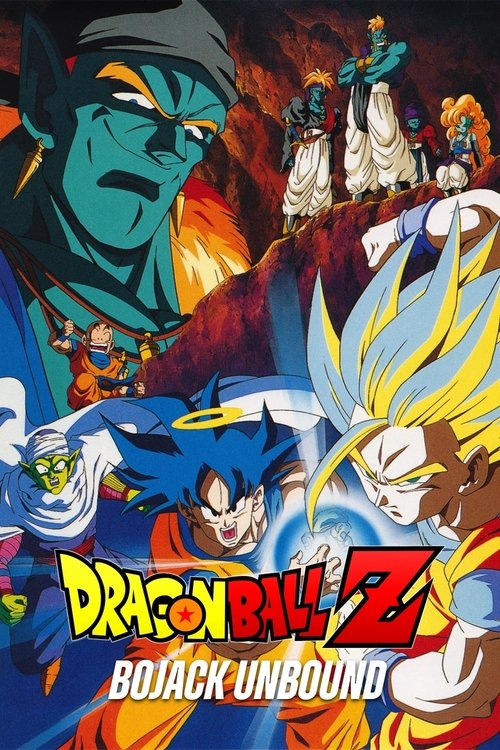
Dragon Ball Z: Bojack Unbound (1993)
Directed by Yoshihiro Ueda
No — Dragon Ball Z: Bojack Unbound is not woke, scoring 0 out of 100 on our wokeness meter.
Dragon Ball Z: Bojack Unbound arrives from 1993 as the ninth theatrical outing of the franchise, a fifty-minute burst of tournament brackets, alien warlords, and fatherly advice from the afterlife.
Consciousness Markers
The cast is a standard Japanese voice ensemble for the era, and the multi-species roster is a genre convention of shonen anime rather than any deliberate representation casting.
No LGBTQ+ characters, themes, or subtext appear anywhere in the film.
The lone female fighter, Zangya, is a disposable henchman killed off by her own boss; there is no feminist framing whatsoever.
The film is a straightforward martial arts tournament story with no engagement with race or racial politics.
No environmental or climate themes are present.
A wealthy promoter bankrolls the tournament, but the film treats this purely as plot setup with no critique of wealth or capitalism.
No body positivity themes; the film is built around idealized super-powered physiques.
No neurodivergent characters or themes are depicted.
The film is pure fictional space-fantasy with no historical subject matter to revise.
This is a brisk 50-minute action film of punches, transformations, and Kamehamehas with zero preachy messaging.
Why it received this score
Dragon Ball Z: Bojack Unbound arrives from 1993 as the ninth theatrical outing of the franchise, a fifty-minute burst of tournament brackets, alien warlords, and fatherly advice from the afterlife. The plot concerns a wealthy promoter, a staged martial arts competition, and a galactic prisoner who escapes his star-bound cage because of a previous villain's explosion. Gohan, Trunks, Vegeta, Piccolo, and a supporting cast of fighters punch, transform, and fire energy beams until the problem is resolved. It is brisk, loud, and entirely committed to the logic of shonen escalation. The film has no interest in the cultural conversations that would dominate later decades. It wants to show a teenager achieve a new transformation and hit a space pirate very hard.
On the contemporary social consciousness checklist, the results are uniformly empty. The voice cast is a standard Japanese ensemble for the period, and the alien diversity is a genre convention, not a casting statement. The lone female fighter, Zangya, exists to be defeated and then killed by her own commander, which forecloses any feminist reading. Race, climate, capitalism, body image, neurodivergence, and historical revision are absent. The wealthy tournament promoter is a plot device, not a target of critique. The film has no LGBTQ subtext, no lectures about identity, and no sermon about the environment. It is a martial arts cartoon with a body count and a power-up sequence.
This is not a failing. It is a classification. Bojack Unbound belongs to a pre-2010s mode of anime filmmaking where the only message is that training works and friendship helps you punch harder. The closest thing to a thesis is that absent fathers can still teleport in for a crucial assist. The film runs fifty minutes, resolves its conflict with a Kamehameha, and ends with a gag about the world crediting Mr. Satan for the victory. There is no preachy energy, no representation agenda, no revisionist history. The ledger is blank, and the blankness is sincere. A sommelier of cultural markers would find nothing to swirl in the glass.
Analysis generated by our Consciousness Algorithm
Part of


Synopsis
Mr. Money is holding another World Martial Arts Tournament and Mr. Satan invites everyone in the world to join in. Little does he know that Bojack, an ancient villain who has escaped his prison, is competing. Since Goku is currently dead, it is up to Gohan, Vegeta, and Trunks to defeat Bojack and his henchman.
Questions about Dragon Ball Z: Bojack Unbound
Is Dragon Ball Z: Bojack Unbound woke?
No — Dragon Ball Z: Bojack Unbound is not woke, scoring 0 out of 100 on our wokeness meter. That earns it a verdict of Ultra Based.
Does Dragon Ball Z: Bojack Unbound have any woke elements?
No. All 10 markers score zero.
How does Dragon Ball Z: Bojack Unbound compare to other 1993 movies?
It ranks #76 of the 97 films from 1993 we've scored; their average is 11. The wokest is Bound by Honor (60).
Is Dragon Ball Z: Bojack Unbound the most woke Dragon Ball Z movie?
No. It ranks #3 of the 15 Dragon Ball Z films we've scored; the wokest is Dragon Ball Z: The Return of Cooler (2).