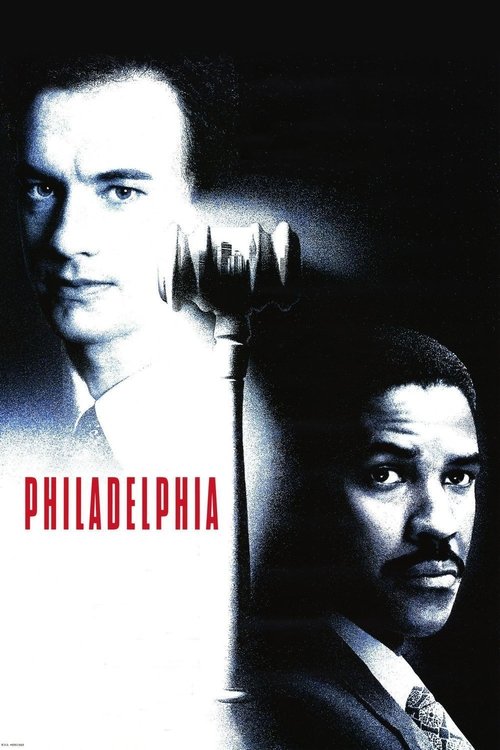
Philadelphia (1993)
Directed by Jonathan Demme
Partly · Woke-Adjacent
How we score movies →Consciousness Markers
LGBTQ+ themes are central to the narrative. Andrew's sexuality is treated with dignity and his experience of discrimination forms the emotional core, though the film predates modern queer cinema vocabulary.
Racial dynamics between the two male leads suggest some awareness of cross-racial alliance and Washington's character's prejudice-overcoming arc, but this is not the film's primary focus.
The courtroom scenes contain moral argumentation, but the film mostly shows rather than tells. It lacks the preachy tone characteristic of high lecture energy.
Casting is not motivated by representation consciousness. Antonio Banderas plays a supporting role, but this reflects the film's era rather than deliberate diversity strategy.
The film critiques a corrupt law firm but operates entirely within capitalist legal structures. There is no systemic economic critique.
Feminist agenda is minimal. Female characters are peripheral to the narrative, which centers entirely on male professional and emotional dynamics.
While the film treats Andrew's deteriorating body with dignity, this is not a body positivity agenda but rather a humanistic response to illness.
No climate consciousness or environmental themes present in the film.
No representation of neurodivergence or related themes in the film.
The film is grounded in the historical reality of 1980s AIDS crisis and legal discrimination without attempting revisionist reinterpretation.


Synopsis
Two competing lawyers join forces to sue a prestigious law firm for AIDS discrimination. As their unlikely friendship develops, their courage overcomes the prejudice and corruption of their powerful adversaries.
Why it received this score
Philadelphia stands as a curious artifact of the early 1990s, a film that takes discrimination seriously without yet possessing the specific cultural vocabulary of contemporary progressive sensibilities. Jonathan Demme's legal drama confronts AIDS hysteria and homophobia through a conventional narrative structure: the wronged lawyer, the unlikely ally, the corrupt institution, the courtroom vindication. The film's moral stakes are genuine, yet it operates within a humanistic framework that predates the particular markers we now associate with modern social consciousness. Tom Hanks's portrayal of a dying man fighting for dignity carries weight, while Denzel Washington's journey from casual homophobia to understanding feels earned rather than imposed.
What distinguishes Philadelphia is its restraint in areas we now expect to see agitated. There is no performance of awareness, no self-congratulatory staging of progressive principles. The film simply asserts that discrimination is wrong and builds its case methodically. This is both its strength and the reason its woke score remains moderate. The LGBTQ+ representation is substantive and central to the narrative, yes, but it emerges organically from the story rather than as a statement of values. The racial dynamics between the two male leads introduce an interesting subtext about cross-racial solidarity, yet the film never lectures us about it.
Thirty years on, Philadelphia reads as a film of genuine moral seriousness that lacked the vocabulary to perform its own progressivism. It is not cynical, nor is it especially preachy. It is simply a well-crafted argument for human dignity, presented in the language of American legal drama. One watches it and understands why it mattered in 1993, and also why it could not possibly be made in precisely this form today.
Analysis generated by our Consciousness Algorithm
Critic Reviews
“Jonathan Demme's long-awaited Philadelphia is so expertly acted, well-meaning and gutsy that you find yourself constantly pulling for it to be the definitive AIDS movie. [14 Jan 1994, p.13]”
“And yet Philadelphia is quite a good film, on its own terms. And for moviegoers with an antipathy to AIDS but an enthusiasm for stars like Tom Hanks and Denzel Washington, it may help to broaden understanding of the disease.”
“The story is timely and powerful, and the performances of Hanks and Washington assure that the characters will not immediately vanish into obscurity.”
“Directed by Jonathan Demme, and starring Tom Hanks and Denzel Washington, this AIDS courtroom drama is so pumped full of nitrous oxide, you could get your teeth drilled on it.”