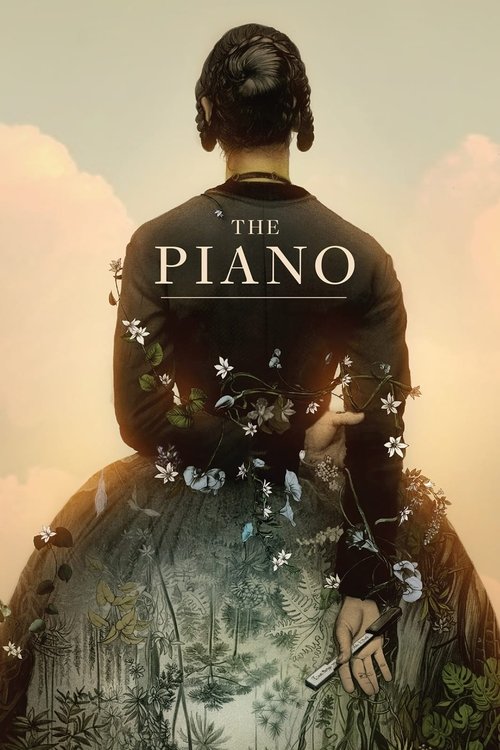
The Piano (1993)
Directed by Jane Campion
Partly · Woke-Adjacent
How we score movies →Consciousness Markers
Ada actively defies patriarchal authority, pursues her own desires, and escapes her marriage on her own terms. Her sexual agency drives the narrative and the film validates her choices.
Holly Hunter's Oscar-winning performance as a mute woman was groundbreaking for 1993. However, indigenous characters remain background figures rather than subjects of the narrative.
Ada's muteness is central to her character and the film's themes of communication and expression. However, it functions as romantic device rather than genuine disability representation.
The film presents Ada's sexuality and desire frankly and celebrates her bodily agency. However, the cinematography still operates within conventional male gaze aesthetics.
Campion trusts visual and musical language over preachy dialogue, which grants the work artistic restraint. Some marital conflict scenes contain confrontational exchanges but rarely preach.
The film depicts 19th-century colonialism as setting but does not substantially reframe or reexamine historical events through modern consciousness.
Ada's piano represents artistic value over commercial exchange, but the film offers no systemic critique of capitalism or class relations.
The film is set during colonial New Zealand but treats indigenous characters as scenery. Colonial dispossession is never interrogated or addressed as a theme.
No explicit LGBTQ+ content. Some critics have detected homoerotic subtext, but the film is primarily concerned with heterosexual desire and transgression.
The film contains no environmental themes or climate-related content of any kind.
Synopsis
When an arranged marriage brings Ada and her spirited daughter to the wilderness of nineteenth-century New Zealand, she finds herself locked in a battle of wills with both her controlling husband and a rugged frontiersman to whom she develops a forbidden attraction.
Why it received this score
Jane Campion's "The Piano" occupies an ambiguous position in the genealogy of progressive cinema. Released in 1993, it predates most contemporary markers of cultural consciousness by several years, yet it grapples with female desire and agency in ways that were genuinely transgressive for mainstream cinema at the time. Holly Hunter's mute Ada stands as the film's moral and artistic center, a woman who refuses the diminishment her marriage demands and pursues her own sexuality with a clarity that many films still find threatening.
The film's relationship to progressive sensibilities, however, is decidedly mixed. Its feminist core sits uneasily beside a colonial backdrop that treats indigenous New Zealanders as atmospheric rather than human. Ada's liberation occurs against the landscape of indigenous dispossession, a contradiction the film never interrogates. The sexual dynamics between Ada and Harvey Keitel's Baines, while presented as transgressive and mutually desired, still operate within the male gaze of cinematography and narrative structure. Ada's muteness functions less as an authentic exploration of disability than as a romantic and artistic trope, a silence that male characters must breach and interpret.
The film's restraint is both its strength and its limitation. Campion trusts viewers to read its themes through music, touch, and image rather than explicit dialogue, which grants the work considerable artistic dignity. Yet this same restraint extends to its social dimensions, leaving historical and political questions unexamined. "The Piano" is a film about a woman claiming power, but it is not quite a film about power itself.
Analysis generated by our Consciousness Algorithm
Critic Reviews
“Campion's script is very well received, but the film finally makes it on cinematics: bleakly beautiful photography, haunting score, and good acting. [12 Nov 1993]”
“Great art is both immediately accessible and eternally elusive, having at its centre a powerful simplicity that speaks to anyone who cares to listen, that rewards every interpretation while embracing none. The Piano is great art.”
“The Piano plays itself with such contrapuntal richness, it resonates in you forever.”
“An overwrought, hollowly symbolic glob of glutinous nonsense... I haven't seen a sillier film about a woman and a piano since John Huston's "The Unforgiven" (1960), a Western in which Lillian Gish had her piano carried out into the front yard so she could play Mozart to pacify attacking Indians. [13 Dec 1993]”