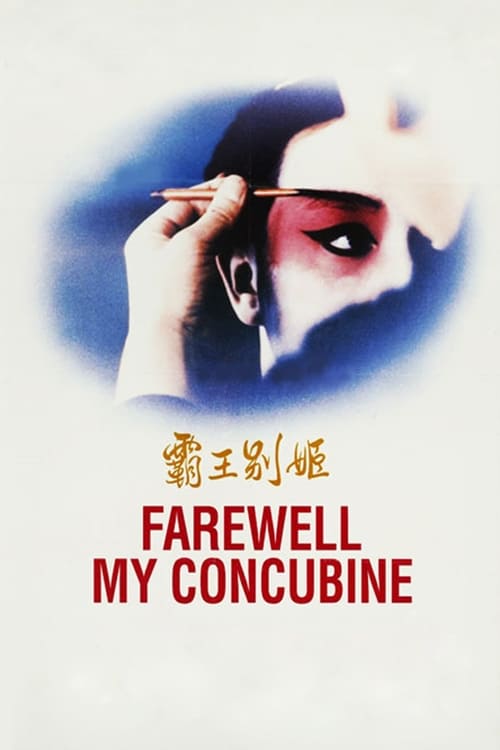
Farewell My Concubine (1993)
Directed by Chen Kaige
Yes — Farewell My Concubine is woke, scoring 60 out of 100 on our wokeness meter.
Farewell My Concubine arrives from 1993, a year when the classification of films required only a notebook and a strong cup of tea.
Consciousness Markers
Cheng Dieyi's unrequited love for Duan Xiaolou, his gender confusion as a female impersonator, and the film's explicit homosexuality are central; Chinese censors objected to its representation of homosexuality and gender identity.
The film offers a critical, personal retelling of 20th-century Chinese history, including the Cultural Revolution, and was censored for its unconventional depiction of Maoist-era turmoil.
Gong Li's Juxian is headstrong and complex, but the film's focus is on male artists and historical trauma rather than a feminist critique of patriarchy.
The film is an epic historical drama that embeds its political critique in character and tragedy; it rarely stops to lecture the audience directly.
The cast is entirely Chinese, but this is a Chinese-language co-production set in China; the film does not engage in modern diversity casting or comment on representation.
The film explores Chinese history and society, but not racial consciousness or racial justice in the modern woke sense.
No environmental or climate themes are present.
The Cultural Revolution scenes include accusations of capitalism and class struggle, but the film critiques communist persecution rather than advocating anti-capitalist politics.
No body positivity themes are present.
No neurodivergence themes are present.
Why it received this score
Farewell My Concubine arrives from 1993, a year when the classification of films required only a notebook and a strong cup of tea. Chen Kaige's epic follows two Peking opera performers, Cheng Dieyi and Duan Xiaolou, across five decades of Chinese upheaval, and its most persistent preoccupation is Dieyi's unrequited love for his stage brother. This is not subtext. The makeup ritual before every performance, the jealousy that greets Xiaolou's marriage to Juxian, the final suicide that completes the role of Consort Yu: the film places same-sex longing and gender confusion at its center, and Chinese censors removed fourteen minutes of it for exactly that reason. By the standards of any decade, this registers as a substantial engagement with queer identity, achieved without a single speech explaining itself.
The politics are woven into the tragedy. The Cultural Revolution arrives as a struggle session, and the film watches friends denounce each other under pressure, which amounts to a personal retelling of Maoist-era history and earned the film a ban for its trouble. Little of this is delivered as instruction. The film prefers to let a humiliated man's smudged stage makeup speak for the era. Gong Li's Juxian has spine and complexity, though the camera belongs to the men and to their art.
Where the film declines to participate is in the modern register. The cast is Chinese because the story is Chinese. There is no climate anxiety, no body politics, no neurological diagnosis, no racial framework, no economic sermon. The Cultural Revolution's accusations of capitalism are the villains' weapon, not the film's thesis. What remains is a tragedy about art, love, and history, and it makes no attempt to instruct us on how to feel about any of it.
Analysis generated by our Consciousness Algorithm


Synopsis
In an epic tale of theater, gender, love and class, two Beijing opera actors navigate political turmoil as their friendship evolves over decades.
Questions about Farewell My Concubine
Is Farewell My Concubine woke?
Yes — Farewell My Concubine is woke, scoring 60 out of 100 on our wokeness meter. That earns it a verdict of Woke.
What makes Farewell My Concubine woke?
2 of the 10 markers register at 30 or above, led by LGBTQ+ Themes (85) and Revisionist History (40). On LGBTQ+ Themes: Cheng Dieyi's unrequited love for Duan Xiaolou, his gender confusion as a female impersonator, and the film's explicit homosexuality are central; Chinese censors objected to its representation of homosexuality and gender identity.
How does Farewell My Concubine compare to other 1993 movies?
It is the wokest of the 97 films from 1993 we've scored; their average is 11.
How is the Woke Score calculated?
An AI-assisted process researches the film and its reception, scores it 0–100 on ten markers, then combines those into one 0–100 Woke Score. It measures a specific set of 2020s cultural themes, not film quality.