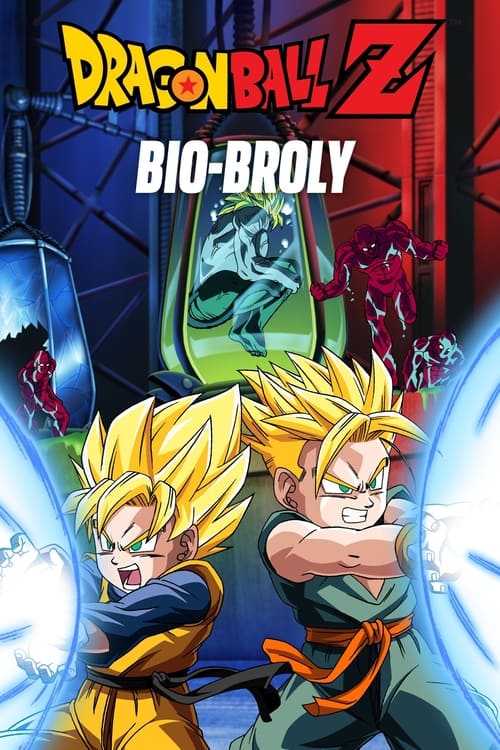
Dragon Ball Z: Bio-Broly (1994)
Directed by Yoshihiro Ueda
No — Dragon Ball Z: Bio-Broly is not woke, scoring 0 out of 100 on our wokeness meter.
Dragon Ball Z: Bio-Broly is the eleventh theatrical outing for a franchise that has never once shown interest in examining its own assumptions, and this entry holds the line.
Consciousness Markers
All characters are Japanese-voiced anime characters; no deliberate diverse or inclusive casting markers.
No LGBTQ+ characters, themes, or subtext.
Android 18 is a capable fighter, but the film has no feminist agenda or commentary.
No racial themes or consciousness.
The bio-fluid is a generic sci-fi threat, not an environmental or climate crusade.
Mr. Satan's debt and Jaguar's wealth are plot devices, not anti-capitalist critique.
No body positivity themes; character designs are conventional shonen.
No neurodivergence themes or characters.
No historical revisionism.
No preachy or lecture-driven messaging.
Why it received this score
Dragon Ball Z: Bio-Broly is the eleventh theatrical outing for a franchise that has never once shown interest in examining its own assumptions, and this entry holds the line. Mr. Satan's old sparring partner, a wealthy island owner named Jaguar, summons the world champion for a grudge match with the intention of exposing him as a fraud. Android 18 tags along to collect on a debt. Trunks and Goten stow away in search of a worthy opponent. A scientist has grown a clone of Broly from a recovered blood sample, and a leaking vat of matter-devouring bio-fluid reduces the resulting titan to a soggy, misshapen nuisance before the midpoint. That is the whole apparatus. It runs about fifty minutes and never apologizes.
The picture operates entirely within the moral universe of shonen spectacle, where the only questions worth asking are who hits hardest and whether seawater will petrify the goo before it swallows the planet. There is no casting agenda to speak of, no romantic subtext of any orientation, no racial framing, no environmental sermon, no critique of Jaguar's private wealth despite the island laboratory sitting right there as an obvious target. Android 18 fights competently and is then defeated so the boys can take over, which is not a statement about anything, merely the genre's default choreography. The bio-fluid is a hazard, not a metaphor. Nobody in the cast is coded as neurodivergent, and nobody learns a lesson about loving their body. The film simply wants to show two children firing energy waves at a melting monster.
Some will find in this a refreshing absence of preachment. Others will find in it a fifty-minute commercial for toys. Both readings are correct, and neither is interesting. The sommelier's verdict: a thin, sour vintage, poured without ceremony, best consumed by the already converted.
Analysis generated by our Consciousness Algorithm
Part of


Synopsis
Jaga Bada, Mr. Satan's old sparring partner, has invited Satan to his personal island to hold a grudge match. Trunks and Goten decide to come for the adventure and Android #18 is following Satan for the money he owes her. Little do they know that Jaga Bada's scientist have found a way to resurrect Broly, the legendary Super Saiyan.
Questions about Dragon Ball Z: Bio-Broly
Is Dragon Ball Z: Bio-Broly woke?
No — Dragon Ball Z: Bio-Broly is not woke, scoring 0 out of 100 on our wokeness meter. That earns it a verdict of Ultra Based.
Does Dragon Ball Z: Bio-Broly have any woke elements?
No. All 10 markers score zero.
How does Dragon Ball Z: Bio-Broly compare to other 1994 movies?
It ranks #77 of the 86 films from 1994 we've scored; their average is 10. The wokest is On Deadly Ground (75).
Is Dragon Ball Z: Bio-Broly the most woke Dragon Ball Z movie?
No. It ranks #3 of the 15 Dragon Ball Z films we've scored; the wokest is Dragon Ball Z: The Return of Cooler (2).