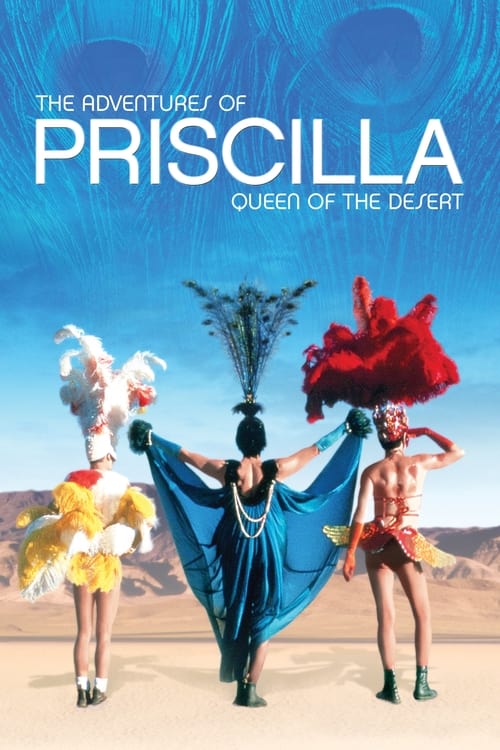
The Adventures of Priscilla, Queen of the Desert (1994)
Directed by Stephan Elliott
Yes — The Adventures of Priscilla, Queen of the Desert is woke, scoring 60 out of 100 on our wokeness meter.
The Adventures of Priscilla, Queen of the Desert functions less as a contemporary social document and more as a historical artifact of a specific cultural moment.
Consciousness Markers
The film is centrally about drag queens and a transgender woman, celebrating queer identity and confronting homophobia and transphobia throughout the journey.
Features prominent LGBTQ+ characters and Aboriginal Australian supporting roles, though the queer leads are played by straight actors, reflecting 1994 casting norms rather than modern authentic representation.
Includes a strong transgender woman character and challenges gender norms through drag, but it is not structured around a feminist agenda or women's empowerment.
Aboriginal Australian characters appear positively and assist the protagonists, but race is not a central theme or subject of social critique.
The film conveys a message of tolerance and shows the harms of homophobia, but it remains a character-driven comedy rather than a preachy lecture.
No environmental or climate-related themes are present.
The film does not critique capitalism, wealth inequality, or class structures.
While drag celebrates self-expression, the film does not address body positivity or size acceptance as a theme.
No neurodivergent characters or themes are present.
The film is a fictional road comedy and does not engage in historical revisionism.
Why it received this score
The Adventures of Priscilla, Queen of the Desert functions less as a contemporary social document and more as a historical artifact of a specific cultural moment. This 1994 road comedy documents the journey of drag performers and a transgender woman across the Australian interior. We are presented with a world of vibrant self-expression that attempts to navigate a society still far from modern progressive sensibilities. The film achieves a remarkable level of celebration regarding queer identity, positioning the journey as a defiant act of cultural assertion.
While the film delivers a potent and unapologetic focus on marginalized lives, its broader political ambitions remain underdeveloped. The exploration of representation is hampered by the casting choices of the era, which, while featuring diverse supporting roles, did not entirely dismantle existing heteronormative structures. The narrative is character driven rather than didactic, which prevents it from escalating into a sermon about systemic injustice. It is a colorful celebration of the individual struggle, not a manifesto for global social restructuring.
Ultimately, Priscilla remains a significant piece of cinema. Its status as an award winner confirms its cultural weight, yet its limitations—specifically its refusal to engage in the broader critiques of class or environment—anchor it firmly in a niche of celebratory melodrama. We view it now as a vital, if somewhat charming, snapshot of the progressive movements that were gathering momentum before they became a fully codified cultural mandate.
Analysis generated by our Consciousness Algorithm


Synopsis
Two drag performers and a transgender woman travel across the desert to perform their unique style of cabaret.
Questions about The Adventures of Priscilla, Queen of the Desert
Is The Adventures of Priscilla, Queen of the Desert woke?
Yes — The Adventures of Priscilla, Queen of the Desert is woke, scoring 60 out of 100 on our wokeness meter. That earns it a verdict of Woke.
What makes The Adventures of Priscilla, Queen of the Desert woke?
3 of the 10 markers register at 30 or above, led by LGBTQ+ Themes (95), Representation Casting (55) and Feminist Agenda (30). On LGBTQ+ Themes: The film is centrally about drag queens and a transgender woman, celebrating queer identity and confronting homophobia and transphobia throughout the journey.
How does The Adventures of Priscilla, Queen of the Desert compare to other 1994 movies?
It ranks #2 of the 86 films from 1994 we've scored; their average is 10. The wokest is On Deadly Ground (75).
How is the Woke Score calculated?
An AI-assisted process researches the film and its reception, scores it 0–100 on ten markers, then combines those into one 0–100 Woke Score. It measures a specific set of 2020s cultural themes, not film quality.