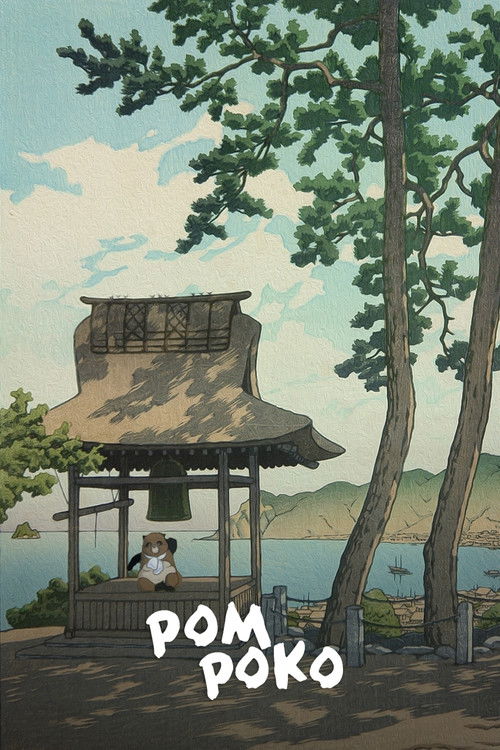
Pom Poko (1994)
Directed by Isao Takahata
Partly — Pom Poko is somewhat woke, scoring 45 out of 100 on our wokeness meter.
Isao Takahata's 1994 animated feature concerns a colony of tanuki in the Tama Hills who discover that postwar prosperity has arrived in the form of bulldozers.
Consciousness Markers
The plot directly attacks real-estate developers, shopping malls, and a theme-park owner who commodifies the tanuki's protest; it is a clear anti-development, anti-greed fable.
The ending has Ponkichi directly address the audience with a plea to protect animals' living space, giving the film a mild but explicit moralizing streak.
The film is centrally about deforestation and habitat loss from suburban development, but it does not engage with climate change or modern climate activism.
The cast and characters are entirely Japanese tanuki and human figures; there is no modern diversity-casting agenda or commentary on representation.
No LGBTQ+ characters, relationships, or themes appear in the film.
Oroku is a respected matriarch, but the film does not advance a feminist agenda or critique patriarchy.
The tanuki's struggle is framed as environmental and folkloric, not as a racial or ethnic justice narrative.
Tanuki folklore includes exaggerated anatomy, but the film does not promote body positivity or fat acceptance as a modern social marker.
No neurodivergent characters or themes are present.
The film draws on folklore and environmental history but does not revise or reinterpret established history for ideological ends.
Why it received this score
Isao Takahata's 1994 animated feature concerns a colony of tanuki in the Tama Hills who discover that postwar prosperity has arrived in the form of bulldozers. The creatures shapeshift, drum their bellies, and mount an increasingly desperate resistance against a suburban development called New Tama. The film treats this as tragedy and farce in equal measure, and its sympathies sit squarely with the animals. Fair enough. There is nothing especially modern about grieving a forest.
The economic argument is where the film sharpens. Developers, shopping malls, and a theme-park proprietor who claims credit for the tanuki's ghost parade all take their turns as villains, and the satire lands hardest on the commodification of protest itself. A movement becomes an attraction. A haunting becomes a publicity stunt. That is an old complaint about greed, delivered with unusual clarity. The environmental register is narrower than contemporary audiences might expect: this is a film about habitat loss and paved hillsides, not about emissions or warming. The trees are cut for houses, not for fuel.
Where the film tips into sermonizing, it does so at the very end. Ponkichi turns to the camera and asks humans to be kinder to animals with fewer transformation skills, a plea delivered without irony and with the surrounding sprawl visible behind him. It is gentle and it is unmistakably a lesson. Elsewhere the film is content to let its folklore and its grief speak for themselves. The tanuki who cannot pass as human are simply left to dodge traffic, and the film offers no remedy, only the request. A sommelier might call this a vintage with a long, moralizing finish.
Analysis generated by our Consciousness Algorithm


Synopsis
The Raccoons of the Tama Hills are being forced from their homes by the rapid development of houses and shopping malls. As it becomes harder to find food and shelter, they decide to band together and fight back. The Raccoons practice and perfect the ancient art of transformation until they are even able to appear as humans in hilarious circumstances.
Questions about Pom Poko
Is Pom Poko woke?
Partly — Pom Poko is somewhat woke, scoring 45 out of 100 on our wokeness meter. That earns it a verdict of Woke-Adjacent.
What makes Pom Poko woke?
2 of the 10 markers register at 30 or above, led by Eat the Rich (70) and Lecture Energy (45). On Eat the Rich: The plot directly attacks real-estate developers, shopping malls, and a theme-park owner who commodifies the tanuki's protest; it is a clear anti-development, anti-greed fable.
How does Pom Poko compare to other 1994 movies?
It ranks #3 of the 86 films from 1994 we've scored; their average is 10. The wokest is On Deadly Ground (75).
How is the Woke Score calculated?
An AI-assisted process researches the film and its reception, scores it 0–100 on ten markers, then combines those into one 0–100 Woke Score. It measures a specific set of 2020s cultural themes, not film quality.