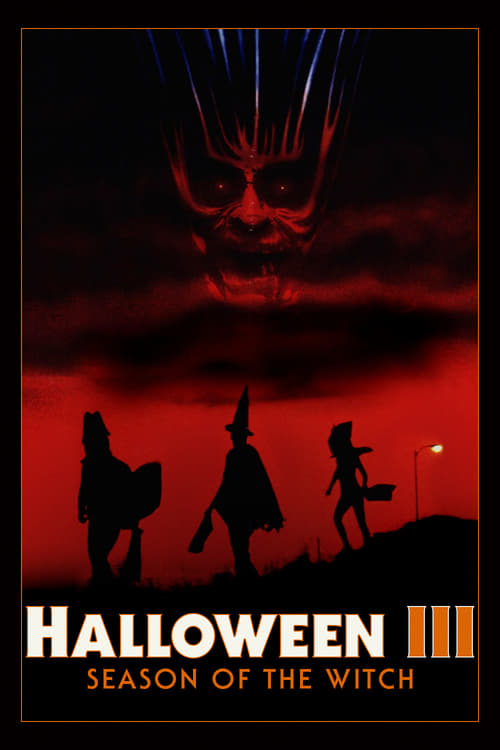
Halloween III: Season of the Witch (1982)
Directed by Tommy Lee Wallace
No — Halloween III: Season of the Witch is not woke, scoring 15 out of 100 on our wokeness meter.
Halloween III: Season of the Witch arrives as the franchise's strange anthology experiment, a 1982 curio with no Michael Myers and a plot about a mask company plotting mass child murder through a television commercial.
Consciousness Markers
Academics have read the film as a critique of American consumer culture and corporate control, with Cochran weaponizing the very commercialism he abhors; this is a genuine anti-corporate thread, though it predates and is not framed in modern 'eat the rich' terms.
Cochran delivers lengthy monologues about the ancient Celtic origins of Halloween and his plot, but these are villain exposition rather than social or moral lecturing.
Ellie Grimbridge is written as 'spunky and strong-minded' and drives the investigation alongside Challis, but she is ultimately a damsel who is abducted and replaced by an android, so no coherent feminist agenda is present.
The cast is overwhelmingly white, with the notable exception of a few minor roles; there is no deliberate or commented-upon diversity casting.
No LGBTQ+ characters, themes, or subtext appear anywhere in the film.
The film engages no racial themes or commentary whatsoever.
There is no environmental or climate-related content in the film.
No body-positivity themes are present; the film's body horror is purely gruesome rather than affirming.
No neurodivergent characters or themes are depicted.
The film invokes Celtic Samhain mythology as villain backstory but makes no revisionist historical claims about real events.
Why it received this score
Halloween III: Season of the Witch arrives as the franchise's strange anthology experiment, a 1982 curio with no Michael Myers and a plot about a mask company plotting mass child murder through a television commercial. Its social consciousness is not the modern kind. It is a sour, old-fashioned distrust of corporate power and media saturation. Conal Cochran weaponizes the very consumerism he claims to despise, turning Halloween masks and a catchy jingle into instruments of sacrifice. Academics have found an anti-corporate thread here, and it is real, though it speaks in the idiom of postwar unease instead of contemporary economic rage. The film has no interest in identity politics, climate anxiety, or the politics of the body. Its horrors are gruesome and literal: insects, snakes, exploding heads, and a factory full of androids.
The cast is overwhelmingly white, and the film never pauses to notice or correct that fact. No queer characters or subtext appear. No racial argument is made. No environmental sermon is delivered. Ellie Grimbridge begins as a spunky, strong-minded companion, then is kidnapped, replaced by an android, and destroyed in a car crash. That is a flicker of feminine agency, not a feminist program. Cochran's long speeches about Samhain and Celtic ritual are villain exposition, not moral instruction. He is not lecturing the audience about social responsibility. He is explaining his plan to kill children with Stonehenge microchips. The body horror is purely punitive, with no affirmation of diverse bodies. Neurodivergence and historical revisionism are nowhere present.
The film remains a cult oddity with a genuine critical streak: a suspicion of corporations that sell conformity and death in the same package. The final image of Dr. Challis screaming into a phone while a network refuses to listen is a sharp little nightmare about media helplessness. But the film offers no progressive checklist, no identity lesson, no ecological warning. It has nasty masks and a deadpan Irish villain. For all its cult appeal, its cultural reach is narrow and its social agenda is mostly a bad mood about advertising. That is the whole harvest.
Analysis generated by our Consciousness Algorithm
Part of


Synopsis
After a terrified toy salesman is mysteriously attacked and brought to the hospital clutching the year's most popular Halloween mask, Dr. Daniel Challis sets out to investigate the strange events and finds himself thrust into a nightmarish conspiracy.
Questions about Halloween III: Season of the Witch
Is Halloween III: Season of the Witch woke?
No — Halloween III: Season of the Witch is not woke, scoring 15 out of 100 on our wokeness meter. That earns it a verdict of Ultra Based.
Does Halloween III: Season of the Witch have any woke elements?
1 of the 10 markers register at 30 or above, led by Eat the Rich (45). On Eat the Rich: Academics have read the film as a critique of American consumer culture and corporate control, with Cochran weaponizing the very commercialism he abhors; this is a genuine anti-corporate thread, though it predates and is not framed in modern 'eat the rich' terms.
How does Halloween III: Season of the Witch compare to other 1982 movies?
It ranks #5 of the 41 films from 1982 we've scored; their average is 7. The wokest is Gandhi (42).
Is Halloween III: Season of the Witch the most woke Halloween movie?
Yes. It scores highest of the 11 Halloween films we've scored.