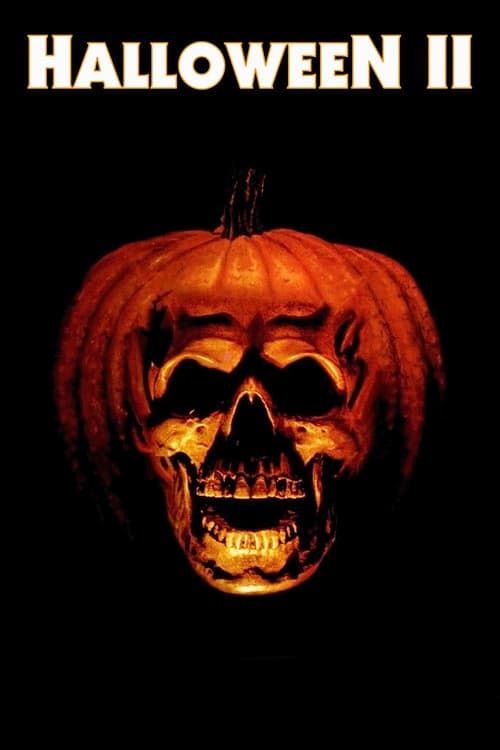
Halloween II (1981)
Directed by Rick Rosenthal
No — Halloween II is not woke, scoring 0 out of 100 on our wokeness meter.
Halloween II arrives in 1981 with no discernible interest in the social questions that would later consume the culture.
Consciousness Markers
The cast is predominantly white, with only minor minority characters in hospital staff roles that exist without any commentary or deliberate inclusive casting agenda.
No LGBTQ+ characters, themes, or subtext are present.
While Laurie Strode is a survivor, the film is a conventional slasher that does not advance any feminist agenda or critique of patriarchy.
Race is not addressed or thematized in any way.
There is no environmental or climate-related content.
The film contains no critique of capitalism or wealth inequality.
No body positivity themes or messaging are present.
Mental illness is not explored through a neurodivergence lens; Michael Myers is presented as pure evil rather than a neurodivergent character.
The film is a fictional slasher with no historical revisionism.
The film does not lecture the audience on social or political issues; Dr. Loomis's exposition is purely plot-driven.
Why it received this score
Halloween II arrives in 1981 with no discernible interest in the social questions that would later consume the culture. Michael Myers follows Laurie Strode to Haddonfield Memorial Hospital and proceeds to stab his way through the night shift. The victims are nurses, paramedics, a security guard, and a federal marshal. Nobody pauses to interrogate the politics of any of this, because there are no politics here to interrogate. The film is a machine for generating suspense, and it runs on blood and synthesizer chords. Its cast is white, its concerns are strictly local, and its ambitions extend no further than the next dark corridor.
The film does carry one piece of mythology: the revelation that Laurie is Michael's sister, a twist Carpenter himself later dismissed as silly. That is the entire thematic payload. There is no critique of the institution that warehouses the mentally ill, no sympathy extended to the staff cut down while doing their jobs, and no gesture toward the era's broader anxieties beyond a brief nod to the urban legend of tainted Halloween candy. Mental illness is rendered as pure, motiveless evil, which is the opposite of a considered portrait. Race, class, sexuality, and the environment go unmentioned, which is unsurprising for a slasher sequel assembled on a modest budget.
What remains is craft of a limited kind. Rick Rosenthal reproduces the first-person camera work and the patient stalking of the original, and Donald Pleasence shouts his way through the proceedings with the conviction of a man who has decided the material deserves it. The result is competent, grim, and entirely of its moment. It asks nothing of the audience except that they keep watching. On the ledger of cultural instruction, it is a blank page, and there is a certain honesty in that.
Analysis generated by our Consciousness Algorithm
Part of


Synopsis
After failing to kill stubborn survivor Laurie and taking a bullet or six from former psychiatrist Dr. Sam Loomis, Michael Myers has followed Laurie to the Haddonfield Memorial Hospital, where she's been admitted for Myers' attempt on her life. The institution proves to be particularly suited to serial killers, however, as Myers cuts, stabs and slashes his way through hospital staff to reach his favorite victim.
Questions about Halloween II
Is Halloween II woke?
No — Halloween II is not woke, scoring 0 out of 100 on our wokeness meter. That earns it a verdict of Ultra Based.
Does Halloween II have any woke elements?
No. All 10 markers score zero.
How does Halloween II compare to other 1981 movies?
It ranks #32 of the 43 films from 1981 we've scored; their average is 5. The wokest is The Fox and the Hound (18).
Is Halloween II the most woke Halloween movie?
No. It ranks #8 of the 11 Halloween films we've scored; the wokest is Halloween III: Season of the Witch (15).