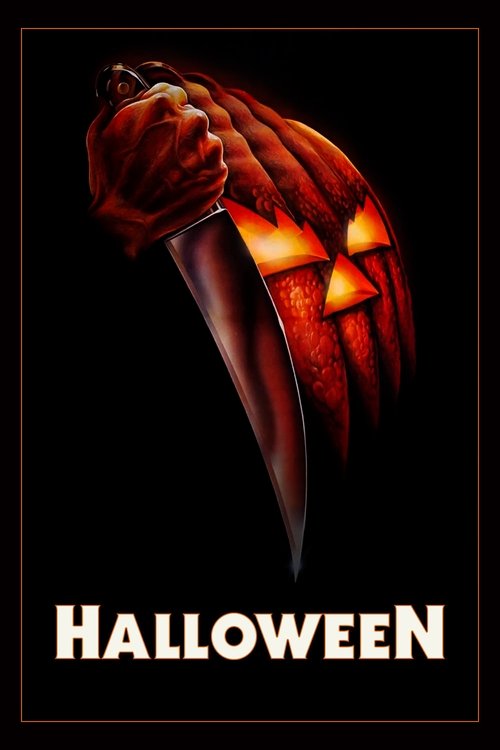
Halloween (1978)
Directed by John Carpenter
No · Ultra Based
How we score movies →Consciousness Markers
Laurie Strode is competent and survives, but this reflects slasher genre mechanics rather than feminist ideology. The film contains the problematic 'virtue rewarded' moral framework common to 1970s horror.
Michael Myers is portrayed as mentally ill, but this reflects outdated horror tropes rather than contemporary neurodivergence awareness or representation.
Cast is entirely white with conventional gender distribution. Jamie Lee Curtis plays a capable female lead, but this reflects genre convention rather than deliberate representation strategy.
The film refrains from explicit moralizing or preachy messaging, though Dr. Loomis provides exposition about Myers' mental state without modern psychological nuance.
No LGBTQ+ themes, characters, or representation present. All relationships depicted are heterosexual by default.
No racial themes or consciousness evident. The film treats race as invisible and unmarked, reflecting 1970s mainstream cinema conventions.
No climate messaging, environmental concerns, or ecological consciousness present in the film.
No critique of capitalism, wealth inequality, or economic systems. The film depicts suburban consumer culture without commentary.
No engagement with body positivity, disability justice, or alternative physical representation. Bodies function purely as plot devices.
The film contains no historical narrative or revisionist historical interpretation. It is set in contemporary (1978) America.


Synopsis
Fifteen years after murdering his sister on Halloween Night 1963, Michael Myers escapes from a mental hospital and returns to the small town of Haddonfield, Illinois to kill again.
Why it received this score
Halloween is a masterpiece of minimalist horror craft that operates entirely within the aesthetic and cultural logic of 1978. John Carpenter's film has become a text upon which contemporary critics project feminist and sociological readings, but the film itself was not created as a vehicle for progressive social consciousness. The capable female protagonist Laurie Strode survives not because the film is making a statement about gender equality, but because that is the functional requirement of the slasher narrative. Michael Myers remains an inexplicable force of violence, the suburban setting a blank canvas for horror rather than social commentary. The iconic score and precise cinematography demonstrate Carpenter's mastery of the medium, yet these technical achievements exist independent of any engagement with modern cultural awareness.
The film's cultural legacy includes inspiring countless imitators with more regressive gender politics, though the original remains subtler than its descendants. Laurie's virtue, contrasted with her more sexually active peers, might be read through contemporary feminist film theory as a problematic moral calculus, but the film makes no explicit commentary on gender, sexuality, or social justice. The cast is entirely white and heterosexual by default rather than design. There is no climate consciousness, no disability representation, no anti-capitalist sentiment, and no engagement with systemic inequality. These absences are not failures on the film's part, merely facts of its historical moment.
To score Halloween on a scale measuring 2020s progressive sensibilities is to acknowledge that excellence in craft does not equal alignment with modern cultural markers. The film is genuinely great, but it is not woke, and no amount of retrospective cultural analysis can make it so. It remains a work of its time, influential precisely because it focuses on the fundamentals of suspense rather than ideological messaging.
Analysis generated by our Consciousness Algorithm
Critic Reviews
“Not entirely without some laughable or dated scenes, Halloween remains an original that continues to inspire a genre and probe middle America's fears about what's really lurking in the laundry room after midnight.”
“Halloween is an absolutely merciless thriller, a movie so violent and scary that, yes, I would compare it to “Psycho.””
“From a shock-and-suspense point-of-view, Halloween is the rival of Alfred Hitchcock's "Psycho." With only a few arguable exceptions (such as "The Exorcist"), there isn't another post-1970 release that comes close to it in terms of scaring the living hell out of a viewer... A modern classic of the most horrific kind.”
“Halloween is a stab at a derivative minor classic. It's apparent where Carpenter got his horror devices - and a minor misfortune that he hasn't been able to synthesize them in a fresh or exciting way.”