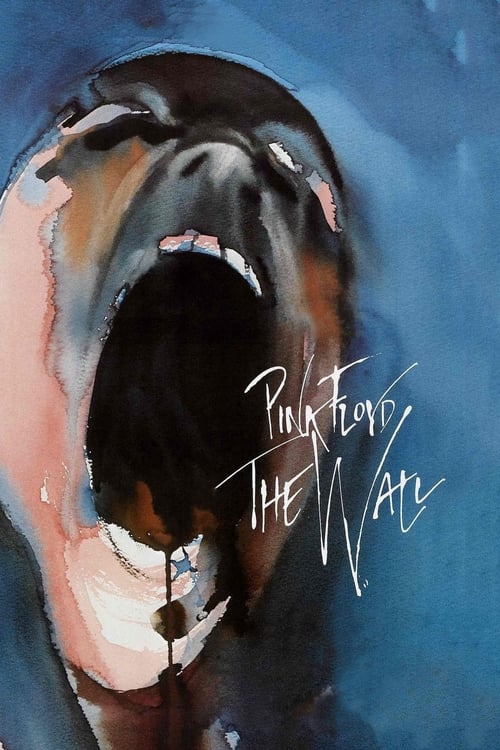
Pink Floyd: The Wall (1982)
Directed by Alan Parker
No — Pink Floyd: The Wall is not woke, scoring 19 out of 100 on our wokeness meter.
Pink Floyd: The Wall arrives from 1982 with the confidence of a nightmare that has already happened.
Consciousness Markers
The film critiques rock stardom, the music industry, consumerism, and materialistic isolation, though in a surreal and personal rather than explicitly political-economic register.
The film is heavily metaphorical and message-driven about alienation, war, education, and fascism, but its delivery is surreal rock-opera spectacle rather than modern social-justice preaching.
The fascist rally sequence briefly depicts Pink's followers attacking minority groups, but race is not a sustained theme or modern racial-consciousness critique.
The cast is overwhelmingly white and the film makes no effort at diverse or inclusive casting.
There are no LGBTQ+ themes, characters, or subtext in the film.
The film's gender politics are not feminist; women appear mainly as mother, wife, and groupie figures within Pink's psychological landscape.
The film contains no climate or environmental themes.
The film uses grotesque and body-horror imagery, but it does not promote body positivity or body-acceptance themes.
Pink's mental breakdown and trauma are depicted as psychological disintegration, not as neurodivergent identity or advocacy.
The film uses World War II imagery and fascist symbolism, but it does not revise or reinterpret historical events in a modern ideological sense.
Why it received this score
Pink Floyd: The Wall arrives from 1982 with the confidence of a nightmare that has already happened. Alan Parker and Gerald Scarfe turn Roger Waters's album into a live-action and animated fever dream about Pink, a rock star who builds an emotional wall out of childhood grief, an absent father, an overbearing mother, a failed marriage, and the grinding machinery of fame. It is a serious film about serious pain. Seriousness, however, is not the same as modern social consciousness. The cast is uniformly white. The women are mother, wife, and groupie, functions in Pink's psychic landscape. There is no LGBTQ+ thread, no climate parable, no body-acceptance message, no neurodivergence advocacy. The film does not reinterpret history for contemporary ideological purposes. It uses World War II and fascist iconography as raw material for Pink's collapse.
That is not to say the film is without political texture. The neo-Nazi rally sequence briefly shows Pink's followers attacking minority groups, a gesture that acknowledges racial violence without developing a sustained racial critique. The sharper strain is anti-capitalist in a vague, artistic way. The music industry, the executive approach, the accumulation of possessions as emotional insulation: these are targets. The film distrusts stardom and consumer comfort. But its anger is surreal and personal, not economic analysis. There is lecture energy here, since the whole project is metaphorical and message-driven about alienation, war, education, and fascism. Yet the delivery is rock-opera spectacle, not a modern sermon. It wants to overwhelm the senses, not guide the audience toward a policy position.
By the standards of contemporary cultural awareness, then, this is a barren vintage. It has no representation agenda, no feminist revision, no environmental conscience, no identity-forward framework. It is a monument to a different set of anxieties: the wall, the worm, the trial, the unbearable weight of being a rock god. We can admire the animation, the audacity, the sheer depressive force. The film remains a landmark of its kind. It simply does not speak the current language of social virtue. It speaks the older language of personal disintegration, and it speaks it loudly.
Analysis generated by our Consciousness Algorithm
Synopsis
A troubled rock star descends into madness in the midst of his physical and social isolation from everyone.
Questions about Pink Floyd: The Wall
Is Pink Floyd: The Wall woke?
No — Pink Floyd: The Wall is not woke, scoring 19 out of 100 on our wokeness meter. That earns it a verdict of Ultra Based.
Does Pink Floyd: The Wall have any woke elements?
1 of the 10 markers register at 30 or above, led by Eat the Rich (35). On Eat the Rich: The film critiques rock stardom, the music industry, consumerism, and materialistic isolation, though in a surreal and personal rather than explicitly political-economic register.
How does Pink Floyd: The Wall compare to other 1982 movies?
It ranks #3 of the 41 films from 1982 we've scored; their average is 7. The wokest is Gandhi (42).
How is the Woke Score calculated?
An AI-assisted process researches the film and its reception, scores it 0–100 on ten markers, then combines those into one 0–100 Woke Score. It measures a specific set of 2020s cultural themes, not film quality.