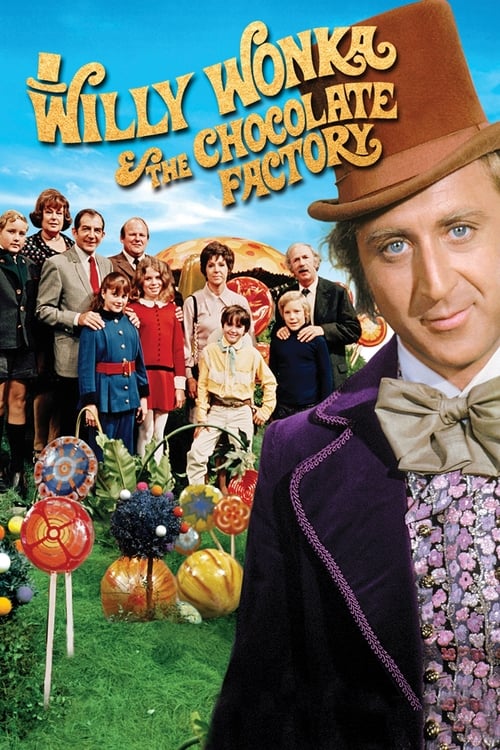
Willy Wonka & the Chocolate Factory (1971)
Directed by Mel Stuart
No — Willy Wonka & the Chocolate Factory is not woke, scoring 6 out of 100 on our wokeness meter.
The 1971 adaptation of Roald Dahl's novel arrives with an impeccable pedigree and an unapologetically commercial soul.
Consciousness Markers
The production history shows genuine racial awareness — the Oompa-Loompas were redesigned from African Pygmies to green-and-orange figures after NAACP protest, and the title was changed partly over the 'Mister Charlie' slur — but the film itself contains no racial themes or commentary.
The cast is overwhelmingly white; the only nod to representation is the internationally assembled troupe of short-statured actors playing the Oompa-Loompas, which is a curiosity of 1971 production rather than a modern diversity mandate.
No LGBTQ+ characters, themes, or subtext of any kind.
A 1971 children's musical with no feminist agenda; the female children are defined by their vices (spoiled, gum-chewing) and the story centers on Charlie and Wonka.
No environmental or climate themes whatsoever.
The film is effectively a feature-length advertisement for the Quaker Oats Wonka Bar and celebrates an eccentric industrialist; if anything it is a paean to candy capitalism, not a critique of it.
The opposite of body positivity: Augustus Gloop is mocked and punished for being overweight and gluttonous, a textbook fat-shaming gag.
No neurodivergent representation or themes.
A pure fantasy with no historical subject matter to revise.
The film moralizes only in the gentle fairy-tale register of Roald Dahl; it preaches good behavior to children, not social justice to adults.
Why it received this score
The 1971 adaptation of Roald Dahl's novel arrives with an impeccable pedigree and an unapologetically commercial soul. Quaker Oats bought the rights to sell a candy bar, and the resulting picture is a feature-length confection with Gene Wilder's sardonic chocolatier at its center. The cast is white to a man, with the exception of the internationally recruited troupe of short-statured performers who play the Oompa-Loompas, a detail that reads today as a production curiosity more than a diversity initiative. The film's real engagement with race happened off camera: the NAACP objected to Dahl's African Pygmy workers, the studio repainted them green and orange, and the title was adjusted partly because "Mister Charlie" carried an ugly charge in the American vernacular. None of that negotiation reaches the screen. The film offers a fantasy about a poor boy and a rich eccentric, with no commentary on either.
On the subject of bodies, the film is actively hostile. Augustus Gloop exists to be sucked up a pipe for the crime of being fat and hungry, and the Oompa-Loompas sing a jaunty tune about it. There is no LGBTQ presence, no feminist reading available, no climate anxiety, and no critique of capital. The factory is a marvel of private enterprise, and the audience is invited to admire it. Wonka is an industrialist who hands out lifetime chocolate supplies and selects an heir. The moral instruction is aimed at children: don't chew gum, don't watch television, don't be spoiled. It is a fairy tale sermon, not a social one.
Craftsmanship survives. Wilder's entrance, the limping walk, the somersault, the sudden ambiguity of a man who may be lying at all times. That is worth preserving, and the National Film Registry agreed in 2014. As a document of progressive sensibility, however, the film is a period piece. Its conscience lives entirely in the production memos.
Analysis generated by our Consciousness Algorithm


Synopsis
When eccentric candy man Willy Wonka promises a lifetime supply of sweets and a tour of his chocolate factory to five lucky kids, penniless Charlie Bucket seeks the golden ticket that will make him a winner.
Questions about Willy Wonka & the Chocolate Factory
Is Willy Wonka & the Chocolate Factory woke?
No — Willy Wonka & the Chocolate Factory is not woke, scoring 6 out of 100 on our wokeness meter. That earns it a verdict of Ultra Based.
Does Willy Wonka & the Chocolate Factory have any woke elements?
Very few. None of the 10 markers reaches 30, the level where a marker counts as present; the highest is Racial Consciousness at 12.
How does Willy Wonka & the Chocolate Factory compare to other 1971 movies?
It ranks #17 of the 30 films from 1971 we've scored; their average is 10. The wokest is Death in Venice (60).
How is the Woke Score calculated?
An AI-assisted process researches the film and its reception, scores it 0–100 on ten markers, then combines those into one 0–100 Woke Score. It measures a specific set of 2020s cultural themes, not film quality.