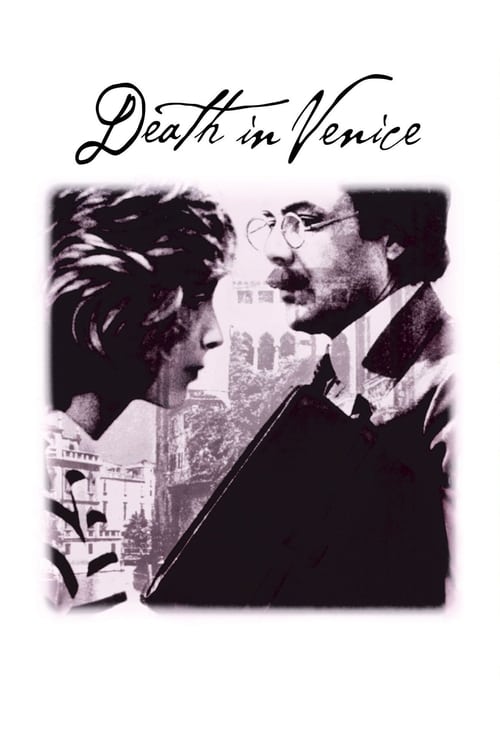
Death in Venice (1971)
Directed by Luchino Visconti
Yes — Death in Venice is woke, scoring 60 out of 100 on our wokeness meter.
Luchino Visconti's Death in Venice proceeds with the patience of a museum guard and the composure of a man who has decided not to blink.
Consciousness Markers
The film is a landmark of queer cinema, centered on Aschenbach's homoerotic obsession with Tadzio and unspoken homosexual desire.
The cast is entirely white European; there is no deliberate inclusive or diverse casting.
Women are peripheral; the narrative is driven by a male gaze and offers no feminist critique or agenda.
No engagement with race or racial issues; the setting and cast are uniformly white.
The cholera epidemic is a plot device, not an environmental or climate-themed allegory.
No critique of capitalism or wealth redistribution; the luxury setting is aesthetic, not political.
The film idealizes youthful beauty and does not promote body positivity or diverse body acceptance.
No neurodivergent characters or themes are present.
It is a faithful adaptation of a novella, not a revisionist historical narrative.
The film is contemplative and aesthetic rather than didactic or preachy.
Why it received this score
Luchino Visconti's Death in Venice proceeds with the patience of a museum guard and the composure of a man who has decided not to blink. Dirk Bogarde is Gustav von Aschenbach, a composer who travels to the Lido for his health and spends the rest of the picture losing it in immaculate increments. The ruin of him is Tadzio, a Polish adolescent played by Björn Andrésen, filmed the way a jeweler films a stone. Almost nothing is spoken between them. Everything is looked at. The film took four BAFTAs for craft and still sits high on the British Film Institute's poll of significant queer works.
The ledger beyond that is remarkably clean. The cast is uniformly white European and no gesture is made toward widening it. Women drift at the edges of the frame with parasols and children, offering no counter-reading of the gaze that organizes the whole enterprise. Venice is sinking and the cholera is genuine, but the epidemic serves as atmosphere, not as an environmental summons. Nobody redistributes a lira. Physical beauty is venerated here in a single, narrow, and frankly awkward register, the opposite of a broad acceptance of bodies. The film never stops to instruct us, and that is its own quiet mercy.
What does light up is the queer content, and it lights up thoroughly. This is a study of unspoken homosexual longing rendered with real care, so that the silence itself becomes the subject: the elevator glance, the hairdresser's chair, the Adagietto swelling over a boy wading into the sea. Visconti strips out the novella's ambiguity and replaces it with devotion, a trade that offended some critics and moved others. Björn Andrésen later described the aftermath with undisguised discomfort, which lends the whole artifact a second, colder life.
Analysis generated by our Consciousness Algorithm


Synopsis
Composer Gustav von Aschenbach travels to Venice for health reasons. There, he becomes obsessed with the stunning beauty of an adolescent Polish boy named Tadzio who is staying with his family at the same Grand Hôtel des Bains on the Lido as Aschenbach.
Questions about Death in Venice
Is Death in Venice woke?
Yes — Death in Venice is woke, scoring 60 out of 100 on our wokeness meter. That earns it a verdict of Woke.
What makes Death in Venice woke?
1 of the 10 markers register at 30 or above, led by LGBTQ+ Themes (90). On LGBTQ+ Themes: The film is a landmark of queer cinema, centered on Aschenbach's homoerotic obsession with Tadzio and unspoken homosexual desire.
How does Death in Venice compare to other 1971 movies?
It is the wokest of the 30 films from 1971 we've scored; their average is 10.
How is the Woke Score calculated?
An AI-assisted process researches the film and its reception, scores it 0–100 on ten markers, then combines those into one 0–100 Woke Score. It measures a specific set of 2020s cultural themes, not film quality.