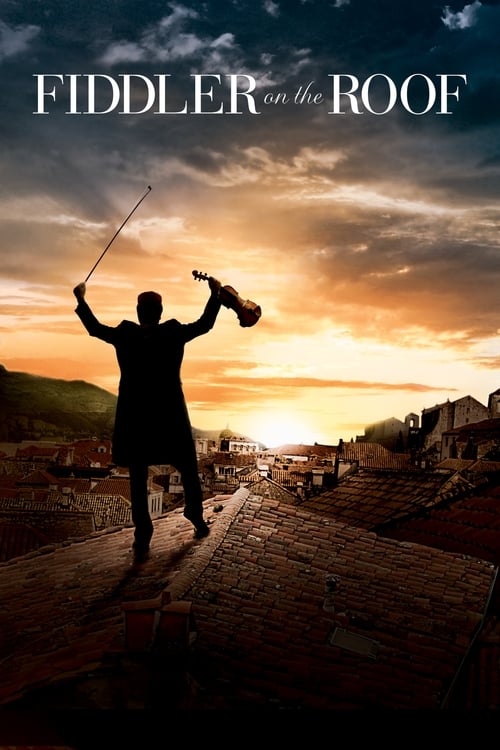
Fiddler on the Roof (1971)
Directed by Norman Jewison
No · Ultra Based
How we score movies →Consciousness Markers
The film features substantial Jewish representation with Chaim Topol in the lead role and a cast drawn from Jewish performers. However, this reflects accurate historical casting rather than contemporary diversity initiatives.
The film depicts antisemitism and persecution as historical reality and incorporates Jewish cultural identity substantially. This represents serious engagement with historical injustice rather than contemporary racial consciousness frameworks.
Female characters possess agency and drive plot developments, particularly through romantic choices. However, their autonomy operates within traditional family and patriarchal structures without explicit critique of gender systems.
The protagonist is a poor milkman struggling economically, but the film does not engage in systemic critique of capitalism or class hierarchies. Economic hardship is presented as individual misfortune.
While the film contains thematic weight and some preachy moments about tradition and change, it does not adopt the explicit pedagogical tone characteristic of contemporary socially conscious cinema.
The film presents a romanticized view of Jewish village life and tradition, though it does not engage in the contemporary practice of revisionist historical reframing or counter-narrative construction.
No LGBTQ+ themes or representation are present in the film. The narrative is entirely centered on heterosexual family relationships and romantic pairings.
No climate-related themes, messaging, or environmental consciousness appears in the film.
No body positivity messaging, discourse about body standards, or related themes are present in the film.
No representation of neurodivergent characters or engagement with neurodivergence appears in the narrative.


Synopsis
In a pre-revolutionary Russia, a poor Jewish milkman struggles with the challenges of a changing world as his daughters fall in love and antisemitism grows.
Why it received this score
Fiddler on the Roof presents a portrait of pre-revolutionary Russian Jewish life that engages seriously with antisemitism as historical fact and cultural reality. The film's treatment of its subject matter is respectful and emotionally complex, centering on family bonds, generational conflict, and the grinding pressure of cultural displacement. The female characters, particularly Tevye's daughters, drive the narrative's exploration of tension between tradition and personal desire, and their agency within romantic contexts is genuine if circumscribed by the historical moment depicted.
However, the film operates within a fundamentally humanist dramatic framework rather than through the specific cultural reflexes of contemporary progressive consciousness. Its concern is with universal themes of love, belonging, and dignity in the face of injustice, not with the systematic examination of representation, identity politics, or social hierarchies that characterize modern social consciousness. The work treats its Jewish characters with dignity and complexity, but this reflects the serious engagement of a pre-1980s prestige drama with meaningful subject matter, not the deliberate interrogation of cultural systems.
The film's modest score reflects its distance from contemporary sensibilities. It is a fine work of cinema about important historical realities, but it was not created with the conscious apparatus of modern progressive cultural analysis. We might appreciate its humanism without mistaking that humanism for the specific cultural project that emerged decades later.
Analysis generated by our Consciousness Algorithm
Critic Reviews
“Fiddler on the Roof is not a perfect motion picture - it is too long and there are times when it's obvious that the musical numbers have been pre-recorded then lip-synched - but it represents an enjoyable three hours.”
“By preserving the exoticism and making sure the audience left the theater humming, Jewison made a grubby, European-flavored movie that Yanks could embrace.”
“It still stands up as an upbeat portrait of pre-revolutionary Russia, and will have you whistling If I Were A Rich Man for days.”
“There's something patronising about the way Norman Jewison portrays all these poor but cheerful Yiddish types. The choreography is clumsy, the acting caricatured, and the songs themselves painfully overblown.”