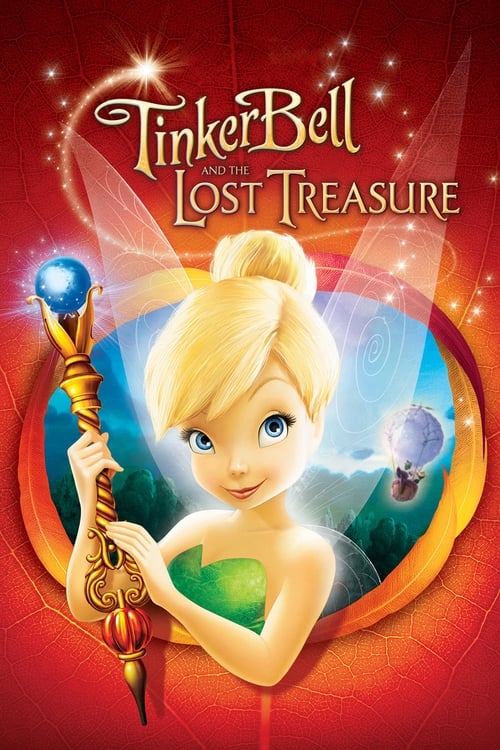
Tinker Bell and the Lost Treasure (2009)
Directed by Klay Hall
No — Tinker Bell and the Lost Treasure is not woke, scoring 8 out of 100 on our wokeness meter.
Tinker Bell and the Lost Treasure arrives as the second entry in the Disney Fairies line, a direct-to-video affair from 2009 concerning a shattered moonstone, a ceremonial scepter, and a young tinker fairy learning to govern her temper.
Consciousness Markers
The voice cast includes actors of color such as Lucy Liu and Raven-Symoné in prominent fairy roles, though the film makes no explicit comment on race or representation.
No LGBTQ+ characters, themes, or subtext are present.
Tinker Bell is a female protagonist, but the film does not advance a feminist agenda or critique gender roles.
No exploration of racial identity, systemic racism, or racial consciousness.
While nature fairies tend to the seasons, the film contains no climate change messaging or environmental crusade.
No critique of capitalism, wealth inequality, or class struggle.
No body positivity themes or diverse body representations are present.
Tinker Bell's temper is a character flaw, not framed as neurodivergence.
No historical revisionism or reimagining of past events.
The film offers gentle moral lessons about friendship and temper, but no preachy social justice lecturing.
Why it received this score
Tinker Bell and the Lost Treasure arrives as the second entry in the Disney Fairies line, a direct-to-video affair from 2009 concerning a shattered moonstone, a ceremonial scepter, and a young tinker fairy learning to govern her temper. It is autumn in Pixie Hollow. The leaves turn. A blue harvest moon is scheduled. The stakes are municipal at best, and the film knows it, which is part of its quiet integrity. Five critics on Rotten Tomatoes approved, unanimously, and the relief appears to have been mutual.
On the matter of social instruction, the film belongs to a gentler dispensation. Tinker Bell yells at Terence, breaks something precious, runs away, and returns with an apology and a repaired scepter. The lesson concerns temper and friendship, delivered softly and without a syllabus. The voice cast includes Lucy Liu and Raven-Symoné in prominent fairy roles, a staffing decision the film never acknowledges and never feels compelled to justify. That is the entire extent of its representational ambition. No character interrogates the power structure of Pixie Hollow. Nobody organizes the dust keepers. Blaze the firefly is a firefly.
The production was granted a curious distinction: the United Nations named Tinker Bell an honorary Ambassador of Green for environmental awareness among children. This is promotional apparatus, not content. The film itself contains no sermon about the climate, no indictment of consumption, no lesson about the pixie dust supply chain. What remains is a modest adventure with songs by Demi Lovato and a firefly who will not be quiet. It is harmless, brief, and entirely of its era. We file it accordingly.
Analysis generated by our Consciousness Algorithm
Part of


Synopsis
A blue harvest moon will rise, allowing the fairies to use a precious moonstone to restore the Pixie Dust Tree, the source of all their magic. But when Tinker Bell accidentally puts all of Pixie Hollow in jeopardy, she must venture out across the sea on a secret quest to set things right.
Questions about Tinker Bell and the Lost Treasure
Is Tinker Bell and the Lost Treasure woke?
No — Tinker Bell and the Lost Treasure is not woke, scoring 8 out of 100 on our wokeness meter. That earns it a verdict of Ultra Based.
Does Tinker Bell and the Lost Treasure have any woke elements?
Very few. None of the 10 markers reaches 30, the level where a marker counts as present; the highest is Representation Casting at 20.
How does Tinker Bell and the Lost Treasure compare to other 2009 movies?
It ranks #123 of the 230 films from 2009 we've scored; their average is 14. The wokest is Home (79).
Is Tinker Bell and the Lost Treasure the most woke Tinker Bell movie?
No. It ranks #5 of the 6 Tinker Bell films we've scored; the wokest is Tinker Bell (29).