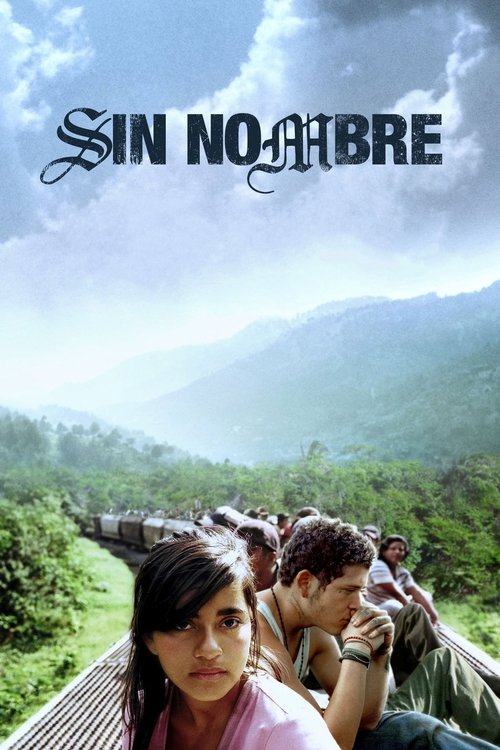
Sin Nombre (2009)
Directed by Cary Joji Fukunaga
Yes — Sin Nombre is woke, scoring 60 out of 100 on our wokeness meter.
Cary Joji Fukunaga's 2009 debut follows Sayra, a Honduran teenager riding the roofs of freight trains toward a New Jersey that exists mainly as a rumor, and El Casper, a Mara Salvatrucha member whose loyalty is dissolving in real time.
Consciousness Markers
The film is deeply rooted in the socio-political realities of race, class, and the perilous life of migrants. It provides a raw look at the systemic dangers faced by Latino communities.
The film centers on a complex, autonomous Indigenous Latina protagonist, Sayra, whose journey is the primary narrative engine. This provides a significant, if pre-2020, example of authentic representation of Central American life.
The film critiques the exploitative nature of the border system and gang life, but it does not offer a specific ideological or structural anti-capitalist critique.
Sayra exhibits strong agency and determination in pursuing her own life goals, though the film focuses more on survival than on a modern feminist critique of systemic patriarchy.
While the film addresses heavy social issues, it functions as a dramatic thriller rather than a didactic piece designed to lecture the audience on social justice.
There is no discernible presence of LGBTQ+ themes, characters, or subtext within the narrative structure.
The narrative focuses entirely on human conflict and migration, with no thematic engagement with environmental issues or climate change.
The film does not address body image, self-acceptance, or body positivity in any meaningful way.
There is no evidence of characters or plot points related to neurodivergence.
The film is a fictional narrative and does not attempt to reinterpret or revise a specific historical event.
Why it received this score
Cary Joji Fukunaga's 2009 debut follows Sayra, a Honduran teenager riding the roofs of freight trains toward a New Jersey that exists mainly as a rumor, and El Casper, a Mara Salvatrucha member whose loyalty is dissolving in real time. The camera stays close to the bodies in motion: the grip on the coupling, the wet clothes, the river crossing. Sayra is not a symbol. She is a protagonist with appetites and decisions, and the film grants her the full weight of its narrative engine. Fukunaga cast actual migrants as extras, and the authenticity registers in how people sit on a moving train, which is the sort of detail no casting director invents.
The social consciousness here is of the raw, embedded variety. Race and class are not debated on screen. They are the terrain. The gang, the coyote, the shelter, the border patrol: each is a station on a route designed to extract everything from people who have nothing left to trade. There is a critique of the machinery of exploitation in that, though the film declines to name an ideology. Sayra's determination reads as survival more than doctrine. The whole enterprise is a thriller first, and it trusts the audience to draw conclusions without a closing sermon, which is a discipline worth applauding in any decade.
Several of the contemporary markers simply are not present. No LGBTQ threads. No environmental argument. No meditation on body image or neurodivergence. No revision of recorded history, since the story is invented. What remains is a lean, brutal film about migration that predates the vocabulary now applied to such material. It earns its gravity through blood and freight cars, not through instruction. We are left, as ever, cataloguing what a film does rather than what we wish it had announced.
Analysis generated by our Consciousness Algorithm
Part of


Synopsis
Sayra, an Indigenous Latina American teenage girl from Honduras, Central America, hungers for a better life. Her chance for one comes when she is reunited with her long-estranged father, who intends to emigrate to Mexico and then enter the United States. Sayra's life collides with a pair of Indigenous Latino American gang members from Mexico, North America who have boarded the same USA-bound train.
Questions about Sin Nombre
Is Sin Nombre woke?
Yes — Sin Nombre is woke, scoring 60 out of 100 on our wokeness meter. That earns it a verdict of Woke.
What makes Sin Nombre woke?
2 of the 10 markers register at 30 or above, led by Racial Consciousness (80) and Representation Casting (70). On Racial Consciousness: The film is deeply rooted in the socio-political realities of race, class, and the perilous life of migrants.
How does Sin Nombre compare to other 2009 movies?
It ranks #4 of the 230 films from 2009 we've scored; their average is 14. The wokest is Home (79).
How is the Woke Score calculated?
An AI-assisted process researches the film and its reception, scores it 0–100 on ten markers, then combines those into one 0–100 Woke Score. It measures a specific set of 2020s cultural themes, not film quality.