Home (2009)
Directed by Yann Arthus-Bertrand
Yes — Home is woke, scoring 79 out of 100 on our wokeness meter.
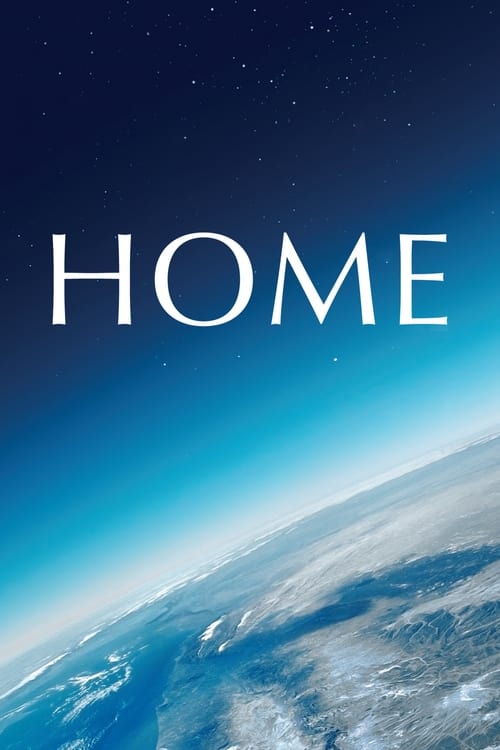
Home is a 2009 French documentary that consists almost entirely of aerial photography, 488 hours of raw footage distilled into ninety minutes of the planet viewed from a helicopter.
Consciousness Markers
Entirely a climate crusade: global warming, resource depletion, species extinction, and a call to reverse ecological damage.
Narration is explicitly didactic, warning humanity of its ecological sins and urging immediate change.
Critiques excessive exploitation and overconsumption, but its target is broad human consumption rather than an explicit eat-the-rich or anti-capitalist program.
The film uses multi-language narrators for accessibility, not as a modern representation-casting statement; the aerial documentary has no narrative casting.
No LGBTQ+ themes or characters.
No feminist agenda or gender-focused commentary.
The environmental message is universal; no racial consciousness or racial justice framing.
No body-positivity themes.
No neurodivergence themes.
Presents environmental history and human impact, but not a revisionist social-justice historical narrative.
Why it received this score
Home is a 2009 French documentary that consists almost entirely of aerial photography, 488 hours of raw footage distilled into ninety minutes of the planet viewed from a helicopter. It was shot across 54 countries, released simultaneously in 181, and given away free on World Environment Day. Glenn Close reads the English version. Salma Hayek reads the Spanish. The production was bankrolled by a luxury goods conglomerate, a detail the reviewers of the period found difficult to ignore and equally difficult to explain away.
The film's register is unmistakable. It addresses the viewer the way a disappointed parent addresses a teenager, cataloguing the damage: warming, depletion, extinction, the collapse of fisheries and forests. There is no argument to follow, only an inventory, followed by a deadline of roughly ten years in which to reverse the trend. The imagery earns its grandeur. The narration earns nothing. It lectures without pause, and the lecture is the point. The film exists to make an audience feel accused, and it succeeds at that with a thoroughness that leaves room for nothing else.
On the question of economic critique, the target is consumption itself, framed as a species-wide appetite instead of a structure with owners. That is a softer position than it first appears. The film asks humanity to want less without ever asking who profits from the wanting. Everything else here, gender, race, identity, the body, the mind, is absent. Not suppressed. Simply not the subject. The subject is the planet, and the planet has no pronoun.
Analysis generated by our Consciousness Algorithm


Synopsis
In 200,000 years of existence, man has upset the balance on which the Earth had lived for 4 billion years. Global warming, resource depletion, species extinction: man has endangered his own home. But it is too late to be pessimistic: humanity has barely ten years left to reverse the trend, become aware of its excessive exploitation of the Earth's riches, and change its consumption pattern.
Questions about Home
Is Home woke?
Yes — Home is woke, scoring 79 out of 100 on our wokeness meter. That earns it a verdict of Woke.
What makes Home woke?
3 of the 10 markers register at 30 or above, led by Climate Crusade (98), Lecture Energy (95) and Eat the Rich (45). On Climate Crusade: Entirely a climate crusade: global warming, resource depletion, species extinction, and a call to reverse ecological damage.
How does Home compare to other 2009 movies?
It is the wokest of the 230 films from 2009 we've scored; their average is 14.
How is the Woke Score calculated?
An AI-assisted process researches the film and its reception, scores it 0–100 on ten markers, then combines those into one 0–100 Woke Score. It measures a specific set of 2020s cultural themes, not film quality.