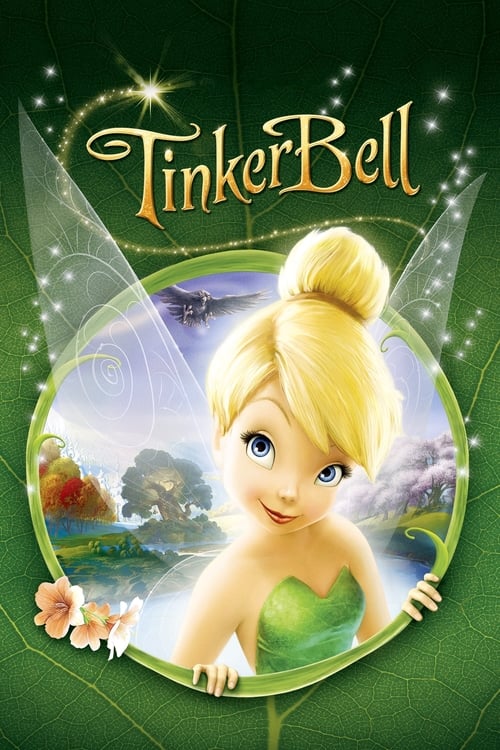
Tinker Bell (2008)
Directed by Bradley Raymond
No — Tinker Bell is not especially woke, scoring 29 out of 100 on our wokeness meter.
Tinker Bell arrives in 2008 as the opening installment of the Disney Fairies line, a direct-to-video venture that reportedly passed through two dozen script revisions and a management purge before reaching shelves.
Consciousness Markers
The voice cast and character designs include several women of color (Raven-Symoné, Lucy Liu, America Ferrera) as prominent fairies, though the film does not comment on race.
Female-led story with a protagonist who defies expectations by using her tinkering skills to save spring, though the feminist message is implicit rather than explicit.
The film delivers a gentle moral about self-acceptance and finding your own talent, but it is not preachy in a modern activist sense.
No LGBTQ+ themes or characters are present.
No racial themes or commentary are present.
The film depicts seasonal cycles and nature fairies but contains no climate change message or environmental crusade.
No anti-capitalist or eat-the-rich themes are present.
No body positivity themes or diverse body representations are present.
Tinker Bell is different and struggles to fit in, but this is framed as a talent difference, not neurodivergence.
The film is an origin story for a fictional fairy, not a revisionist take on historical events.
Why it received this score
Tinker Bell arrives in 2008 as the opening installment of the Disney Fairies line, a direct-to-video venture that reportedly passed through two dozen script revisions and a management purge before reaching shelves. Pixar executives deemed an earlier cut virtually unwatchable, which tells us more about studio politics than about the finished product. What survives is a modest origin story. A fairy is born from a baby's first laugh, learns her talent is tinkering, and spends the rest of the running time attempting to become something she is not.
The voice cast merits a moment of acknowledgment. Raven-Symoné, Lucy Liu, and America Ferrera appear as prominent fairies, and the ensemble is more varied than the 1953 Peter Pan would have permitted. The film never remarks on this, which is to its credit. Tinker Bell herself carries a female-led narrative in which she defies the assigned order of things and rescues spring through mechanical ingenuity. The message stays implicit. No character delivers a speech about glass ceilings, and the story resolves by having her accept her place, a curious destination for a tale about refusing your place.
Elsewhere the cupboard is bare. There is no romantic subplot to interrogate, no villain to redeem, no social thesis to unpack. The moral concerns self-acceptance and finding your own talent, delivered gently, without the sermonizing that later children's animation would adopt as house style. It is a film about a fairy who fixes things. That is the whole of it. We are left, as ever, to classify.
Analysis generated by our Consciousness Algorithm
Part of


Synopsis
Journey into the secret world of Pixie Hollow and hear Tinker Bell speak for the very first time as the astonishing story of Disney's most famous fairy is finally revealed in the all-new motion picture "Tinker Bell."
Questions about Tinker Bell
Is Tinker Bell woke?
No — Tinker Bell is not especially woke, scoring 29 out of 100 on our wokeness meter. That earns it a verdict of Based.
Does Tinker Bell have any woke elements?
2 of the 10 markers register at 30 or above, led by Representation Casting (45) and Feminist Agenda (30). On Representation Casting: The voice cast and character designs include several women of color (Raven-Symoné, Lucy Liu, America Ferrera) as prominent fairies, though the film does not comment on race.
How does Tinker Bell compare to other 2008 movies?
It ranks #16 of the 212 films from 2008 we've scored; their average is 12. The wokest is Milk (68).
Is Tinker Bell the most woke Tinker Bell movie?
Yes. It scores highest of the 6 Tinker Bell films we've scored.