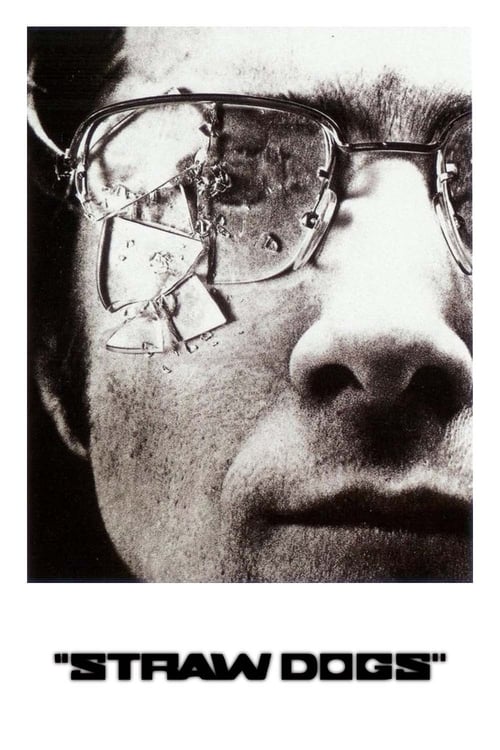
Straw Dogs (1971)
Directed by Sam Peckinpah
No — Straw Dogs is not woke, scoring 0 out of 100 on our wokeness meter.
Sam Peckinpah's Straw Dogs arrives from 1971 with the confidence of a film that has nothing to apologize for and no interest in being liked.
Consciousness Markers
The cast is entirely white, with no meaningful racial or ethnic diversity; the film does not engage with representation as a theme.
No LGBTQ+ characters, themes, or subtext are present.
The film is widely criticized for misogynistic and male-chauvinist depictions, including controversial rape scenes; it does not advance a feminist agenda.
No engagement with racial identity, racism, or racial justice.
No environmental or climate themes.
No critique of capitalism, wealth inequality, or class-based economic systems.
No body-positive themes or diverse body representation.
Henry Niles is depicted as mentally deficient, but the film treats this as a plot device rather than a neurodivergence-awareness theme.
Based on a novel, not a historical event, and offers no revisionist historical narrative.
The film is a violent thriller, not a preachy or didactic work advancing modern social-justice messaging.
Why it received this score
Sam Peckinpah's Straw Dogs arrives from 1971 with the confidence of a film that has nothing to apologize for and no interest in being liked. Dustin Hoffman plays David Sumner, an American mathematician who relocates to his wife's Cornish village and slowly discovers that the locals regard him as livestock. The escalation is methodical, the climax is a siege, and the film's reputation rests largely on two rape scenes that were censored by multiple rating boards and condemned as misogynistic. We note this not as a flaw to be corrected but as the film's actual content. Whatever Straw Dogs is arguing, it is not arguing for the dignity of women. It is the film that later critics would cite as the negative image of a feminist sensibility.
The cast is entirely white and the film has no comment to make about that, or about race at all. Its anxieties are territorial and marital. There is no environmental conscience, no economic critique, no interest in body diversity, and no advocacy on behalf of the neurodivergent, though the character of Henry Niles is mentally deficient and serves as the fuse for the final act. That is a plot device, not a platform. The film's women exist to be looked at and imperiled, its men to prove something ancient about themselves. Nothing in the screenplay gestures toward the social concerns that would occupy the following half century. It is a cold, ugly, superbly constructed piece of work, and it means every unpleasant thing it says.
To classify Straw Dogs is to classify a fossil. Its politics are pre-modern in the specific sense that they predate the vocabulary we now use to discuss them. The film offers no lecture, no lesson, no invitation to improve ourselves. It ends with a man muttering to himself in a wrecked house, surprised by his own capacity for carnage. There is no messaging here, only aftermath. We score it accordingly, with the sober respect owed to an artifact that predates the questions entirely.
Analysis generated by our Consciousness Algorithm
Synopsis
David Sumner, a mild-mannered academic from the United States, marries Amy, an Englishwoman. In order to escape a hectic stateside lifestyle, David and his wife relocate to the small town in rural Cornwall where Amy was raised. There, David is ostracized by the brutish men of the village, including Amy's old flame, Charlie. Eventually the taunts escalate.
Questions about Straw Dogs
Is Straw Dogs woke?
No — Straw Dogs is not woke, scoring 0 out of 100 on our wokeness meter. That earns it a verdict of Ultra Based.
Does Straw Dogs have any woke elements?
No. All 10 markers score zero.
How does Straw Dogs compare to other 1971 movies?
It ranks #28 of the 30 films from 1971 we've scored; their average is 10. The wokest is Death in Venice (60).
How is the Woke Score calculated?
An AI-assisted process researches the film and its reception, scores it 0–100 on ten markers, then combines those into one 0–100 Woke Score. It measures a specific set of 2020s cultural themes, not film quality.