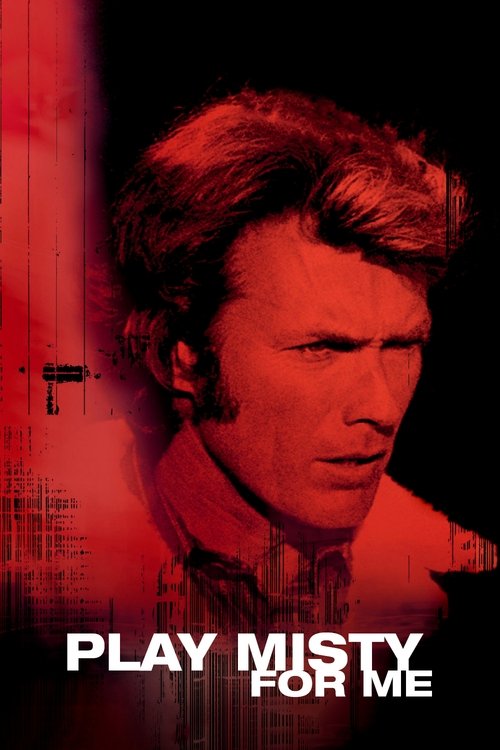
Play Misty for Me (1971)
Directed by Clint Eastwood
No — Play Misty for Me is not woke, scoring 4 out of 100 on our wokeness meter.
Clint Eastwood's 1971 directorial debut arrives with a radio disc jockey, a jaguar, a jazz station in Carmel, and a fan who will not take no for an answer.
Consciousness Markers
The cast includes Black actors James McEachin and Clarice Taylor in supporting roles, but their presence is incidental and unremarked upon, with no commentary on representation.
No LGBTQ+ characters, themes, or subtext of any kind.
The film trades in the classic 'unstable woman' stalker trope, with the female antagonist coded as hysterical and obsessive; there is no feminist framing or critique.
No engagement with racial themes or consciousness whatsoever.
No environmental or climate content.
No economic critique or anti-capitalist themes; the radio DJ's career concerns are purely personal.
No body positivity themes present.
Evelyn's behavior has been read by critics as consistent with borderline personality disorder, but the film treats this as villainous pathology rather than an affirming neurodivergent portrayal.
A contemporary-set psychological thriller with no historical revisionism.
A lean genre thriller that entertains rather than preaches; no didactic messaging or moral lecturing.
Why it received this score
Clint Eastwood's 1971 directorial debut arrives with a radio disc jockey, a jaguar, a jazz station in Carmel, and a fan who will not take no for an answer. The machinery is efficient. Eastwood keeps the camera calm while Jessica Walter dismantles a man's life one uninvited visit at a time. It is a genre exercise, executed with the discipline of someone who had spent seventeen years watching other directors get it wrong.
The film's cultural ledger is short. Walter's Evelyn is the unstable woman of the era's thrillers, hysterical, obsessive, self-harming, and finally lethal, and the screenplay never asks us to consider what made her that way. Critics have since read her behavior as consistent with borderline personality disorder, though the film frames the condition as villainy, not as a life to be understood. There is no feminist counter-reading on offer, and no racial consciousness to speak of. James McEachin and Clarice Taylor appear in supporting roles, competent and unremarked, their presence carrying no argument about anything. The camera stays interested in the man being stalked.
The remaining categories sit empty. No climate anxiety, no economic critique, no body positivity, no revisionist history, no sermon. The closest the film comes to a thesis is that obsessive love is dangerous, which is less a message than a plot device. This is a well-made potboiler that wants nothing from its audience except a pulse. That restraint is neither virtue nor vice. It is simply a film from another era, doing what thrillers did before they learned to explain themselves.
Analysis generated by our Consciousness Algorithm
Part of


Synopsis
A brief fling between a late-night radio disc jockey and an obsessed female fan takes a frightening turn when another woman enters the picture.
Questions about Play Misty for Me
Is Play Misty for Me woke?
No — Play Misty for Me is not woke, scoring 4 out of 100 on our wokeness meter. That earns it a verdict of Ultra Based.
Does Play Misty for Me have any woke elements?
Very few. None of the 10 markers reaches 30, the level where a marker counts as present; the highest is Representation Casting at 10.
How does Play Misty for Me compare to other 1971 movies?
It ranks #19 of the 30 films from 1971 we've scored; their average is 10. The wokest is Death in Venice (60).
How is the Woke Score calculated?
An AI-assisted process researches the film and its reception, scores it 0–100 on ten markers, then combines those into one 0–100 Woke Score. It measures a specific set of 2020s cultural themes, not film quality.