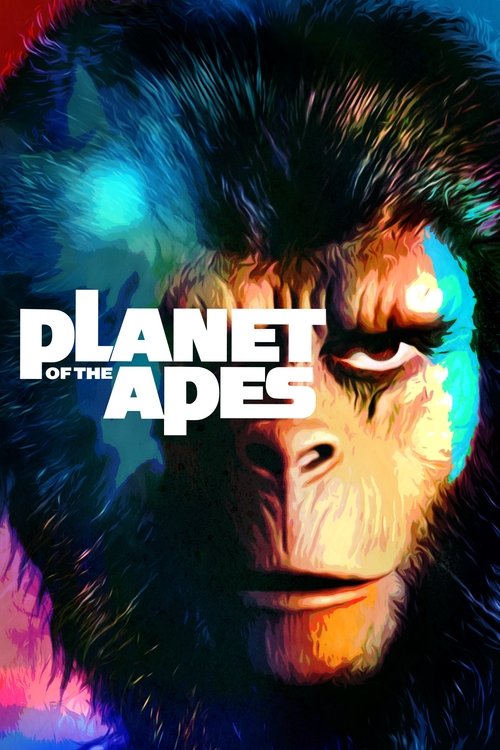
Planet of the Apes (1968)
Directed by Franklin J. Schaffner
No — Planet of the Apes is not woke, scoring 14 out of 100 on our wokeness meter.
Planet of the Apes arrives from 1968, a year when a film could still stage a full-scale allegory about race and caste and then hand the audience a twist ending instead of a pamphlet.
Consciousness Markers
The film functions as a well-documented allegory for American race relations, with apes as the dominant caste and humans as hunted, enslaved inferiors, and the famous 'damned dirty ape' line inverting racial slurs. It is a parable rather than an explicit modern racial-consciousness statement.
The film carries social commentary and a moralizing final twist about humanity's self-destruction, but the messaging is woven into drama and adventure rather than delivered as a lecture.
Zira is a competent female chimpanzee scientist, mildly notable for 1968, but the film offers no feminist thesis; Nova is a mute, passive primitive woman and the pregnancy subplot was cut.
The plot involves Dr. Zaius suppressing the truth of a prior human civilization, a theme of buried history, but this is a narrative device rather than a modern revisionist reframing of real history.
The cast is overwhelmingly white, with no deliberate effort to diversify roles; the apes are played by white actors in prosthetics. No representation-casting intent is present.
There are no LGBTQ+ characters, themes, or subtext in the film.
The apocalyptic ending attributes Earth's ruin to nuclear war, not climate change; no environmental theme is present.
The film contains no critique of capitalism, wealth, or class economics.
No body-positivity themes or messaging appear in the film.
No neurodivergence themes or neurodiverse representation are present.
Why it received this score
Planet of the Apes arrives from 1968, a year when a film could still stage a full-scale allegory about race and caste and then hand the audience a twist ending instead of a pamphlet. Franklin J. Schaffner's picture deposits Charlton Heston on a planet where apes hunt, enslave, and lobotomize humans, and the arrangement is plainly a mirror held up to an American racial hierarchy. The famous line about stinking paws lands as a slur inverted, a neat piece of rhetorical engineering. None of it arrives as a lecture. The sermonizing, such as it is, stays buried inside the adventure, and the closing shot of the Statue of Liberty does the moralizing in one silent image. For a film with something on its mind, it is remarkably patient.
Elsewhere the ledger is thin. Zira, played by Kim Hunter, is a competent chimpanzee scientist, which registered as mildly notable in 1968 and reads as modest now. Nova, the mute primitive woman, exists to be named and led around, and the discarded pregnancy subplot suggests the filmmakers sensed the material could not bear the weight. There is no critique of capital, no environmental conscience (the ruin of Earth is attributed to nuclear war, an older anxiety), no body politics, no neurodiverse representation, and no casting effort a modern audience would recognize as deliberate. Dr. Zaius suppresses evidence of a prior human civilization, which gestures at buried history without reframing any real one.
The makeup won an honorary Academy Award, the film entered the National Film Registry, and it spawned four sequels and a franchise that outlived everyone involved. A parable with a moral and a monkey mask. We have spent the decades since converting such parables into something more explicitly instructive, and the results have not always improved.
Analysis generated by our Consciousness Algorithm
Part of


Synopsis
Astronaut Taylor crash lands on a distant planet ruled by apes who use a primitive race of humans for experimentation and sport. Soon Taylor finds himself among the hunted, his life in the hands of a benevolent chimpanzee scientist.
Questions about Planet of the Apes
Is Planet of the Apes woke?
No — Planet of the Apes is not woke, scoring 14 out of 100 on our wokeness meter. That earns it a verdict of Ultra Based.
Does Planet of the Apes have any woke elements?
1 of the 10 markers register at 30 or above, led by Racial Consciousness (40). On Racial Consciousness: The film functions as a well-documented allegory for American race relations, with apes as the dominant caste and humans as hunted, enslaved inferiors, and the famous 'damned dirty ape' line inverting racial slurs.
How does Planet of the Apes compare to other 1968 movies?
It ranks #5 of the 23 films from 1968 we've scored; their average is 7. The wokest is Night of the Living Dead (27).
Is Planet of the Apes the most woke Planet of the Apes (Original) movie?
No. It ranks #3 of the 5 Planet of the Apes (Original) films we've scored; the wokest is Conquest of the Planet of the Apes (29).