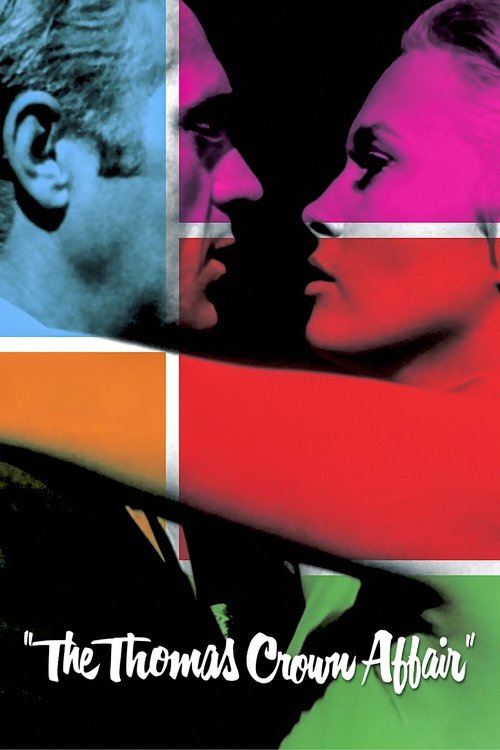
The Thomas Crown Affair (1968)
Directed by Norman Jewison
No — The Thomas Crown Affair is not woke, scoring 9 out of 100 on our wokeness meter.
Norman Jewison's 1968 heist romance arrives dressed for a cocktail party and never once considers removing the jacket.
Consciousness Markers
Dunaway's Vicki Anderson is an independent, sharp-witted professional who matches Crown intellectually, but the film treats this as stylish star chemistry rather than a feminist statement, and she ultimately loses the game.
Faye Dunaway anchors the film as a capable professional investigator, and Yaphet Kotto appears in a minor supporting role, but the casting reflects 1968 norms rather than any deliberate diversity agenda.
No LGBTQ+ characters, themes, or subtext appear anywhere in the film.
Race is never addressed; Kotto's presence is incidental and carries no thematic weight.
No environmental themes or climate content of any kind.
Crown's wealth is a backdrop for glamour and boredom-driven mischief, not a critique of capitalism; the film luxuriates in Rolls-Royces and Ferraris rather than condemning them.
No body-positivity themes; the film trades on conventional 1960s glamour and physical allure.
No neurodivergence is depicted or discussed.
A fictional heist romance with no historical revisionism.
The film is pure stylish entertainment — Pauline Kael called it 'pretty good trash' — with no moralizing or didactic messaging.
Why it received this score
Norman Jewison's 1968 heist romance arrives dressed for a cocktail party and never once considers removing the jacket. Steve McQueen plays Thomas Crown, a Boston millionaire so bored by his own money that he robs a bank for the exercise. Faye Dunaway plays Vicki Anderson, the insurance investigator who takes him apart between polo matches and a chess game that runs longer than most marriages. The split screens are clever. The Ferrari is red. Michel Legrand's score won an Academy Award and earned it. Pauline Kael called the picture pretty good trash, which remains the most efficient review anyone has written of it.
On the matter of social consciousness, the film belongs to its moment and offers no apology for that. Dunaway's investigator is sharp, professional, and paid on commission, a woman who matches her quarry move for move. The screenplay treats this as star chemistry and lets her lose the final round with a tearful smile. That is stylish casting, not a statement. Yaphet Kotto appears briefly in support, a presence the camera never bothers to interrogate. Race goes unmentioned. So does everything else on the modern checklist.
There is no environmental sermon, no indictment of the wealthy beyond the observation that they get bored, no discussion of identity, body, or mind. Crown's fortune funds the glamour. The film luxuriates in Rolls-Royces instead of condemning them. We are left with craft, chemistry, and a very good song about windmills. It is a handsome artifact from a period that had not yet learned to lecture its audience, and there are evenings when that registers as a small mercy. We score it accordingly, with respect and without enthusiasm, and we move on to the next screening.
Thematic tags: oscar_winner.
Analysis generated by our Consciousness Algorithm


Synopsis
A debonair, adventuresome bank executive believes that he has pulled off the perfect multi-million dollar heist--until he must match wits with an insurance investigator who will do anything to get her man.
Questions about The Thomas Crown Affair
Is The Thomas Crown Affair woke?
No — The Thomas Crown Affair is not woke, scoring 9 out of 100 on our wokeness meter. That earns it a verdict of Ultra Based.
Does The Thomas Crown Affair have any woke elements?
Very few. None of the 10 markers reaches 30, the level where a marker counts as present; the highest is Feminist Agenda at 20.
How does The Thomas Crown Affair compare to other 1968 movies?
It ranks #7 of the 23 films from 1968 we've scored; their average is 7. The wokest is Night of the Living Dead (27).
How is the Woke Score calculated?
An AI-assisted process researches the film and its reception, scores it 0–100 on ten markers, then combines those into one 0–100 Woke Score. It measures a specific set of 2020s cultural themes, not film quality.