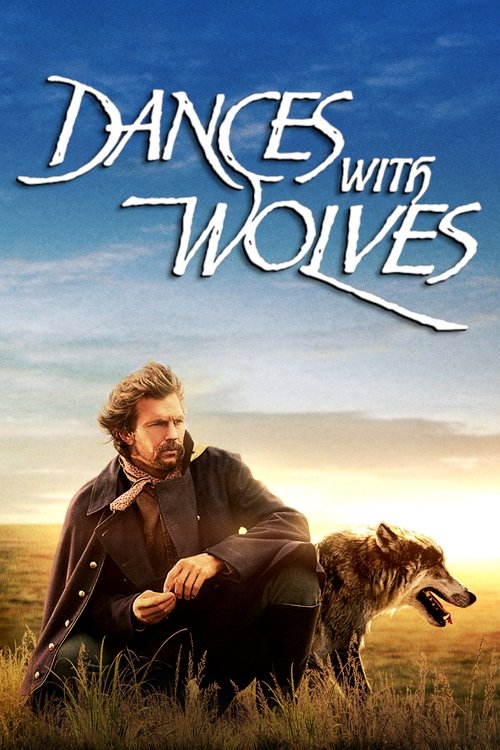
Dances with Wolves (1990)
Directed by Kevin Costner
No · Based
How we score movies →Consciousness Markers
The film casts genuine Native American actors in significant roles and uses the Lakota language authentically. However, the lead character remains white, and Native characters serve primarily to facilitate his narrative arc.
The film demonstrates awareness of Native American culture and uses indigenous languages and customs. However, this consciousness is filtered through and subordinated to a white protagonist's perspective and redemption narrative.
The film presents a romanticized version of Sioux culture while eliding the broader historical context of colonization, displacement, and genocide that defines the actual relationship between settlers and Native peoples.
The film avoids heavy-handed preaching but its entire structure functions as a lesson in cultural appreciation delivered through a white protagonist's education.
Mary McDonnell's character is presented as a romantic prize and love interest with minimal agency. She exists primarily as an object of desire and cultural guide for the protagonist.
While the film presents tribal life as spiritually superior to military hierarchy, it contains no systematic critique of economic systems or capitalist structures.
No LGBTQ themes, representation, or subtext of any kind appears in this 1990 Western.
No climate-related themes or messaging appears in this film.
No body positivity themes or messaging present in this film.
No representation or discussion of neurodivergence appears in the narrative.


Synopsis
Wounded Civil War soldier John Dunbar tries to commit suicide—and becomes a hero instead. As a reward, he's assigned to his dream post, a remote junction on the Western frontier, and soon makes unlikely friends with the local Sioux tribe.
Why it received this score
Dances with Wolves presents itself as a sympathetic portrait of Native American culture, and by the standards of 1990 Hollywood, it was genuinely progressive in its use of the Lakota language and its decision to cast indigenous actors in substantial roles. The film's sin, however, is not what it includes but what it centers. The narrative arc belongs entirely to Kevin Costner's white soldier, whose personal transformation from suicidal officer to enlightened tribesman forms the emotional spine of the story. The Sioux characters exist primarily as instruments of his redemption, their own complex history and agency subordinated to his journey of discovery.
The film's representation of Native Americans, while respectful in surface detail, reinforces a persistent Hollywood fantasy: that indigenous peoples are noble, spiritual, and ultimately in need of validation from white protagonists. Costner's character does not merely join the tribe; he becomes their greatest warrior and romantic hero. This is the white savior narrative in its purest form, dressed in buckskin and linguistic authenticity. For 1990, the film was undoubtedly ahead of much of Hollywood's approach to indigenous representation. By contemporary standards of progressive cinema, however, its architecture is deeply compromised.
The film contains no meaningful engagement with climate themes, economic critique, LGBTQ representation, disability representation, or feminist perspective. Its racial consciousness, while present, operates within a framework that ultimately centers white redemption. This is a movie that believes itself to be doing important work, and by the metrics of its era, it was. But it reveals precisely how thoroughly even well-intentioned representations can be captured by the very power structures they purport to critique.
Analysis generated by our Consciousness Algorithm
Critic Reviews
“This movie moves so confidently and looks so good it seems incredible that it's a directorial debut.”
“A clear-eyed vision. Authentic as an Edward Curtis photograph, lyrical as a George Catlin oil or a Karl Bodmer landscape, this is a film with a pure ring to it. It's impossible to call it anything but epic [9 Nov 1990, Calendar, p.F-1]”
“The movie is childishly naïve... like a New Age social-studies lesson. It isn't really revisionist; it's the old stuff toned down and sensitized. [17 Dec 1990]”