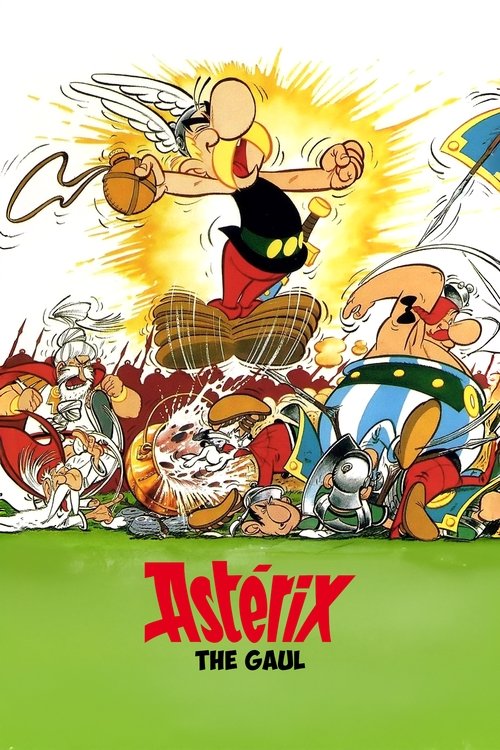
Asterix the Gaul (1967)
Directed by Ray Goossens
No — Asterix the Gaul is not woke, scoring 0 out of 100 on our wokeness meter.
Asterix the Gaul arrived in 1967, produced by the publisher Dargaud and animated by Belvision without the consent, or much of the enthusiasm, of Rene Goscinny and Albert Uderzo.
Consciousness Markers
A 1967 French animated production with an all-white, all-male voice cast. The source material famously contains no female characters at all, and the cast list is entirely European performers playing Gauls and Romans. No representational ambitions whatsoever.
The film contains no LGBTQ+ characters, themes, subtext, or allusion. It is a straightforward 1960s children's adventure comedy about a magic potion.
This is explicitly noted as the only Asterix film to include no female character whatsoever. There is no feminist content to speak of, intentional or otherwise.
The Gaul-versus-Roman conflict is a classical civilizational gag, not a commentary on race or racial justice. No racial consciousness markers present.
No environmental themes, climate anxiety, or ecological messaging. The forest is merely a setting for ambushes.
The resistance against Roman occupation is anti-imperial in a classical comedic sense, not an economic critique of capitalism or wealth inequality. No eat-the-rich content.
No body positivity themes. The comedy trades on characters being short, fat, or otherwise physically caricatured for laughs, with no affirming counter-message.
Characters like the 'slack-tongued misfit' Caligula Minus and the 'slow-witted merchant' are comic foils, not neurodivergence representation. No markers of this theme.
The film depicts a fictionalized Gaulish village resisting Rome, but presents this as light historical-comic fantasy rather than any revisionist reinterpretation of historical record.
Pure slapstick and gag-driven comedy with no pedagogical intent or moralizing. Caesar's cameo and the hair-growing potion exist solely for laughs.
Why it received this score
Asterix the Gaul arrived in 1967, produced by the publisher Dargaud and animated by Belvision without the consent, or much of the enthusiasm, of Rene Goscinny and Albert Uderzo. The two men disliked it enough to block two planned sequels. What they objected to was craft, not politics, and the politics are simply not there. A Roman centurion named Phonus Balonus wants the druid's magic potion. A short, slack-tongued legionary named Caligula Minus is dressed in a wig and false moustache and smuggled into the village. The whole affair runs on ambush, disguise, and the comedy of physical inadequacy.
The potion, when finally extracted, turns out to be a hair-growing formula, and an entire legion is left helpless under cascading beards. Julius Caesar arrives, is unimpressed by the camp's condition, and grants the Gauls their freedom. This is the register throughout: gag, reversal, banquet. There is no thesis. The film holds the distinction of being the only Asterix feature with no female character at all, and it does nothing with that absence, because it never notices it. The Gauls fight Romans, which is a classical comic conflict and not a study of racial hierarchy. The forest is a place to be ambushed in, not an ecosystem in peril. Nobody lectures. Nobody learns anything. Strawberries are demanded out of season as a practical joke.
We are left, then, with a clean slate. No casting ambitions, no identity themes, no economic critique, no moral instruction. It is a 1967 children's cartoon about a magic beverage, and it has the good manners to stay one.
Analysis generated by our Consciousness Algorithm
Part of


Synopsis
In the year 50 BC, Gaul is occupied by the Romans - nearly. But the small village of Asterix and his friends still resists the Roman legions with the aid of their druid's magic potion, which gives superhuman strength. Learning of this potion, a Roman centurion kidnaps the druid to get the secret formula out of him.
Questions about Asterix the Gaul
Is Asterix the Gaul woke?
No — Asterix the Gaul is not woke, scoring 0 out of 100 on our wokeness meter. That earns it a verdict of Ultra Based.
Does Asterix the Gaul have any woke elements?
No. All 10 markers score zero.
How does Asterix the Gaul compare to other 1967 movies?
It ranks #15 of the 19 films from 1967 we've scored; their average is 10. The wokest is In the Heat of the Night (60).
Is Asterix the Gaul the most woke Asterix and Obelix (Animation) movie?
No. It ranks #7 of the 10 Asterix and Obelix (Animation) films we've scored; the wokest is Asterix: The Secret of the Magic Potion (22).