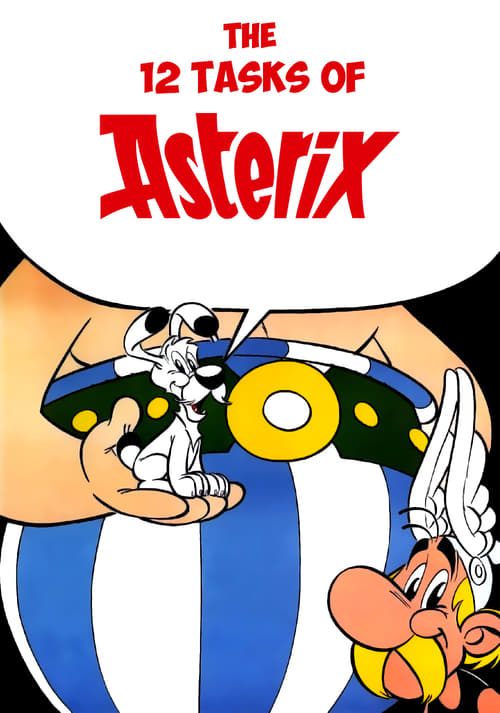
The Twelve Tasks of Asterix (1976)
Directed by René Goscinny
No — The Twelve Tasks of Asterix is not woke, scoring 0 out of 100 on our wokeness meter.
The Twelve Tasks of Asterix arrives from 1976, the third animated outing for Goscinny and Uderzo's Gauls and the first built on an original screenplay by the creators themselves.
Consciousness Markers
All characters are drawn as ancient Gauls, Romans, and other Mediterranean/European peoples; no modern representation casting or diversity commentary.
No LGBTQ+ characters, themes, or subtext.
Female characters are largely sirens, Cleopatra, or background figures; no feminist agenda.
Ethnic groups appear as ancient caricatures for comedy, not as a racial-justice or consciousness theme.
No environmental or climate themes.
Satire targets Roman bureaucracy and authority, not capitalism or wealth inequality.
Obelix's size is played for comedy and strength, not body-positivity messaging.
No neurodivergence themes or characters.
Alternate-history premise of Gauls defeating Rome is comic fantasy, not modern revisionist history.
The film is satirical and parodic but not preachy or lecture-driven.
Why it received this score
The Twelve Tasks of Asterix arrives from 1976, the third animated outing for Goscinny and Uderzo's Gauls and the first built on an original screenplay by the creators themselves. Caesar, weary of Senate gossip that the village of indomitable Gauls might be divine, sets twelve labours in the manner of Hercules. Asterix and Obelix outrun a Greek champion, out-eat a Belgian cook, resist the sirens of the Isle of Pleasure, and finally outlast a Roman bureaucracy so labyrinthine that the sequence became a byword for administrative despair in three countries. It is a comedy of cunning, and it has aged into a cult item on the strength of that one permit office alone.
We searched this film for contemporary social consciousness and found the shelves bare. The satire aims at officialdom, at clerks who send you to another window, at the pomposity of empire. It is political in the oldest sense and progressive in none of the newer ones. The sirens exist to test male resolve and are dispatched by Obelix's appetite for wild boar. Cleopatra drifts past in retirement, a footnote. Obelix's bulk is a running gag and a tactical advantage, never a lesson about self-acceptance. No character pauses to explain the moral of the scene.
The final reel has Asterix admit that none of it matters because they are drawings in a cartoon, which is either the most honest ending in the series or the laziest, and we have decided it is the former. Nothing here preaches. Nothing here lectures. The film asks only that we laugh at a man requesting a permit that does not exist. A clean specimen. Zero across the board.
Analysis generated by our Consciousness Algorithm
Part of


Synopsis
Asterix and Obelix depart on an adventure to complete twelve impossible tasks to prove to Caesar that they are as strong as the Gods. You'll roar with laughter as they outwit, outrun, and generally outrage the very people who are trying to prove them "only human".
Questions about The Twelve Tasks of Asterix
Is The Twelve Tasks of Asterix woke?
No — The Twelve Tasks of Asterix is not woke, scoring 0 out of 100 on our wokeness meter. That earns it a verdict of Ultra Based.
Does The Twelve Tasks of Asterix have any woke elements?
No. All 10 markers score zero.
How does The Twelve Tasks of Asterix compare to other 1976 movies?
It ranks #29 of the 30 films from 1976 we've scored; their average is 13. The wokest is 1900 (77).
Is The Twelve Tasks of Asterix the most woke Asterix and Obelix (Animation) movie?
No. It ranks #7 of the 10 Asterix and Obelix (Animation) films we've scored; the wokest is Asterix: The Secret of the Magic Potion (22).