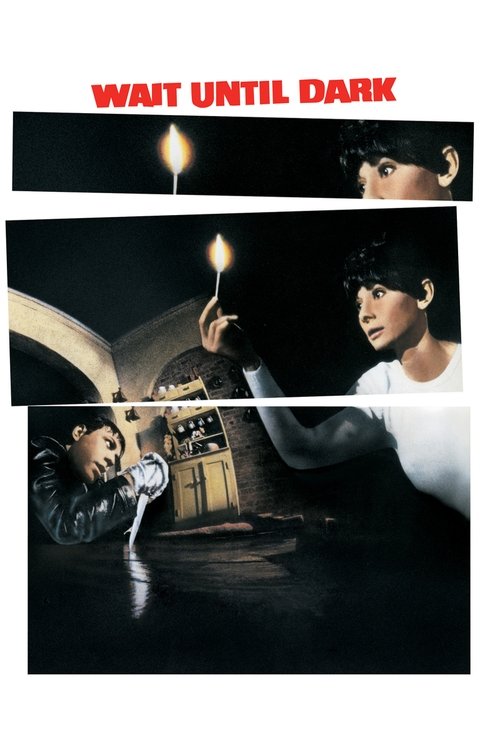
Wait Until Dark (1967)
Directed by Terence Young
No — Wait Until Dark is not woke, scoring 9 out of 100 on our wokeness meter.
Wait Until Dark arrives from 1967 with a blind heroine, a heroin-stuffed doll, and a trio of thugs in a Greenwich Village basement.
Consciousness Markers
The protagonist is a blind woman, a form of disability representation, though she is played by the sighted Audrey Hepburn and the film predates any modern casting-consciousness agenda.
A woman leads the film and ultimately outwits and kills her tormentor, but the framing is the classic 'helpless girl against the odds' damsel-in-peril trope rather than any feminist thesis.
No LGBTQ+ characters, themes, or subtext of any kind.
No engagement with race or racial themes whatsoever.
No environmental or climate content.
The villains are drug smugglers and con men; there is no critique of wealth, class, or capitalism.
No body-positivity themes or messaging.
Blindness is a physical disability, not neurodivergence, and the film makes no reference to neurodiversity.
A straightforward genre thriller with no historical revisionism.
A taut suspense film that entertains rather than preaches; no didactic social messaging.
Why it received this score
Wait Until Dark arrives from 1967 with a blind heroine, a heroin-stuffed doll, and a trio of thugs in a Greenwich Village basement. Audrey Hepburn plays Susy Hendrix, whose disability is both her vulnerability and her eventual tactical advantage. That premise offers a measure of disability representation, though the film casts a sighted star and treats blindness as a mechanism for suspense. No modern casting-consciousness is present. The movie is not interested in the politics of who tells which story. It wants the audience to hold its breath, and it succeeds.
Susy does outwit and kill her tormentor, which gives the film a faint proto-feminist afterglow. The framing remains the classic helpless woman against the odds, a damsel in peril who survives through cunning and a kitchen knife. There is no thesis about patriarchy, no speech about agency. The villains are drug smugglers and con men, so the film has no interest in class warfare or anti-capitalist allegory. Race is absent. LGBTQ themes are absent. Climate concerns are absent. Body positivity is absent. Neurodivergence is not addressed; blindness is physical, not neurological. Historical revisionism never enters the frame.
The result is a taut thriller that prefers entertainment to instruction. No lecturing, no sermonizing, no social lesson smuggled inside the suspense. The famous climax, with Susy shattering lightbulbs and using darkness as a weapon, is pure craft. It remains effective because it trusts the audience to feel fear without being told what to think. For a film from this era, that restraint is notable. The cultural awareness on display is slight and incidental, a blind heroine and a female survivor, nothing more. It is a dry vintage, well aged, and free of modern additives.
Analysis generated by our Consciousness Algorithm


Synopsis
After a flight back home, Sam Hendrix returns with a doll he innocently acquired along the way. As it turns out, the doll is actually stuffed with heroin, and a group of criminals led by the ruthless Roat has followed Hendrix back to his place to retrieve it. When Hendrix leaves for business, the crooks make their move -- and find his blind wife, Susy, alone in the apartment. Soon, a life-threatening game begins between Susy and the thugs.
Questions about Wait Until Dark
Is Wait Until Dark woke?
No — Wait Until Dark is not woke, scoring 9 out of 100 on our wokeness meter. That earns it a verdict of Ultra Based.
Does Wait Until Dark have any woke elements?
Very few. None of the 10 markers reaches 30, the level where a marker counts as present; the highest is Representation Casting at 20.
How does Wait Until Dark compare to other 1967 movies?
It ranks #5 of the 19 films from 1967 we've scored; their average is 10. The wokest is In the Heat of the Night (60).
How is the Woke Score calculated?
An AI-assisted process researches the film and its reception, scores it 0–100 on ten markers, then combines those into one 0–100 Woke Score. It measures a specific set of 2020s cultural themes, not film quality.