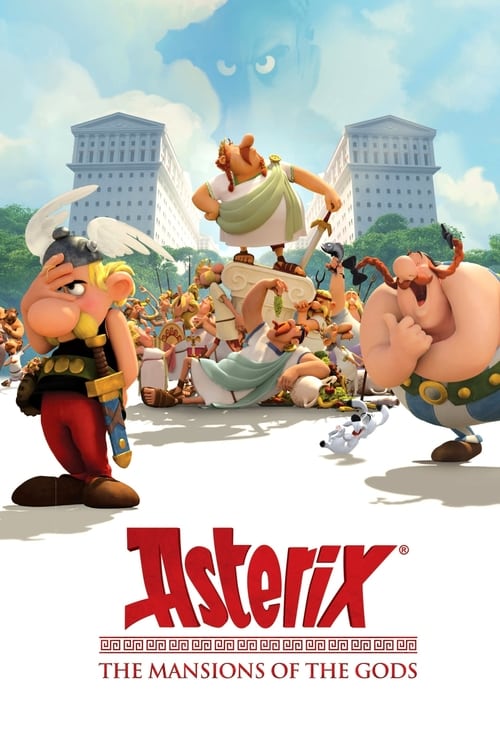
Asterix: The Mansions of the Gods (2014)
Directed by Louis Clichy
No — Asterix: The Mansions of the Gods is not woke, scoring 8 out of 100 on our wokeness meter.
Asterix: The Mansions of the Gods arrives from 2014 France, rendered in three dimensions and adapted from the album in which Caesar attempts to conquer the Gauls not with legions but with a luxury property development.
Consciousness Markers
The story satirizes real-estate speculation, consumerism, price wars, and even labor strikes and wage demands by slaves and legionaries, giving it a genuine anti-consumerist, faintly anti-capitalist edge inherited from the source comic.
The Romans' deforestation of the forest and Getafix's instant-growth acorns give a faint environmental streak, but it is a plot device rather than a climate crusade.
The cast is a standard ensemble of French voice actors with no deliberate or commented-upon diversity casting; the Roman/Gaul divide is civilizational, not representational.
The satire is embedded in farce and slapstick rather than delivered as moral instruction, keeping the preaching minimal.
Female characters exist in the margins but the film advances no feminist argument or gendered critique of power.
The Gaul-versus-Roman conflict is a national-colonial satire, not a racial-consciousness one; no engagement with race as a social construct.
No LGBTQ+ characters, themes, or subtext appear anywhere in the story.
Obelix's girth is played for laughs in the traditional comic register, not as a body-positivity statement.
No neurodivergent characters or themes are present.
The Roman-Gallic setting is pure comic fantasy and makes no revisionist historical claims.
Why it received this score
Asterix: The Mansions of the Gods arrives from 2014 France, rendered in three dimensions and adapted from the album in which Caesar attempts to conquer the Gauls not with legions but with a luxury property development. The scheme is gentrification by zoning permit. Roman slaves clear the forest, architect Squaronthehypotenus frets about deadlines, and the Gauls respond with magic acorns that regrow trees overnight.
The film's animating spirit is commercial satire, and it is sharper than the family-friendly packaging suggests. Slaves are freed, handed the magic potion, and promptly use it to speed construction and negotiate equal pay, apartments, and freedom. The legionaries, hearing of this, go on strike. A price war erupts over fish and antique weaponry. Asterix watches his village become a shopping destination and is disgusted by it. This is a genuine anti-consumerist streak, inherited intact from the source material, and it lands with more bite than most films aimed at children.
Elsewhere the ledger is thin. The environmental gesture is present but instrumental: the forest is a battleground, and the acorns are a plot device, not a sermon. Female characters hover at the edges without advancing any argument about power. The Gaul and Roman divide is civilizational and comic, not racial. The cast is a standard French ensemble, unremarked. Obelix's bulk is a running gag of the old school, not a statement. There is no romance outside the heteronormative default, no neurodivergent presence, no revisionist claim on history. And crucially, the film never stops to lecture. Its morality arrives through slapstick, the most durable delivery system available. Caesar ends the picture dangling from a tree branch. That is the correct ending for a satire that trusts its audience.
Analysis generated by our Consciousness Algorithm
Part of


Synopsis
In order to wipe out the Gaulish village by any means necessary, Caesar plans to absorb the villagers into Roman culture by having an estate built next to the village to start a new Roman colony.
Questions about Asterix: The Mansions of the Gods
Is Asterix: The Mansions of the Gods woke?
No — Asterix: The Mansions of the Gods is not woke, scoring 8 out of 100 on our wokeness meter. That earns it a verdict of Ultra Based.
Does Asterix: The Mansions of the Gods have any woke elements?
1 of the 10 markers register at 30 or above, led by Eat the Rich (35). On Eat the Rich: The story satirizes real-estate speculation, consumerism, price wars, and even labor strikes and wage demands by slaves and legionaries, giving it a genuine anti-consumerist, faintly anti-capitalist edge inherited from the source comic.
How does Asterix: The Mansions of the Gods compare to other 2014 movies?
It ranks #155 of the 303 films from 2014 we've scored; their average is 13. The wokest is Selma (68).
Is Asterix: The Mansions of the Gods the most woke Asterix and Obelix (Animation) movie?
No. It ranks #2 of the 10 Asterix and Obelix (Animation) films we've scored; the wokest is Asterix: The Secret of the Magic Potion (22).