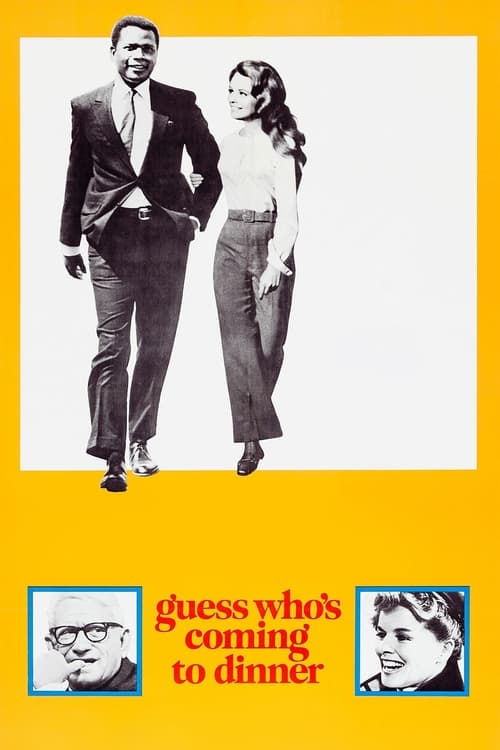
Guess Who's Coming to Dinner (1967)
Directed by Stanley Kramer
No · Based
How we score movies →Consciousness Markers
The film directly addresses racial prejudice and interracial marriage, which was radical for 1967. However, it frames racial acceptance as contingent on Black exceptionalism rather than on fundamental human equality.
Sidney Poitier is a major star and the film centers on his character, but he is cast as a paragon of respectability rather than a complex human being. His Blackness is presented as something to be overcome through exceptional achievement.
The film contains preachy moments where characters articulate progressive positions on race, particularly in confrontations between the parents and their daughter. The dialogue sometimes prioritizes message delivery over naturalistic conversation.
The female characters exist primarily to react to the male characters' choices. Katharine Houghton's character has agency in choosing her partner, but the narrative does not explore her perspective with depth.
No LGBTQ+ themes or representation in the film.
No climate themes present in the film.
The film contains no critique of capitalism or economic systems. Dr. Prentice's professional success is presented as unambiguously positive.
Body positivity is not a concern of the film.
No representation of neurodivergence in the film.
The film does not engage in revisionist historical narratives.


Synopsis
A couple's attitudes are challenged when their daughter brings home a fiancé who is black.
Why it received this score
Stanley Kramer's "Guess Who's Coming to Dinner" occupies a curious position in the history of American cinema: it is simultaneously a film of genuine moral seriousness about racial integration and interracial marriage, and yet a text that reveals the particular blindnesses of mid-century liberal sentiment. The film's central preoccupation, that a Black man of exceptional accomplishment and refinement might be acceptable to white parents, does represent a challenge to prevailing racism of the era. Spencer Tracy and Katharine Hepburn's characters must confront their own prejudices, and the narrative does not let them off easily.
However, the film's progressive posture is constrained by its implicit logic: integration and acceptance become permissible only insofar as the Black character (Poitier's Dr. Prentice) is extraordinarily accomplished, unfailingly articulate, and non-threatening in every conceivable way. The film asks the audience to accept interracial marriage not on grounds of human equality, but on grounds of Black exceptionalism. The narrative strategy suggests that racism might be overcome through appeals to elite status and respectability rather than through fundamental challenges to racial hierarchy. In this sense, the film embodies a particular species of liberal accommodation that does not demand systemic change, only individual moral growth among well-meaning people.
The film also centers white anxiety and white emotional labor around racial progress, making the white family's journey of acceptance the true dramatic arc. The Black characters, including Beah Richards in a luminous supporting role, are presented primarily as catalysts for white moral development rather than as subjects with their own interior lives and stakes in the outcome. This is not a film that imagines a truly multiracial America; it is a film that imagines white America grudgingly making room.
Analysis generated by our Consciousness Algorithm
Critic Reviews
“It would be easy to tear the plot to shreds and catch Kramer in the act of copping out. But why? On its own terms, this film is a joy to see, an evening of superb entertainment.”
“Guess Who’s Coming to Dinner is an outstanding Stanley Kramer production, superior in almost every imaginable way, which examines its subject matter with perception, depth, insight, humor and feeling.”
“A most delightfully acted and gracefully entertaining film, fashioned much in the manner of a stage drawing-room comedy, that seems to be about something much more serious and challenging than it actually is.”
“Dismal Stanley Kramer morality play about a middle-class couple facing the prospect of their daughter's marriage to a black man (Sidney Poitier). A disaster on all counts.”