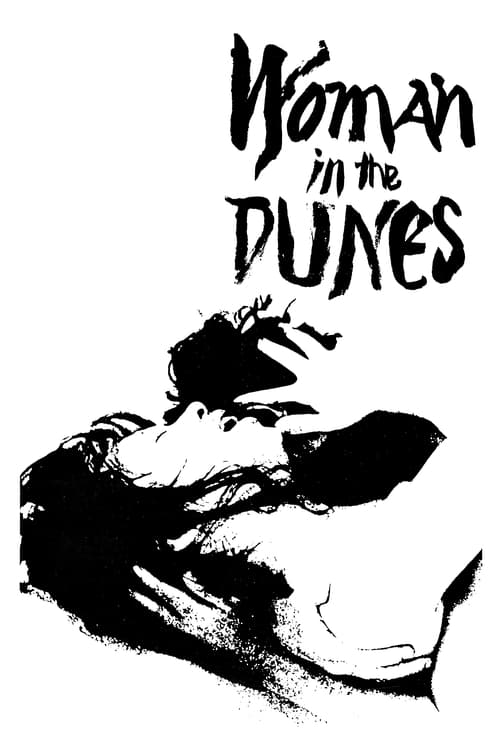
Woman in the Dunes (1964)
Directed by Hiroshi Teshigahara
No — Woman in the Dunes is not woke, scoring 0 out of 100 on our wokeness meter.
A schoolteacher with a butterfly net and a mild contempt for his hosts misses the last bus out of a coastal village.
Consciousness Markers
The cast is entirely Japanese, which is appropriate for a Japanese film but reflects no modern diversity-casting agenda.
No LGBTQ+ themes or characters.
The widow is a victim of feudal exploitation, not a vehicle for feminist empowerment; the film's gender dynamics are existential, not ideological.
No engagement with racial politics or identity.
Sand and water scarcity are metaphysical and material conditions, not a climate-change parable.
The black-market sand trade and forced labor are elements of the allegory, not a critique of capitalism in the modern woke sense.
No body-positivity themes.
The entomologist's obsession is a character trait, not a neurodivergence narrative.
No historical revisionism.
The film is ambiguous and allegorical, not preachy or didactic.
Why it received this score
A schoolteacher with a butterfly net and a mild contempt for his hosts misses the last bus out of a coastal village. The locals offer him a night's lodging at the bottom of a sand pit. In the morning the rope ladder is gone. Hiroshi Teshigahara's 1964 film, adapted by Kobo Abe from his own novel, follows this entomologist through seven years of shoveling, plotting, failing, and finally settling into a routine he never chose. It is austere, black and white, and widely regarded as one of the finest things Japanese cinema has produced. None of that is in dispute here.
What interests this department is the film's relationship to contemporary social consciousness, and the answer is a courteous nothing. The cast is entirely Japanese, which suits a Japanese film and advances no casting agenda. The widow is a slave of the village's cement trade, not a symbol of female liberation; her suffering is economic and existential, and she never once delivers a speech about it. The sand is sand. The water shortage is a matter of survival, not a climate parable. The black-market trade in inferior sand indicts a village, not an economic system, and the film has no interest in indicting anything. There is no body politics, no neurodivergence framing for the man's beetle obsession, no revision of the historical record, and no lecture. Teshigahara trusts the image of a bucket of sand going up a rope.
The final act finds our entomologist discovering capillary action, a way to draw water from damp sand, and the discovery quietly domesticates him. Offered his freedom, he chooses the pit. A police report notes he has been missing for seven years. The film ends there, offering no instruction on how to feel. We are left with the sand, the rope, and the sound of Takemitsu's score scraping against both. Sixty years on, it remains a hard film to recruit for any cause. That is its integrity, and it is also why it will never be drafted into anyone's curriculum of improvement.
Analysis generated by our Consciousness Algorithm


Synopsis
A vacationing entomologist suffers extreme physical and psychological trauma after being taken captive by the residents of a poor seaside village and made to live with a woman whose life task is shoveling sand for them.
Questions about Woman in the Dunes
Is Woman in the Dunes woke?
No — Woman in the Dunes is not woke, scoring 0 out of 100 on our wokeness meter. That earns it a verdict of Ultra Based.
Does Woman in the Dunes have any woke elements?
No. All 10 markers score zero.
How does Woman in the Dunes compare to other 1964 movies?
It ranks #12 of the 17 films from 1964 we've scored; their average is 5. The wokest is Mary Poppins (17).
How is the Woke Score calculated?
An AI-assisted process researches the film and its reception, scores it 0–100 on ten markers, then combines those into one 0–100 Woke Score. It measures a specific set of 2020s cultural themes, not film quality.