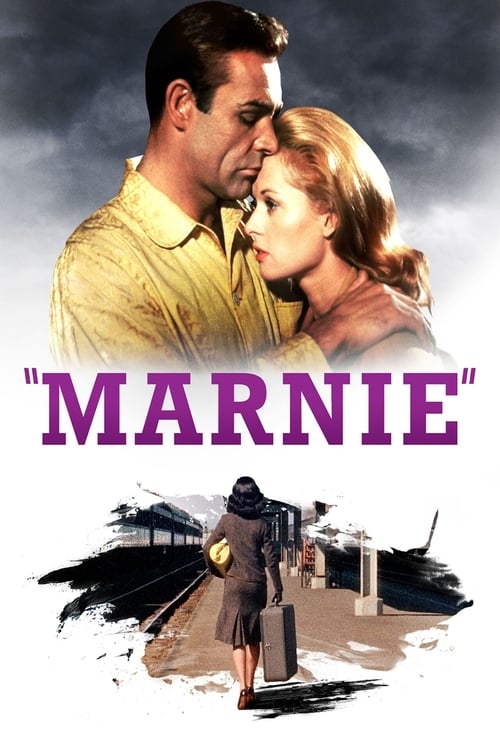
Marnie (1964)
Directed by Alfred Hitchcock
No · Ultra Based
How we score movies →Consciousness Markers
Substantial engagement with psychological trauma, compulsive behavior, and mental health dysfunction, though framed through outdated Freudian psychoanalysis rather than contemporary neurodivergence discourse.
Female protagonist with agency and psychological depth, yet the narrative centers on male coercion and control. Feminist scholars read it as dramatizing misogyny rather than critiquing it.
Tippi Hedren leads, but the cast is entirely white and reflects no meaningful diversity consciousness. A product of 1964 Hollywood without contemporary representation sensibilities.
Marnie's thievery is portrayed as a psychological symptom rather than social critique. No meaningful anticapitalist messaging or consciousness.
Psychoanalytic dialogue is integrated into the narrative rather than delivered as preachy lectures. Minimal preachiness by modern standards.
No LGBTQ+ themes, characters, or content present in the film.
Released in 1964 with no engagement with racial themes or consciousness. The entire cast is white.
No environmental or climate-related themes whatsoever in this psychological thriller.
No body positivity themes or engagement with body image issues in the film.
No historical revisionism or reframing of historical events present in the film.


Synopsis
Marnie is a beautiful but emotionally withdrawn thief, stealing from employers before disappearing under new identities. When her new boss, Mark Rutland, discovers her secret, his fascination turns to obsession, and he blackmails her into marriage, convinced he can cure her. But as he probes deeper into Marnie's fractured mind, long-buried fears and compulsions begin to surface.
Why it received this score
Marnie stands as a curious artifact of its moment, a 1964 Hitchcock thriller that has accumulated decades of feminist film scholarship without having been constructed with any particular social consciousness in mind. The film presents a female protagonist of unusual complexity: Marnie is autonomous, intelligent, and criminally competent, yet the narrative architecture places her under the control of Sean Connery's Mark Rutland, who discovers her compulsive thievery and responds by blackmailing her into marriage under the premise that he can psychoanalyze and cure her psychological dysfunction. The film's engagement with trauma and compulsive behavior operates entirely within the frameworks of mid-century Freudian psychology, which we now understand to be deeply flawed. What emerges from the narrative is not a critique of masculine control but rather its dramatization as romantic intervention.
The film contains no meaningful representation by contemporary standards, no LGBTQ+ content, no racial consciousness whatsoever, and no environmental or anticapitalist messaging. Its only substantial engagement with progressive themes is tangential: the exploration of psychological dysfunction and trauma, though filtered through outdated psychoanalytic language and frameworks. The female lead has agency within the story, yet that agency is ultimately subordinated to the male protagonist's therapeutic ambitions. Marnie has become a text of interest to feminist scholars precisely because it so clearly dramatizes the misogynistic sexual politics of its era, making those politics visible rather than invisible.
The film's legacy is instructive precisely because it demonstrates the distance between a genuinely complex female character and progressive sensibility. Hitchcock was interested in psychology, obsession, and female interiority, but he was not interested in questioning the patriarchal structures within which those themes operate. The result is a film that invites retrospective analysis but cannot claim to have been made with modern social awareness. It remains a masterwork of psychological thriller construction, but one that belongs firmly to its moment.
Analysis generated by our Consciousness Algorithm
Critic Reviews
“The mise-en-scene tends toward a painterly abstraction, as Hitchcock employs powerful masses, blank colors, and studiously unreal, spatially distorted settings. Theme and technique meet on the highest level of film art. ”
“For my money, this Freudian tale about a beautiful kleptomaniac and liar is one of Hitchcock's best accomplishments, certainly one of his most perverse.”
“The film’s themes, along with its avalanche of formal signifiers, are all fused together in the magisterial hunting sequence.”