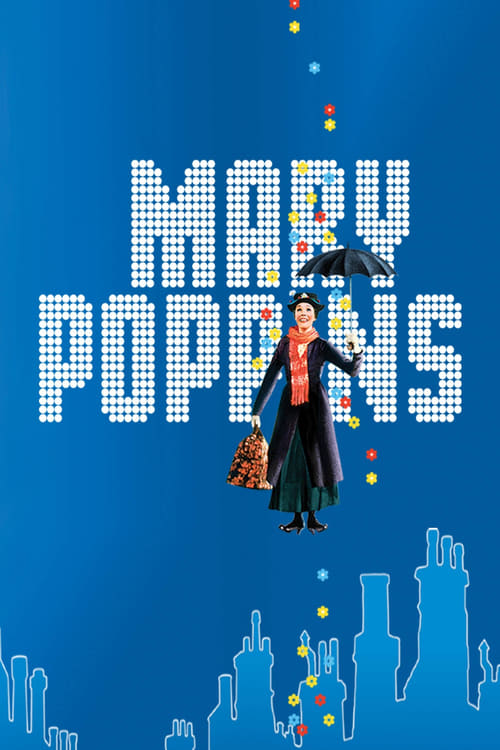
Mary Poppins (1964)
Directed by Robert Stevenson
No — Mary Poppins is not woke, scoring 17 out of 100 on our wokeness meter.
A curious artifact from 1964, this film arrives bearing a suffrage sash and very little else in the way of contemporary social programming.
Consciousness Markers
Mrs. Banks is a suffragette who returns from a Votes for Women rally and sings 'Sister Suffragette,' giving the film a genuine first-wave feminist thread, though she is also depicted as distracted and subservient to her husband, softening the message.
The Dawes bank is portrayed as cold and greedy, with Mr. Dawes Sr. snatching a child's tuppence and provoking a bank run, and Mr. Banks' soulless banking career is contrasted unfavorably with family joy — a mild anti-finance sentiment rather than a systemic critique.
The film relocates the story to the Edwardian era and inserts a suffragette subplot absent from P. L. Travers's books, a light rewriting of the source's setting and politics for thematic convenience.
The 'Sister Suffragette' number carries a faint didactic streak, but the film is overwhelmingly a lighthearted musical comedy that preaches family togetherness rather than social doctrine.
The entire principal cast is white British actors, cast in 1964 without any consciousness of diverse representation. No evidence of representation-driven casting.
No LGBTQ+ characters, themes, or subtext of any kind appear in the film.
No engagement with race or racial themes; the Edwardian London setting is entirely white.
No environmental or climate themes whatsoever.
Uncle Albert's floating from laughter is a comic magical conceit, not a body-positivity statement.
No neurodivergent characters or themes are present.
Why it received this score
A curious artifact from 1964, this film arrives bearing a suffrage sash and very little else in the way of contemporary social programming. Mrs. Banks returns from a rally singing of her sisters and their cause, a genuine first-wave feminist gesture that the film then gently defuses by making her scattered, deferential, and largely absent from her children's lives. The gesture counts for something. It counts for about as much as a tuppence in a bank vault. The rest of Edwardian London is uniformly white, unbothered by questions of race, and entirely uninterested in the climate, the body, or the wiring of the human mind. Uncle Albert floats because he laughs, not because the film has opinions about his physique.
The film's mild economic grumbling deserves a mention. The Dawes bank is cold, greedy, and staffed by men who snatch coins from children, and the resulting run on the institution plays as a small, satisfying rebuke to finance. This is not a systemic critique. It is the pleasure of watching a stern old man get his comeuppance, which is a much older and more reliable entertainment. The screenplay also relocates the source novels to the Edwardian era and invents the suffragette thread wholesale, a light rewrite of the original's setting and politics for the convenience of a good song.
As for sermonizing, the film has one faint streak of it in the suffrage number and then settles into the gentler preaching of family togetherness, which is the sort of lesson no one has ever objected to. The result is a charming, beautifully engineered piece of studio craft with a single progressive ornament pinned to its lapel. We have seen far more insistent musicals. We have also seen worse ones. The umbrella still works. The classification, however, is a modest one.
Analysis generated by our Consciousness Algorithm
Part of


Synopsis
In turn of the century London, a magical nanny employs music and adventure to help two neglected children become closer to their father.
Questions about Mary Poppins
Is Mary Poppins woke?
No — Mary Poppins is not woke, scoring 17 out of 100 on our wokeness meter. That earns it a verdict of Ultra Based.
Does Mary Poppins have any woke elements?
1 of the 10 markers register at 30 or above, led by Feminist Agenda (35). On Feminist Agenda: Mrs.
How does Mary Poppins compare to other 1964 movies?
It is the wokest of the 17 films from 1964 we've scored; their average is 5.
How is the Woke Score calculated?
An AI-assisted process researches the film and its reception, scores it 0–100 on ten markers, then combines those into one 0–100 Woke Score. It measures a specific set of 2020s cultural themes, not film quality.