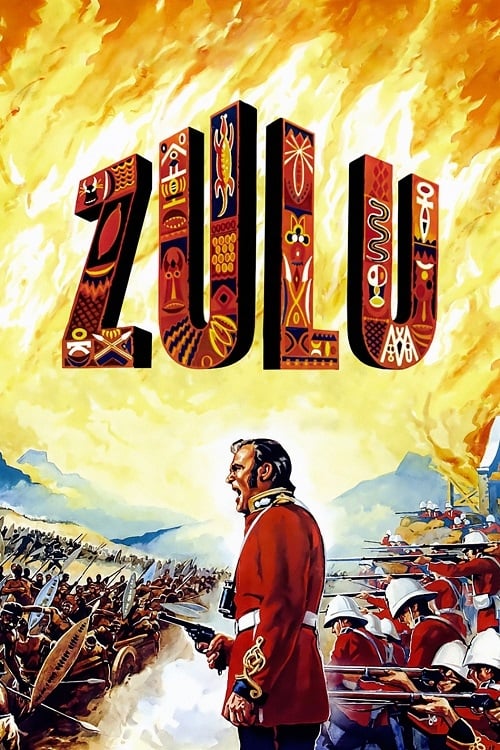
Zulu (1964)
Directed by Cy Endfield
No — Zulu is not woke, scoring 9 out of 100 on our wokeness meter.
Zulu is a 1964 British imperial war spectacle, and it behaves exactly like one.
Consciousness Markers
The production cast actual Zulu warriors and even Zulu chief Mangosuthu Buthelezi as King Cetshwayo, giving the film authentic on-screen presence, but this is period-appropriate colonial-era casting rather than a modern representation agenda.
The film grants the Zulu warriors a measure of dignity through their lament and final salute to the defenders, but it remains a British imperial adventure that frames the enemy as 'tribal hordes' rather than engaging modern racial consciousness.
The film is a straightforward action-and-siege spectacle with only Richard Burton's patriotic narration offering any didactic framing; it does not lecture the audience on social issues.
No LGBTQ+ characters, themes, or subtext appear anywhere in this 1964 imperial war drama.
The lone significant female character, Margareta Witt, exists only as a missionary's daughter and a plot device; there is no feminist framing whatsoever.
No environmental or climate themes are present in this 19th-century battle narrative.
The film celebrates British military discipline and imperial duty; there is no critique of capitalism or wealth.
No body-positivity themes or messaging appear in the film.
Sergeant Maxfield is depicted as 'mentally broken' from battle trauma, but this is a period portrayal of shell-shock, not a modern neurodivergence narrative.
The film romanticizes and fictionalizes the battle (Welsh regiment, Hook's character) but does so in a traditional imperial-heroic mode, not through a modern progressive reinterpretation of history.
Why it received this score
Zulu is a 1964 British imperial war spectacle, and it behaves exactly like one. The film reconstructs the defence of Rorke's Drift with admirable craft, a stirring score, and a cast that includes actual Zulu warriors and Chief Mangosuthu Buthelezi as King Cetshwayo. That casting gives the production an authenticity worth acknowledging, though it reflects period filmmaking practice, not a modern representation agenda. Elsewhere the cupboard is bare. The film has no LGBTQ content, no feminist argument, no environmental conscience, no economic critique, no body-positivity message, and no neurodivergence narrative. Sergeant Maxfield's shattered nerves are a period depiction of shell-shock, not a contemporary statement about mental difference. The lone woman, Margareta Witt, functions as a missionary's daughter and a plot device. She is not there to advance a gender politics.
The film's racial consciousness is modest and complicated. The Zulu warriors are granted dignity in their lament for the dead and their final salute to the defenders. That gesture lands. Yet the larger frame remains a British imperial adventure, with the enemy described as tribal hordes and the narrative organized around the discipline and courage of the garrison. History is romanticized throughout: the 24th is presented as Welsh, Private Hook is reinvented as a rogue who redeems himself, and no battlefield singing contest occurred. This is traditional heroic fiction, not a progressive reinterpretation of empire. The lecture energy is faint. Richard Burton's narration supplies patriotic context, and the film prefers siege action to sermonizing.
The result, then, is a well-mounted relic. It is not hostile to social consciousness; it simply predates the vocabulary. The representation casting deserves a nod, and the Zulu material has moments of grace, but the film remains an imperial boys' own adventure with a stirring finale. Classify it as a historical curiosity, competently staged and culturally distant.
Analysis generated by our Consciousness Algorithm


Synopsis
In 1879, during the Anglo-Zulu War, man-of-the-people Lt. Chard and snooty Lt. Bromhead are in charge of defending the isolated and vastly outnumbered Natal outpost of Rorke's Drift from tribal hordes.
Questions about Zulu
Is Zulu woke?
No — Zulu is not woke, scoring 9 out of 100 on our wokeness meter. That earns it a verdict of Ultra Based.
Does Zulu have any woke elements?
Very few. None of the 10 markers reaches 30, the level where a marker counts as present; the highest is Representation Casting at 20.
How does Zulu compare to other 1964 movies?
It ranks #3 of the 17 films from 1964 we've scored; their average is 5. The wokest is Mary Poppins (17).
How is the Woke Score calculated?
An AI-assisted process researches the film and its reception, scores it 0–100 on ten markers, then combines those into one 0–100 Woke Score. It measures a specific set of 2020s cultural themes, not film quality.