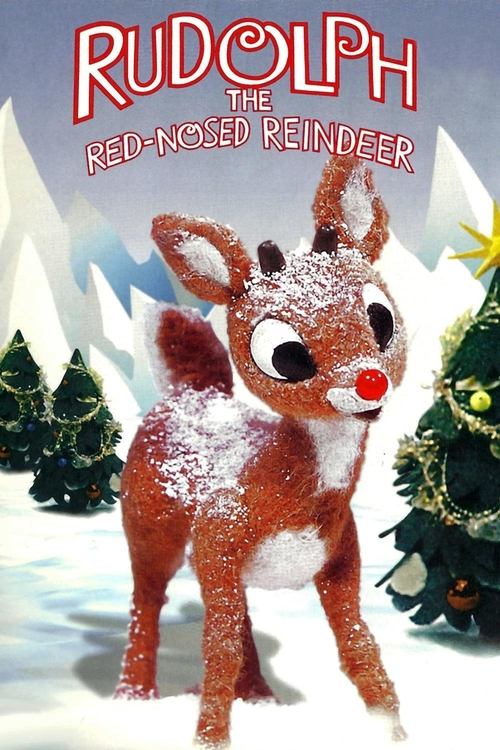
Rudolph the Red-Nosed Reindeer (1964)
Directed by Larry Roemer
No — Rudolph the Red-Nosed Reindeer is not woke, scoring 14 out of 100 on our wokeness meter.
First broadcast in 1964 and rerun with a persistence that borders on geological, this Rankin/Bass stop-motion special remains a curious artifact of mid-century American sentiment.
Consciousness Markers
The special's central theme is the acceptance of physical difference — Rudolph's glowing nose, the misfit toys — though framed as a gentle fable of belonging rather than modern body-positivity discourse.
A mild moral about accepting those who are different is delivered through song and story rather than sermon, keeping the preachiness minimal.
The voice cast is a small pool of Canadian radio actors; no deliberate diverse or inclusive casting is present or remarked upon.
No LGBTQ+ characters, themes, or subtext of any kind appear in this 1964 special.
Clarice and Mrs. Donner are peripheral figures; the narrative centers male characters and offers no feminist critique or agenda.
The story contains no racial themes, commentary, or consciousness whatsoever.
A Christmas Eve snowstorm threatens the sleigh ride, but this is weather-as-plot-device, not a climate crusade.
Yukon Cornelius prospecting for silver and gold and Santa's workshop are played entirely straight; no critique of capital or labor exploitation is intended.
Hermey's desire to be a dentist rather than a toy-maker is nonconformity, not a depiction of neurodivergence.
There is no historical subject matter to revise; the tale is pure fantasy.
Why it received this score
First broadcast in 1964 and rerun with a persistence that borders on geological, this Rankin/Bass stop-motion special remains a curious artifact of mid-century American sentiment. A red-nosed fawn is mocked, expelled from the reindeer games, and eventually vindicated when his defect proves useful on a foggy Christmas Eve. Sam the Snowman narrates with the avuncular patience of a man who has told this story many times and intends to tell it again. The voice cast, drawn largely from a Toronto radio pool, performs with a workmanlike charm. The puppets cost five thousand dollars apiece, a detail we record here for no reason other than our own satisfaction.
The special's engine is the acceptance of physical difference. Rudolph's nose glows, the misfit toys are unwanted, Hermey prefers dentistry to toy-making, and the resolution insists that these irregularities have a place in the world. We score this as a mild instance of the body-positive impulse, though the framing is a gentle fable of belonging, not a modern discourse on self-image. The misfits are welcomed because they become useful, which is a somewhat transactional species of tolerance, but the special is not interested in interrogating its own logic. It simply wants everyone at the party.
On the matter of sermonizing, the special keeps its instruction light. The moral arrives through song and plot, and the whole affair runs on charm instead of reproach. There is no agenda here beyond a wish that children be kind to one another, which is a modest ambition and, in this case, a durable one. We note the absence of nearly every other contemporary marker without surprise. This is a 1964 television special about a reindeer, and it behaves accordingly.
Analysis generated by our Consciousness Algorithm
Synopsis
Sam the snowman tells us the story of a young red-nosed reindeer who, after being ousted from the reindeer games because of his glowing nose, teams up with Hermey, an elf who wants to be a dentist, and Yukon Cornelius, the prospector. They run into the Abominable Snowman and find a whole island of misfit toys. Rudolph vows to see if he can get Santa to help the toys, and he goes back to the North Pole on Christmas Eve. But Santa's sleigh is fogged in. But when Santa looks over Rudolph, he gets a very bright idea...
Questions about Rudolph the Red-Nosed Reindeer
Is Rudolph the Red-Nosed Reindeer woke?
No — Rudolph the Red-Nosed Reindeer is not woke, scoring 14 out of 100 on our wokeness meter. That earns it a verdict of Ultra Based.
Does Rudolph the Red-Nosed Reindeer have any woke elements?
Very few. None of the 10 markers reaches 30, the level where a marker counts as present; the highest is Body Positivity at 20.
How does Rudolph the Red-Nosed Reindeer compare to other 1964 movies?
It ranks #2 of the 17 films from 1964 we've scored; their average is 5. The wokest is Mary Poppins (17).
How is the Woke Score calculated?
An AI-assisted process researches the film and its reception, scores it 0–100 on ten markers, then combines those into one 0–100 Woke Score. It measures a specific set of 2020s cultural themes, not film quality.