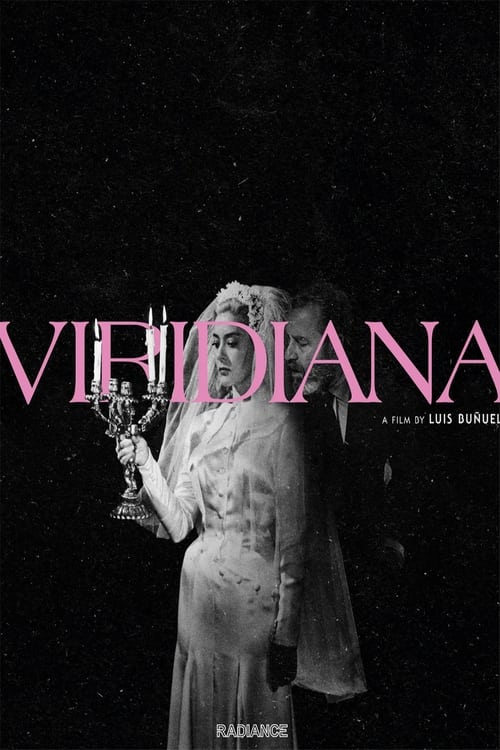
Viridiana (1962)
Directed by Luis Buñuel
No — Viridiana is not woke, scoring 0 out of 100 on our wokeness meter.
The cataloguing impulse requires an assessment of Luis Buñuel's Viridiana, a 1961 Spanish-Mexican production that won the Palme d'Or and was promptly denounced by the Holy See, banned in Spain, and nearly burned at the behest of the Franco government.
Consciousness Markers
The cast is entirely Spanish and Mexican, which is natural for the film's setting and production; there is no modern diversity casting agenda or commentary on representation.
No LGBTQ+ characters, themes, or subtext are present in the film.
While the protagonist is a woman oppressed by patriarchal figures, the film's surrealist and misanthropic treatment does not advance a modern feminist agenda.
The film does not engage with racial identity, racism, or racial justice themes.
There is no environmental or climate-related content in the film.
The film critiques charity and bourgeois hypocrisy, but it does not present a modern anti-capitalist or eat-the-rich message.
No body positivity themes or body-diverse representation are present.
No neurodivergent characters or themes are depicted.
The film is a fictional adaptation of a novel, not a historical revisionist work.
The film's anti-clerical satire is artistic and surreal rather than a modern social-justice lecture.
Why it received this score
The cataloguing impulse requires an assessment of Luis Buñuel's Viridiana, a 1961 Spanish-Mexican production that won the Palme d'Or and was promptly denounced by the Holy See, banned in Spain, and nearly burned at the behest of the Franco government. The original negative survived only because a foreign lab happened to hold it. This is a film with enemies, and the enemies were correct about what it was doing.
What it does is mock the Church, charity, and the pieties of the pious with a cruelty that feels geological in its age. Viridiana, a novice, is tricked, drugged, and nearly violated by her uncle, who then hangs himself and leaves his estate to her and his illegitimate son. She responds by gathering the local beggars into the mansion, where they stage a Last Supper photograph and descend into a drunken orgy, and the surviving cut implies a threesome at the end. None of this is arranged to instruct an audience in contemporary virtue. The film holds no interest in representation for its own sake, no racial argument, no environmental concern, no body-diverse casting, no identity discourse. Its women suffer, but the suffering is Buñuel's cosmic misanthropy at work, applied evenly to everyone in frame. The vagrants are grotesques, not heroes. Jorge is a lecher, not a liberation. Aunt and uncle alike are fools.
A lesson sits embedded here, ancient and sour: charity is a trap, and the charitable are dupes. The film sermonizes about original sin, not social justice. The ledger reads zero across every category we are obliged to track, and that verdict is not a criticism. The blasphemy is genuine, and it is art. Six decades have not softened it, and no era has managed to claim it for its own purposes.
Analysis generated by our Consciousness Algorithm


Synopsis
Viridiana is preparing to start her life as a nun when she is sent, somewhat unwillingly, to visit her aging uncle, Don Jaime. He supports her; but the two have met only once. Jaime thinks Viridiana resembles his dead wife. Viridiana has secretly despised this man all her life and finds her worst fears proven when Jaime grows determined to seduce his pure niece. Viridiana becomes undone as her uncle upends the plans she had made to join the convent.
Questions about Viridiana
Is Viridiana woke?
No — Viridiana is not woke, scoring 0 out of 100 on our wokeness meter. That earns it a verdict of Ultra Based.
Does Viridiana have any woke elements?
No. All 10 markers score zero.
How does Viridiana compare to other 1962 movies?
It ranks #20 of the 23 films from 1962 we've scored; their average is 9. The wokest is The Exterminating Angel (47).
How is the Woke Score calculated?
An AI-assisted process researches the film and its reception, scores it 0–100 on ten markers, then combines those into one 0–100 Woke Score. It measures a specific set of 2020s cultural themes, not film quality.