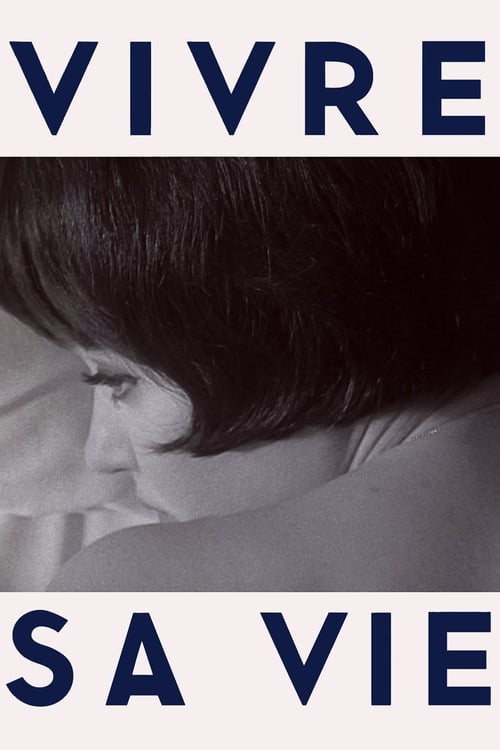
Vivre Sa Vie (1962)
Directed by Jean-Luc Godard
No — Vivre Sa Vie is not woke, scoring 16 out of 100 on our wokeness meter.
Jean-Luc Godard's Vivre sa vie arrives in twelve tableaux, each announced by an intertitle, and follows Nana, played by Anna Karina, from a record shop counter to the sidewalks of Paris and finally to a pavement where she dies in a gunfight over her own sale.
Consciousness Markers
The film centers on a woman's life and exploitation, but it is an existential character study rather than a modern feminist polemic.
Nana's economic desperation and the consumerist Parisian milieu suggest a critique of capitalist precarity, though it is not an explicit political tract.
Godard's intertitles, philosophical dialogue, and Brechtian alienation effects give the film an essayistic, instructional quality, but not a social-justice lecture.
The cast is entirely white French actors; no meaningful diversity in race, ethnicity, or other underrepresented identities is present.
No LGBTQ+ themes, characters, or subtext are present in the film.
The film does not engage with racial identity, racism, or racial justice themes.
No environmental or climate-related themes appear in the film.
The film does not promote body positivity or challenge conventional beauty standards as a theme.
No neurodivergent characters or themes are present.
The film is a fictional contemporary drama and does not revise historical narratives.
Why it received this score
Jean-Luc Godard's Vivre sa vie arrives in twelve tableaux, each announced by an intertitle, and follows Nana, played by Anna Karina, from a record shop counter to the sidewalks of Paris and finally to a pavement where she dies in a gunfight over her own sale. The film is a landmark of the French New Wave, praised by Susan Sontag in terms usually reserved for scripture, and it remains a severe and beautiful object. It is also, by any honest accounting, a film of 1962. Its concerns are existential, linguistic, and formal. The vocabulary of contemporary social consciousness is absent, and no amount of retrospective goodwill can install it there.
There are traces, and we should be precise about how faint they are. Nana's descent is driven by money: the refused loan, the unpaid rent, the landlady at the door. Godard photographs a Paris of neon, jukeboxes, pinball machines and advertising, and the implication is that a woman with no capital has few options and fewer advocates. That is a critique of economic precarity, delivered without a pamphlet. It is also a film about a woman, made with real attention to her interior life, and Karina's performance carries a dignity the script never argues for. None of this amounts to a modern feminist program. The camera watches Nana. It does not campaign for her.
The instruction is heavier. Intertitles announce what we are about to see, characters turn their backs to the lens, and a philosopher lectures Nana on the limits of language. Brecht is in the room, and so is the classroom. Yet the lesson concerns speech, will, and Montaigne, not society's failings, and the film never asks to be agreed with. It asks to be watched. This is a masterpiece of the old kind: formally radical, politically quiet, and unbothered by the categories we now bring to it. The classification is straightforward. The film earns its place in the canon on its own severe terms.
Analysis generated by our Consciousness Algorithm


Synopsis
Twelve episodic tales in the life of a Parisian woman and her slow descent into prostitution.
Questions about Vivre Sa Vie
Is Vivre Sa Vie woke?
No — Vivre Sa Vie is not woke, scoring 16 out of 100 on our wokeness meter. That earns it a verdict of Ultra Based.
Does Vivre Sa Vie have any woke elements?
Very few. None of the 10 markers reaches 30, the level where a marker counts as present; the highest is Feminist Agenda at 25.
How does Vivre Sa Vie compare to other 1962 movies?
It ranks #4 of the 23 films from 1962 we've scored; their average is 9. The wokest is The Exterminating Angel (47).
How is the Woke Score calculated?
An AI-assisted process researches the film and its reception, scores it 0–100 on ten markers, then combines those into one 0–100 Woke Score. It measures a specific set of 2020s cultural themes, not film quality.