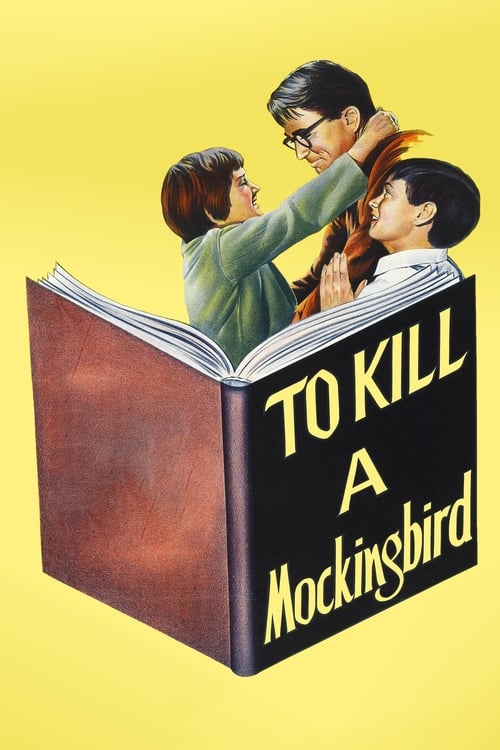
To Kill a Mockingbird (1962)
Directed by Robert Mulligan
No · Based
How we score movies →Consciousness Markers
The film explicitly addresses racism and injustice, but through a white savior narrative that centers white moral awakening rather than Black agency and experience.
Black actors appear in significant roles, but they function primarily as supporting characters in a narrative centered on white protagonists.
Atticus delivers moral arguments in the courtroom, but these are embedded within the narrative rather than functioning as preachy lectures.
Scout is portrayed as a tomboy who challenges gender norms to some degree, but the film does not engage with progressive feminist ideology.
Boo Radley's character could be interpreted as neurodivergent, but he is presented as an object of mystery and fear rather than positive representation.
The film is largely faithful to its historical setting and does not attempt revisionist reframing of the past.
No LGBTQ+ themes or representation present in the film.
No climate-related themes or environmental consciousness present.
No anti-capitalist or critique of economic systems present.
Body positivity is not a relevant concern in this narrative.


Synopsis
Scout Finch, 6, and her older brother Jem live in sleepy Maycomb, Alabama, spending much of their time with their friend Dill and spying on their reclusive and mysterious neighbor, Boo Radley. When Atticus, their widowed father and a respected lawyer, defends a black man named Tom Robinson against fabricated rape charges, the trial and tangent events expose the children to evils of racism and stereotyping.
Why it received this score
To Kill a Mockingbird is a film of undeniable moral seriousness, a courtroom drama that confronts racism and injustice with considerable gravity. The film was honored by the Library of Congress for its cultural and historical significance, and for good reason. It presents a direct indictment of racial prejudice in the American South, with Gregory Peck's Atticus Finch delivering passionate arguments for human dignity and equal justice. Yet we must distinguish between moral importance and the particular constellation of cultural markers that define contemporary progressive consciousness.
The film's narrative architecture reveals its limitations when examined through a modern lens. The story centers the moral awakening of white characters, particularly Atticus and his children, rather than centering the experiences and agency of Tom Robinson and the Black community of Maycomb. Tom Robinson exists largely as a vehicle for white empathy rather than as a fully realized protagonist of his own story. Scholars have observed that this framing, while well-intentioned, ultimately constrains our understanding of racism to what white viewers can comfortably process and learn from.
The absence of contemporary progressive markers is striking. There is no explicit engagement with systemic inequality, no interrogation of economic structures, no meaningful representation of LGBTQ+ identities or neurodivergence, and no particular emphasis on feminist consciousness. The film is a product of its era, faithful to its source material and committed to its moral message, but it operates within the humanist tradition rather than the identity-conscious framework that emerged decades later. This is not a failure, merely a historical fact.
Analysis generated by our Consciousness Algorithm
Critic Reviews
“To Kill A Mockingbird is a product of American realism, and it is a rare and worthy treasure.”
“To Kill a Mockingbird is a major film achievement, a significant, captivating and memorable picture that ranks with the best of recent years.”
“To Kill a Mockingbird is by no means as irreproachable as our memories would lead us to believe but it’s still a gripping yarn and well worth revisiting.”