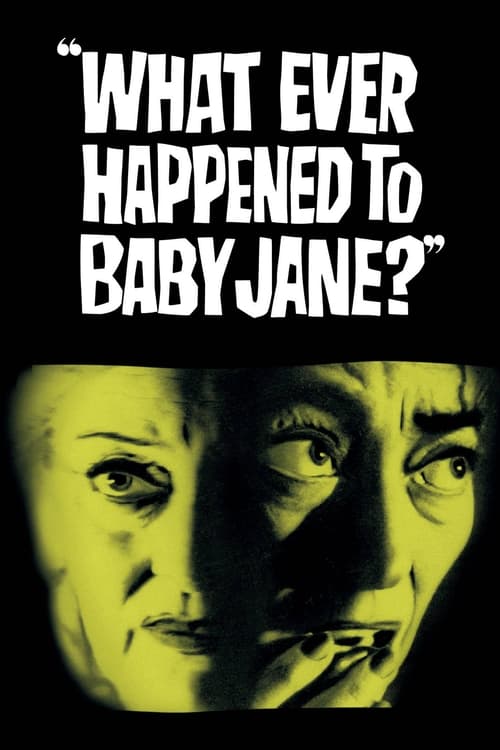
What Ever Happened to Baby Jane? (1962)
Directed by Robert Aldrich
No — What Ever Happened to Baby Jane? is not woke, scoring 13 out of 100 on our wokeness meter.
Robert Aldrich's 1962 picture arrives with a pedigree of suffering and a mansion full of dust, and it earns both.
Consciousness Markers
Both leads are women, and the film indicts Hollywood's discarding of aging actresses and the infantilizing machinery of child stardom, but its sympathies and its cruelty are distributed without any articulated political program.
A 1962 production headlined by two actresses over fifty, with an African-American supporting player (Maidie Norman's Elvira) given unusual assertiveness for the era; this is period-typical casting rather than a modern inclusion program.
There is glancing satire of the vaudeville and studio economy that manufactures a child into a product line of dolls and then discards her, but this is Gothic character motivation rather than an economic argument.
The final beach confession carries a whisper of thematic moralizing about wasted decades and manufactured guilt, but the film delivers this as a twist of pathos, never turning to address the audience.
Elvira is the household's sole clear-eyed moral observer and pays for it with a hammer to the skull, but the film never engages race as a subject; her race is unremarked upon and the role remains a domestic-servant position.
Jane's alcoholism, dissociation, and infantile regression are central to the plot, but they are framed as monstrous pathology in the hagsploitation tradition rather than as neurodivergent experience deserving accommodation.
No LGBTQ+ characters, themes, subtext, or coding of any kind in the narrative; the camp reception of the film came later from audiences, not from the text.
No environmental themes, imagery, or subtext whatsoever; the decaying mansion is a psychological symbol, not an ecological one.
Physical decline, disability, and grotesquerie are the film's instruments of horror, not objects of affirmation; Blanche's paraplegia is treated as vulnerability to be exploited.
The film is a fiction set against real Hollywood history without revising or reinterpreting any historical record; the vaudeville and studio past is atmosphere, not argument.
Why it received this score
Robert Aldrich's 1962 picture arrives with a pedigree of suffering and a mansion full of dust, and it earns both. Two actresses past fifty carry the whole contraption, which in that era counted as an act of nerve, and the film's real subject is the machinery that builds a child into a product line of dolls and then files her away. That complaint about the studio economy is present but glancing, a motive for Gothic cruelty instead of an argument about labor. The housekeeper Elvira, played by Maidie Norman, is granted a steadiness and a willingness to talk back that most domestic roles of the period were denied. She is also the only person in the house who sees clearly, and the film rewards her with a hammer to the skull. Her race goes unmentioned throughout, and the part remains a servant's part.
The picture declines to make much of a case about anything else. There is no subtext of same-sex desire in the text itself; the camp devotion the film later attracted came from audiences and from decades of repertory screenings, not from anything on screen. The environment is absent as a concern, and the crumbling mansion functions as a psychological weather system instead of an ecological warning. Physical decline is the film's chief instrument of terror. Blanche's wheelchair is a device for trapping her, not for dignifying her, and Jane's alcoholism and infantile regression are staged as monstrosity, the hagsploitation tradition doing what it does.
Where the film comes closest to sermonizing is its last scene, when Blanche confesses on the sand that she staged her own accident, and Jane asks whether they might have been friends. It is a twist of pathos, delivered to Blanche and to us by accident, never a lecture aimed at the audience. The decades of manufactured guilt land as tragedy, not as instruction. Aldrich keeps his camera on two ruined women and lets the moral stay where it belongs, in the wreckage. The result is a nasty, elegant machine that indicts an industry and a family without ever pausing to explain itself.
Analysis generated by our Consciousness Algorithm


Synopsis
A former vaudeville child star viciously torments her paraplegic sister in their decaying Hollywood mansion.
Questions about What Ever Happened to Baby Jane?
Is What Ever Happened to Baby Jane? woke?
No — What Ever Happened to Baby Jane? is not woke, scoring 13 out of 100 on our wokeness meter. That earns it a verdict of Ultra Based.
Does What Ever Happened to Baby Jane? have any woke elements?
1 of the 10 markers register at 30 or above, led by Feminist Agenda (30). On Feminist Agenda: Both leads are women, and the film indicts Hollywood's discarding of aging actresses and the infantilizing machinery of child stardom, but its sympathies and its cruelty are distributed without any articulated political program.
How does What Ever Happened to Baby Jane? compare to other 1962 movies?
It ranks #5 of the 23 films from 1962 we've scored; their average is 9. The wokest is The Exterminating Angel (47).
How is the Woke Score calculated?
An AI-assisted process researches the film and its reception, scores it 0–100 on ten markers, then combines those into one 0–100 Woke Score. It measures a specific set of 2020s cultural themes, not film quality.