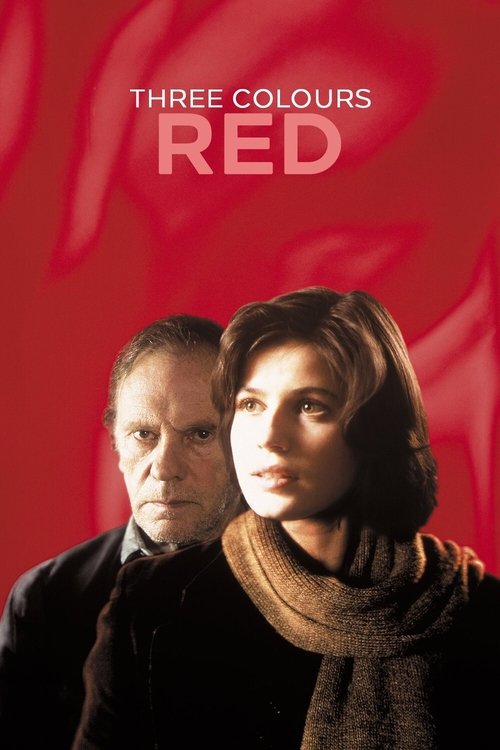
Three Colors: Red (1994)
Directed by Krzysztof Kieślowski
No — Three Colors: Red is not woke, scoring 3 out of 100 on our wokeness meter.
Krzysztof Kieślowski's Three Colours: Red arrives from 1994, which is to say from a lost civilization in which a filmmaker could examine fraternity, destiny, and the quiet machinery of human connection without first submitting a compliance form.
Consciousness Markers
One brief subplot involves a neighbor whose male lover calls him, later revealed to be an affair against a straight marriage; it is a passing plot mechanism rather than an LGBTQ+ theme.
Valentine is a caring, central female figure who rebuffs a photographer's advances, but the film has no feminist thesis or gendered critique.
Kieślowski explores law, ethics, and interconnectedness, but through imagery, eavesdropping, and quiet symbolism rather than any preachy didacticism.
The cast is entirely white European (Irène Jacob, Jean-Louis Trintignant and a French/Swiss supporting ensemble); no deliberate diversity casting exists in this 1994 production.
No engagement with race as a subject or theme anywhere in the film.
No environmental or climate subject matter appears at all.
The modeling/advertising backdrop is atmospheric only; the film mounts no critique of capital or class.
No body image, body acceptance, or related themes present.
No neurodivergence or neurodiversity themes are present.
The film is a fictional meditation on fraternity and destiny; it makes no historical revisionist claims.
Why it received this score
Krzysztof Kieślowski's Three Colours: Red arrives from 1994, which is to say from a lost civilization in which a filmmaker could examine fraternity, destiny, and the quiet machinery of human connection without first submitting a compliance form. The film follows Valentine, a Geneva model and student, who runs over a pregnant dog and thereby stumbles into the orbit of a retired judge who spends his evenings eavesdropping on his neighbors' telephone calls. It is a meditation on law and ethics, on surveillance and solitude, and it was nominated for three Academy Awards without winning any of them. The palette is red, the score is Bolero, and the mood is European melancholy of the highest order.
On the matter of contemporary social consciousness, the cupboard is bare, and we report this without judgment. The cast is entirely white and European, and no effort is made to correct this. Race never enters the frame as a subject. Neither does the climate, the body, the neurotype, or the crimes of capital, though the film lingers in a modeling studio and could have summoned a lecture about advertising had it possessed the appetite. There is one passing subplot in which a neighbor is heard conducting an affair with a male lover, a detail deployed as a plot mechanism and then abandoned. Valentine is caring and central and rebuffs a photographer's advances, which is pleasant but constitutes no thesis. The judge reflects on the philosophy of law, yet he does so through broken glass and telephone wires, never through a monologue delivered to the audience.
What remains is craft, and craft of an unfashionable sort. The film is a mystery about interconnectedness that resolves into a ferry disaster and seven survivors, which is either profound or merely tidy depending on one's patience for European art cinema. We classify it as a relic of an era when a director could ask what we owe one another and trust the audience to answer privately, without a lecture, without a rubric, without anyone being told what to think. It is a masterpiece, allegedly. We have no markers to file.
Analysis generated by our Consciousness Algorithm


Synopsis
Part-time model Valentine unexpectedly befriends a retired judge after she runs over his dog. At first, the grumpy man shows no concern about the dog, and Valentine decides to keep it. But the two form a bond when she returns to his house and catches him listening to his neighbors’ phone calls.
Questions about Three Colors: Red
Is Three Colors: Red woke?
No — Three Colors: Red is not woke, scoring 3 out of 100 on our wokeness meter. That earns it a verdict of Ultra Based.
Does Three Colors: Red have any woke elements?
Very few. None of the 10 markers reaches 30, the level where a marker counts as present; the highest is LGBTQ+ Themes at 8.
How does Three Colors: Red compare to other 1994 movies?
It ranks #71 of the 86 films from 1994 we've scored; their average is 10. The wokest is On Deadly Ground (75).
Is Three Colors: Red the most woke Three Colors movie?
No. It ranks #3 of the 3 Three Colors films we've scored; the wokest is Three Colors: Blue (8).