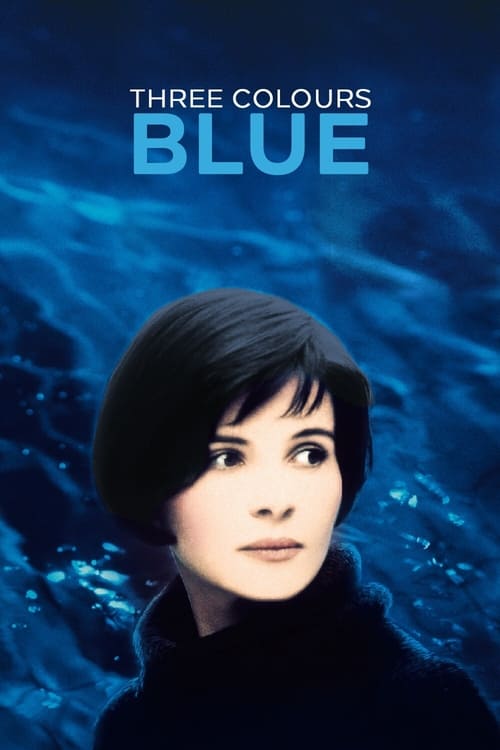
Three Colors: Blue (1993)
Directed by Krzysztof Kieślowski
No — Three Colors: Blue is not woke, scoring 8 out of 100 on our wokeness meter.
Krzysztof Kieślowski's Three Colours: Blue arrives from 1993, a year when a filmmaker could still hang an entire feature on the inner life of a grieving woman and trust the audience to keep up.
Consciousness Markers
The film takes a woman's post-domestic liberation seriously, framing Julie's retreat from wife-and-mother identity as a meditation on emotional freedom, though it reaches no explicit political thesis.
The cast is an all-white French ensemble with no commentary on representation or diversity; minority presence is negligible and unmotivated.
Kieślowski is famously oblique and poetic, conveying theme through color, music and silence rather than sermon; didacticism is essentially absent.
No LGBTQ+ characters or themes appear; Julie's relationships are heterosexual and the subplot with the neighbor's affair is strictly straight.
The film engages no racial themes whatsoever and features no characters of color in any meaningful role.
No environmental themes of any kind; Kieślowski's concerns here are intimate and musical, not ecological.
The film's 'liberty' is existential and emotional, not economic; the European-unity commission is a geopolitical motif rather than class critique.
The exotic dancer Lucille is depicted with sympathy, but the film makes no argument about body image or fat acceptance.
Julie's mother has dementia, but the condition is a narrative device for estrangement, not a depiction of neurodivergence or neurodiversity advocacy.
No historical revisionism; the end-of-Cold-War European piece is a period setting, not a corrective rewriting of history.
Why it received this score
Krzysztof Kieślowski's Three Colours: Blue arrives from 1993, a year when a filmmaker could still hang an entire feature on the inner life of a grieving woman and trust the audience to keep up. Juliette Binoche plays Julie, who loses a husband and a daughter in one crash and then sets about dismantling every remaining thread of her identity: the house, the furniture, the unfinished score, the friends. The film treats this retreat as a genuine inquiry into emotional liberty, and it does so without a single character pausing to explain the thesis. That restraint is the whole achievement.
On the question of a feminist reading, there is real material here. Julie's flight from the roles of wife and mother is taken seriously as a philosophical position, and the film never punishes her for it. But Kieślowski offers a mood, not a platform. The cast is an all-white French ensemble, and the film has no interest in commenting on that fact, which keeps the representation question at a murmur. As for sermonizing, there is none. The director communicates through blue filters, a borrowed cat, a mobile of glass beads. A viewer hoping to be told what to think will leave hungry.
The rest of the contemporary checklist finds nothing to work with, and it is a relief to report as much. There is no LGBTQ material, no racial inquiry, no ecological anxiety. The commission celebrating European unity after the Cold War functions as period detail, not as an argument about class. The film regards an exotic dancer with uncomplicated sympathy but builds no politics of the body around her, and the dementia of Julie's mother serves estrangement, not advocacy. History here is setting, not correction. The residue is a quiet, exacting film about a woman discovering that solitude is a fantasy. We score it accordingly, and without complaint.
Analysis generated by our Consciousness Algorithm


Synopsis
The wife of a famous composer survives a car accident that kills her husband and daughter. Now alone, she shakes off her old identity and explores her newfound freedom but finds that she is unbreakably bound to other humans, including her husband’s mistress, whose existence she never suspected.
Questions about Three Colors: Blue
Is Three Colors: Blue woke?
No — Three Colors: Blue is not woke, scoring 8 out of 100 on our wokeness meter. That earns it a verdict of Ultra Based.
Does Three Colors: Blue have any woke elements?
Very few. None of the 10 markers reaches 30, the level where a marker counts as present; the highest is Feminist Agenda at 22.
How does Three Colors: Blue compare to other 1993 movies?
It ranks #37 of the 97 films from 1993 we've scored; their average is 11. The wokest is Bound by Honor (60).
Is Three Colors: Blue the most woke Three Colors movie?
Yes. It scores highest of the 3 Three Colors films we've scored.