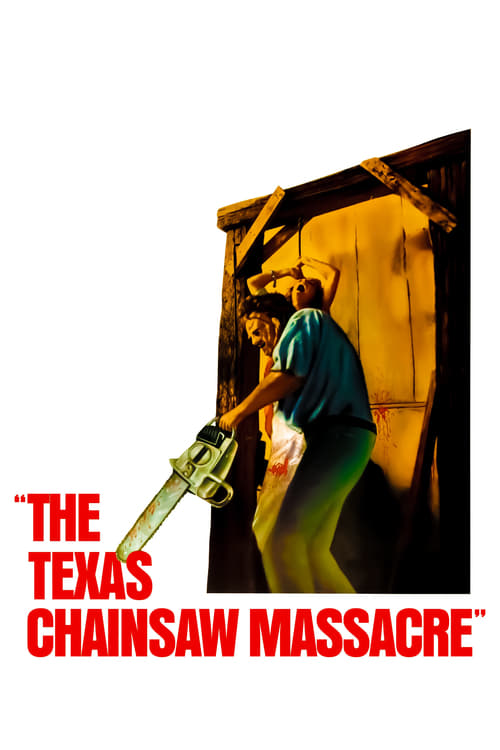
The Texas Chain Saw Massacre (1974)
Directed by Tobe Hooper
No — The Texas Chain Saw Massacre is not woke, scoring 5 out of 100 on our wokeness meter.
Tobe Hooper's 1974 picture arrives with a reputation as the ur-text of the American slasher, and it earns that reputation through sheer unpleasantness, not through any argument.
Consciousness Markers
The cannibal family are displaced slaughterhouse workers, and the film gestures at the brutality of the meat industry and rural economic decay, but this is atmospheric subtext rather than an 'eat the rich' thesis.
Sally Hardesty is the prototypical 'final girl,' a survivor who outlasts her companions, but the film treats this as a genre mechanic rather than a feminist statement.
The cast is almost entirely white Texans, with the notable exception of Franklin Hardesty, a paraplegic character. This is incidental disability inclusion rather than any deliberate representational agenda.
The film offers no moralizing or didactic messaging; it is a visceral, unpedagogical horror experience.
There are no LGBTQ+ characters, themes, or subtext anywhere in the film.
The film engages no racial themes or commentary whatsoever.
There is no environmental or climate-related content in the film.
The film contains no body-positivity themes; bodies are presented as meat and horror spectacle.
Leatherface was conceived by actor Gunnar Hansen as intellectually disabled, but this is deployed as monstrous villainy, the opposite of neurodivergent advocacy.
The film's 'based on true events' framing was a marketing gimmick, not a revisionist historical project; the plot is largely fictional.
Why it received this score
Tobe Hooper's 1974 picture arrives with a reputation as the ur-text of the American slasher, and it earns that reputation through sheer unpleasantness, not through any argument. Five young Texans drive a van toward a family grave, pick up a hitchhiker who cuts himself for sport, and are then dismantled one by one by a household of former slaughterhouse workers. The film's notoriety rests on suggestion. Hooper keeps the gore mostly offscreen, which is the correct artistic choice and also the cheaper one. Heat, sweat, and the sound of a chainsaw idling somewhere off camera are the whole arsenal.
For our purposes the picture is nearly barren. The cast is white Texas, with Paul A. Partain's Franklin supplying a wheelchair and little else. His disability is texture, not thesis. Sally Hardesty survives, which makes her the template for the final girl, but the film treats her endurance as a genre mechanism and nothing more. There is no racial commentary, no environmental lament, and no body-positive reading to be extracted from a movie that regards the human form chiefly as inventory. Leatherface's intellectual disability, drawn from Gunnar Hansen's visits to a special needs school, functions as menace, which is the reverse of advocacy. The based-on-true-events title card was a marketing lie, not a historical project.
The one faint pulse comes from the cannibals themselves, a clan of obsolete meat workers squatting in a house of bone furniture. The film glances at rural economic ruin and the brutality of the slaughterhouse, then moves on. It is atmosphere, not an argument, and Hooper never lectures. The camera simply watches, and the audience is left to sit with it. That restraint is the film's only real virtue, and it is the reason the thing still works fifty years later, long after the imitators stripped the ambiguity out and kept the screaming. A grim, efficient artifact. Nothing more, and nothing less.
{"thematic_tags": []}
Analysis generated by our Consciousness Algorithm
Part of


Synopsis
Five friends head out to rural Texas to visit the grave of a grandfather. On the way, they stumble across what appears to be a deserted house, only to discover something sinister within. Something armed with a chainsaw.
Questions about The Texas Chain Saw Massacre
Is The Texas Chain Saw Massacre woke?
No — The Texas Chain Saw Massacre is not woke, scoring 5 out of 100 on our wokeness meter. That earns it a verdict of Ultra Based.
Does The Texas Chain Saw Massacre have any woke elements?
Very few. None of the 10 markers reaches 30, the level where a marker counts as present; the highest is Eat the Rich at 12.
How does The Texas Chain Saw Massacre compare to other 1974 movies?
It ranks #16 of the 29 films from 1974 we've scored; their average is 10. The wokest is Ali: Fear Eats the Soul (42).
Is The Texas Chain Saw Massacre the most woke Texas Chainsaw Massacre movie?
No. It ranks #4 of the 7 Texas Chainsaw Massacre films we've scored; the wokest is The Return of the Texas Chainsaw Massacre (21).