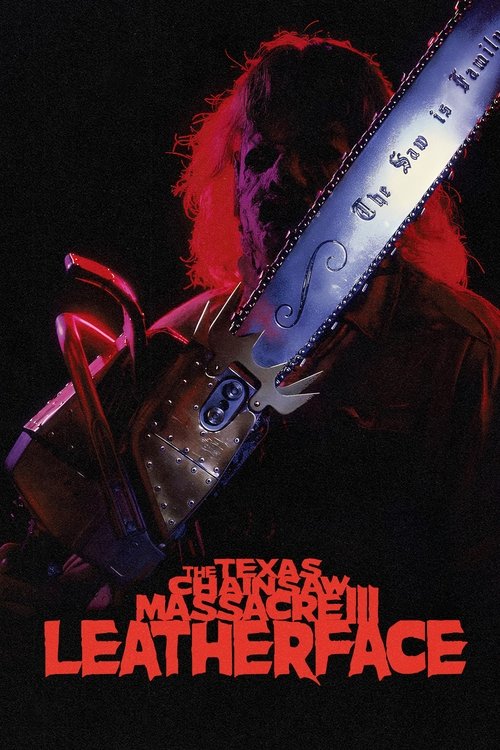
Leatherface: The Texas Chainsaw Massacre III (1990)
Directed by Jeff Burr
No — Leatherface: The Texas Chainsaw Massacre III is not woke, scoring 9 out of 100 on our wokeness meter.
Leatherface: The Texas Chainsaw Massacre III arrives as the third entry in a series that had already shed any pretense of documentary dread.
Consciousness Markers
Ken Foree, a Black actor, plays Benny, a capable survivalist who becomes a co-hero and survives to the end. This is natural, unremarked casting rather than a self-conscious diversity statement.
Michelle functions as a standard slasher 'final girl' who fights back and survives, but the film makes no feminist argument or commentary.
No LGBTQ+ characters, themes, or subtext appear anywhere in the film.
The film contains no engagement with race, racism, or racial identity as themes.
No environmental or climate themes are present.
The cannibalistic Sawyer family is a horror conceit, not a critique of capitalism or wealth.
No body-positive messaging or body-image themes appear.
No neurodivergent characters or themes are depicted.
The film is a straightforward fictional slasher sequel with no historical revisionism.
A pure grindhouse slasher with no didactic or moralizing intent; it exists to shock, not to instruct.
Why it received this score
Leatherface: The Texas Chainsaw Massacre III arrives as the third entry in a series that had already shed any pretense of documentary dread. Jeff Burr's film is a grim, mechanical exercise in backroad slaughter, and it offers no apology for the fact. Two travelers, a truck, a deserted Texas highway, a cannibal clan, and a chrome chainsaw engraved with a family motto. The machinery is familiar and the picture knows it.
Ken Foree appears as Benny, the survivalist who crashes into the plot and refuses to die. His casting carries no announcement and no self-congratulation. He is simply the most competent person on screen, and he earns his escape by shooting his way through a house full of Sawyers. Michelle, played by Kate Hodge, runs and screams and finally kills, serving as the standard final girl while the film never pauses to argue a point about it. The movie has no thesis to advance and no sermon to deliver. It wants to unsettle you and then roll credits.
The Sawyer family eats people because they are hungry and because the genre requires it, not because the screenplay holds a position on wealth or consumption. There is no climate anxiety here, no discourse about bodies or self-image, no neurodivergent subtext, no revised account of history. Viggo Mortensen turns up as Tex with a scruffy menace that classes up the proceedings. The MPAA trimmed over four minutes of gore to secure an R rating, and what survives is lean, nasty, and frequently incoherent. This is a film that exists to shock, not to instruct. There is something almost restful in that.
Analysis generated by our Consciousness Algorithm
Part of


Synopsis
Two college students driving coast to coast are lured off the main highway and onto a deserted Texas road where they are stalked by the menacing Leatherface and his family.
Questions about Leatherface: The Texas Chainsaw Massacre III
Is Leatherface: The Texas Chainsaw Massacre III woke?
No — Leatherface: The Texas Chainsaw Massacre III is not woke, scoring 9 out of 100 on our wokeness meter. That earns it a verdict of Ultra Based.
Does Leatherface: The Texas Chainsaw Massacre III have any woke elements?
Very few. None of the 10 markers reaches 30, the level where a marker counts as present; the highest is Representation Casting at 20.
How does Leatherface: The Texas Chainsaw Massacre III compare to other 1990 movies?
It ranks #20 of the 68 films from 1990 we've scored; their average is 9. The wokest is Nightbreed (60).
Is Leatherface: The Texas Chainsaw Massacre III the most woke Texas Chainsaw Massacre movie?
No. It ranks #3 of the 7 Texas Chainsaw Massacre films we've scored; the wokest is The Return of the Texas Chainsaw Massacre (21).