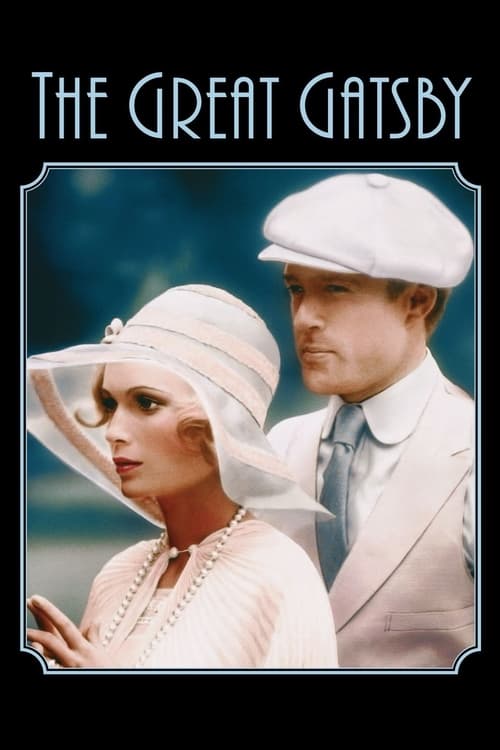
The Great Gatsby (1974)
Directed by Jack Clayton
No — The Great Gatsby is not woke, scoring 15 out of 100 on our wokeness meter.
The 1974 Great Gatsby arrives in handsome period dress and proceeds with the emotional temperature of a museum display.
Consciousness Markers
The film critiques the emptiness and carelessness of the wealthy elite, but it is a literary tragedy rather than a modern anti-capitalist or 'eat the rich' polemic.
The cast is entirely white, with no deliberate or commented-upon racial diversity. The film reflects the demographics of its source material and era without modern representation casting.
There are no LGBTQ+ characters, themes, or subtext in the film.
The film presents women primarily through the lens of Gatsby's obsession and Tom's infidelity, without any feminist critique or agenda.
The film does not engage with racial consciousness or racial justice themes, despite the presence of a Jewish gangster stereotype in the source material.
There is no environmental or climate-related content in the film.
There is no body positivity theme or messaging in the film.
There is no exploration or representation of neurodivergence in the film.
The film is a faithful period adaptation of a 1925 novel and does not revise or reinterpret historical events for modern ideological purposes.
The film does not contain preachy or lecture-like monologues; it aims for emotional and visual fidelity to the novel rather than moral instruction.
Why it received this score
The 1974 Great Gatsby arrives in handsome period dress and proceeds with the emotional temperature of a museum display. Jack Clayton's adaptation is faithful to Fitzgerald's outline, and that fidelity is both its defense and its limitation. Robert Redford's Gatsby is a polished enigma, Mia Farrow's Daisy a lovely surface, and the film watches their doomed romance with the detached manners of a guest who has already checked his coat and is calculating the drive home. The Jazz Age parties glitter. The tragedy registers. The pulse does not.
On the cultural front, the film is a sealed period piece. Its cast is white, its social world is white, and the movie makes no effort to comment on that arrangement or to update it for later audiences. Women are viewed through Gatsby's longing and Tom's philandering, with no feminist counter-reading offered. There is no LGBTQ material, no environmental sermon, no body-positive aside, no neurodivergent character study, and no revisionist rewrite of history. The film trusts the novel's melancholy and its moral hangover, not a modern lecture. When it gestures at social criticism, the gesture is narrow: the rich are careless, the money is loud, and the beautiful people leave wreckage behind. That is a literary observation, not an economic program. It earns a modest place in the eat-the-rich tradition, but it is too busy being a tragedy to hand out pamphlets.
None of this makes the movie reactionary. It makes it old-fashioned in the most literal sense: a 1925 novel filtered through 1974 filmmaking, with no interest in the cultural vocabulary that would arrive decades later. The result is elegant, cold, and mostly content to let the green light do the talking. A viewer seeking contemporary social consciousness will find a well-tailored empty room. A viewer seeking Fitzgerald will find the furniture arranged correctly and the windows left open.
Analysis generated by our Consciousness Algorithm
Part of


Synopsis
Nick Carraway, a young Midwesterner now living on Long Island, finds himself fascinated by the mysterious past and lavish lifestyle of his neighbor, the nouveau riche Jay Gatsby. He is drawn into Gatsby's circle, becoming a witness to obsession and tragedy.
Questions about The Great Gatsby
Is The Great Gatsby woke?
No — The Great Gatsby is not woke, scoring 15 out of 100 on our wokeness meter. That earns it a verdict of Ultra Based.
Does The Great Gatsby have any woke elements?
Very few. None of the 10 markers reaches 30, the level where a marker counts as present; the highest is Eat the Rich at 25.
How does The Great Gatsby compare to other 1974 movies?
It ranks #7 of the 29 films from 1974 we've scored; their average is 10. The wokest is Ali: Fear Eats the Soul (42).
How is the Woke Score calculated?
An AI-assisted process researches the film and its reception, scores it 0–100 on ten markers, then combines those into one 0–100 Woke Score. It measures a specific set of 2020s cultural themes, not film quality.