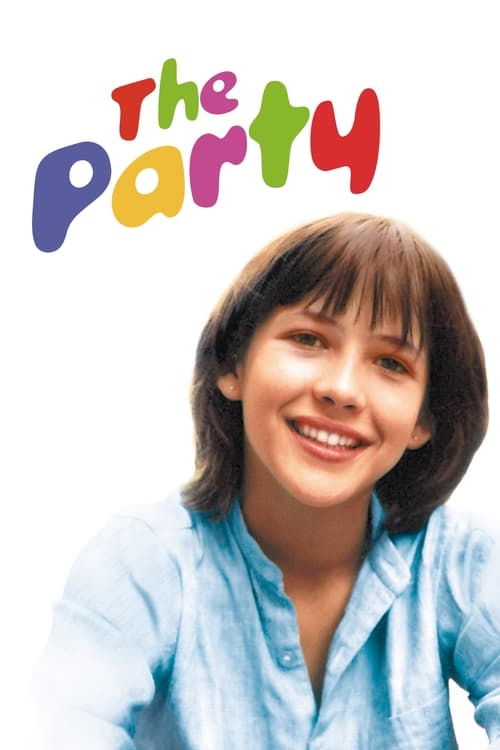
The Party (1980)
Directed by Claude Pinoteau
No — The Party is not woke, scoring 5 out of 100 on our wokeness meter.
Claude Pinoteau's The Party, known in its native France as La Boum, arrives from 1980 with the modest ambition of charming an audience and little else.
Consciousness Markers
The film centers a teenage girl and gives her mother an affair and a defiant streak, but this is character-driven melodrama rather than any articulated feminist agenda.
The cast is a conventional white French ensemble of the era, with no deliberate effort at diverse or inclusive casting as a marker.
A breezy teen comedy that aims to charm rather than preach; there is no didactic messaging.
No LGBTQ+ characters or themes appear anywhere in the film.
Race is entirely absent as a subject; the story is a white Parisian family drama.
No environmental or climate themes whatsoever.
No critique of wealth, class, or capitalism; the family is comfortably bourgeois and the film is indifferent to economics.
No body-positivity themes; the film trades in conventional teen beauty and romance standards.
No neurodivergent characters or themes are present.
The film is a contemporary-set coming-of-age story with no historical revisionism.
Why it received this score
Claude Pinoteau's The Party, known in its native France as La Boum, arrives from 1980 with the modest ambition of charming an audience and little else. Sophie Marceau, in her screen debut, plays Vic, a thirteen-year-old transplanted to Paris, navigating a new school, a first crush, and the slow collapse of her parents' marriage. The film moves through discos, cinemas, and birthday parties with a light touch, and it earned its status as an international hit on the strength of that lightness. There is no thesis here. There is a girl, a boy, and a soundtrack.
The cast is a conventional white Parisian ensemble, assembled for reasons of talent and availability. No inclusive casting program announces itself. Race is not a subject the film raises, and the story unfolds in a comfortable bourgeois milieu that the camera regards without a trace of economic critique. The family has money, the parents have professions, and the film has no opinion about either. Vic's mother, Francoise, is given an affair and a satisfying act of vandalism against her husband's mistress, which lends the proceedings a certain defiance, though the defiance belongs to the character and not to any articulated argument. The film is interested in feelings, not platforms. Climate, neurodivergence, body politics, and historical revisionism are absent entirely; nothing in the screenplay reaches for them.
What remains is a teen comedy that aims to please and mostly succeeds, content to let its young heroine chase a boy and learn that boys are interchangeable. The tone is warm, the pacing is brisk, and the messaging is nonexistent. For a viewer cataloguing the cultural preoccupations of later decades, The Party offers almost nothing to work with, which is its own kind of distinction. It is a film from 1980 that behaves exactly like a film from 1980.
Analysis generated by our Consciousness Algorithm


Synopsis
A thirteen-year-old French girl deals with moving to a new city and school in Paris, while at the same time her parents are getting a divorce.
Questions about The Party
Is The Party woke?
No — The Party is not woke, scoring 5 out of 100 on our wokeness meter. That earns it a verdict of Ultra Based.
Does The Party have any woke elements?
Very few. None of the 10 markers reaches 30, the level where a marker counts as present; the highest is Feminist Agenda at 12.
How does The Party compare to other 1980 movies?
It ranks #20 of the 37 films from 1980 we've scored; their average is 10. The wokest is Nine to Five (42).
How is the Woke Score calculated?
An AI-assisted process researches the film and its reception, scores it 0–100 on ten markers, then combines those into one 0–100 Woke Score. It measures a specific set of 2020s cultural themes, not film quality.