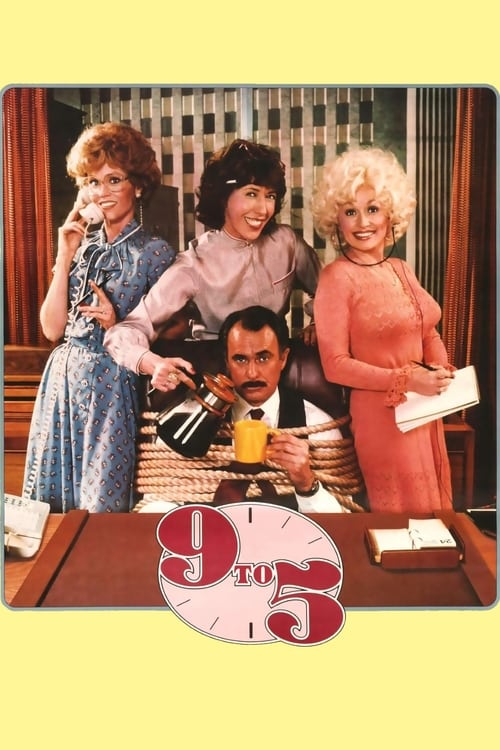
Nine to Five (1980)
Directed by Colin Higgins
Partly · Woke-Adjacent
How we score movies →Consciousness Markers
The film addresses workplace sexism and female solidarity against male authority, but frames these issues through individual revenge fantasy rather than systemic critique. Women's success ultimately depends on male approval and institutional acceptance.
Three strong female leads in prominent roles, though their characterization relies heavily on conventional femininity and attractiveness. The supporting cast is predominantly white and male.
While the film includes fantasy sequences that critique sexism, it does so through comedic exaggeration rather than preachy exposition. However, the central premise does serve as social commentary on workplace discrimination.
One Black cast member (Ren Woods) in a minor role with no substantive character development or engagement with racial themes.
No LGBTQ+ themes, characters, or representation present in the film.
No environmental or climate-related themes present in this workplace comedy.
The film does not critique capitalism or corporate structures. The resolution involves women succeeding within and reinforcing the existing system.
No body positivity messaging or representation of diverse body types. All three leads are conventionally attractive and their appearance is part of their narrative appeal.
No representation of neurodivergent characters or themes related to neurodiversity.
The film does not engage with historical narratives or attempt to revise historical interpretations.


Synopsis
Three female employees of a sexist, egotistical, lying, hypocritical bigot find a way to turn the tables on him.
Why it received this score
Nine to Five arrives as a curious artifact of early 1980s consciousness, a film that addresses workplace sexism with the bluntness of a sledgehammer wrapped in a comedic veneer. The three protagonists are women genuinely mistreated by their boss, and the film takes their grievances seriously even as it frames them through fantasy sequences and broad comedy. Yet the movie's engagement with gender politics operates on the surface level. The women are characterized by their desirability and their relationships to men as much as by their professional competence, and the resolution ultimately depends on male intervention and institutional structures reforming themselves rather than on systemic critique.
The film's approach to its subject matter is fundamentally of its moment, circa 1980. It could be described as proto-feminist in that it depicts workplace discrimination as real and worthy of punishment, but it lacks the structural analysis that would later characterize more overtly progressive cinema. There is no questioning of capitalism itself, no acknowledgment of how power dynamics reproduce across race or class lines, no complexity regarding the women's own complicity or compromises. The film simply asks: what if women got revenge on one bad man. The answer, it turns out, is that they become better managers and the system chugs along.
From the vantage point of contemporary cultural assessment, Nine to Five reads as earnest advocacy for women's inclusion in existing hierarchies rather than a challenge to those hierarchies themselves. This is not the material of modern progressive cultural production, which demands not just representation but interrogation, not just revenge fantasy but systemic reimagining. The film remains charming and well-crafted, but its consciousness stops well short of what contemporary sensibilities would demand from a film addressing these themes.
Analysis generated by our Consciousness Algorithm
Critic Reviews
“"9 to 5" (1980) shines a spotlight on significant workplace issues, from sexual harassment to the challenges of being overworked and underpaid.”
“As a comedy built on the juicy soil of revenge, "9to5" falls between two poles. It's not wild or dark enough to qualify as a truly disturbing farce and it's too fanciful and silly to succeed as realistic satire.”
“Jane Fonda, Lily Tomlinson, and Dolly Parton star in 9 to 5, a comedy from 1980 directed by Colin Higgins.”
“As a comedy built on the juicy soil of revenge, "9to5" falls between two poles. It's not wild or dark enough to qualify as a truly disturbing farce and it's too fanciful and silly to succeed as realistic satire.”