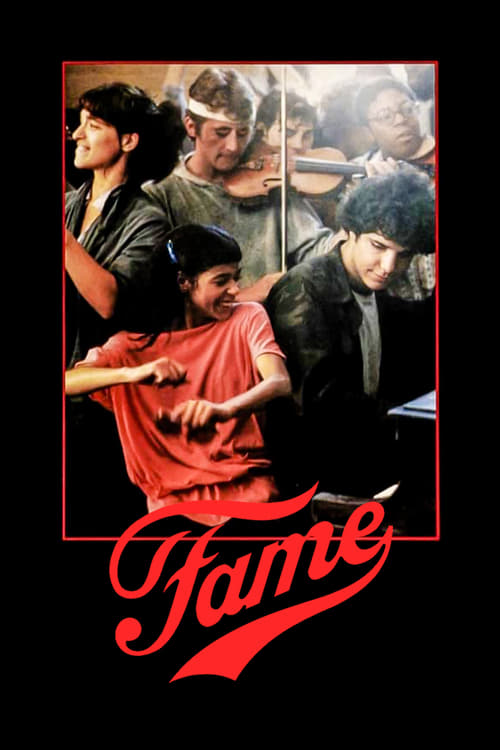
Fame (1980)
Directed by Alan Parker
No — Fame is not especially woke, scoring 30 out of 100 on our wokeness meter.
Alan Parker's Fame (1980) is a musical drama about students at a New York performing arts high school, and it carries a mild, period-specific social awareness.
Consciousness Markers
The film features a notably diverse ensemble for 1980, including Black, Puerto Rican, and Jewish characters, with some explicit exploration of their identities (e.g., Doris's Jewishness, Ralph's Puerto Rican background).
Montgomery MacNeil comes out as gay during an acting exercise, a sympathetic and relatively progressive depiction for its time, though not the film's central focus.
Several female characters (Coco, Doris, Lisa, Hilary) pursue artistic ambitions and make consequential life choices, including Hilary's planned abortion, but the film lacks an explicit feminist critique.
The cast includes Black and Puerto Rican characters, and Leroy's illiteracy and Ralph's family struggles touch on social issues, but systemic racism is not a thematic concern.
The film shows the entertainment industry's exploitative side, such as Coco being manipulated by a porn director and Michael waiting tables, but it is not an anti-capitalist parable.
The film imparts life lessons about perseverance and artistic struggle through its characters, but it does not lecture or preach to the audience.
No environmental or climate-related themes are present.
No body positivity themes are present.
No neurodivergence themes are present; Leroy's illiteracy is not framed as neurodivergence.
The film is a fictional narrative set in the present day of its production, not a historical revision.
Why it received this score
Alan Parker's Fame (1980) is a musical drama about students at a New York performing arts high school, and it carries a mild, period-specific social awareness. The ensemble is unusually diverse for its moment: Black, Puerto Rican, and Jewish students share the frame, and the film lets their backgrounds breathe without turning every scene into a seminar. Montgomery's coming out during an acting exercise is handled with a sympathy that would have been notable in 1980, though the film treats it as one thread among many. These gestures are real, but they are not the engine of the movie.
The young women pursue careers, confront pregnancy, and make choices that carry weight, yet the film stops short of a sustained feminist argument. Racial identity is present in casting and in Leroy's literacy struggles and Ralph's family pressures, but systemic racism is not the subject. The entertainment industry's crueler edges appear through Coco's encounter with a pornographer and Michael's return as a waiting actor, which gives the film a faint anti-capitalist tsk. Its lessons about perseverance and failure are delivered through plot, not sermon. The result is a film that observes hardship without mounting a campaign against it.
Other contemporary markers simply do not appear. There is no climate anxiety, no body-positive messaging, no neurodivergent framing, and no revisionist historical project. Fame is a fictional story set in its own present, interested in ambition, rejection, and the cost of a dream. It is socially aware in a way that feels like 1980, not 2020. That is not a criticism, merely a classification. The film remains culturally significant for its energy and its music, and its progressive touches are best understood as gentle ripples, not a tide.
Analysis generated by our Consciousness Algorithm


Synopsis
A chronicle of the lives of several teenagers who attend a New York high school for students gifted in the performing arts.
Questions about Fame
Is Fame woke?
No — Fame is not especially woke, scoring 30 out of 100 on our wokeness meter. That earns it a verdict of Based.
Does Fame have any woke elements?
3 of the 10 markers register at 30 or above, led by Representation Casting (55), LGBTQ+ Themes (50) and Feminist Agenda (35). On Representation Casting: The film features a notably diverse ensemble for 1980, including Black, Puerto Rican, and Jewish characters, with some explicit exploration of their identities (e.g., Doris's Jewishness, Ralph's Puerto Rican background).
How does Fame compare to other 1980 movies?
It ranks #2 of the 37 films from 1980 we've scored; their average is 10. The wokest is Nine to Five (42).
How is the Woke Score calculated?
An AI-assisted process researches the film and its reception, scores it 0–100 on ten markers, then combines those into one 0–100 Woke Score. It measures a specific set of 2020s cultural themes, not film quality.