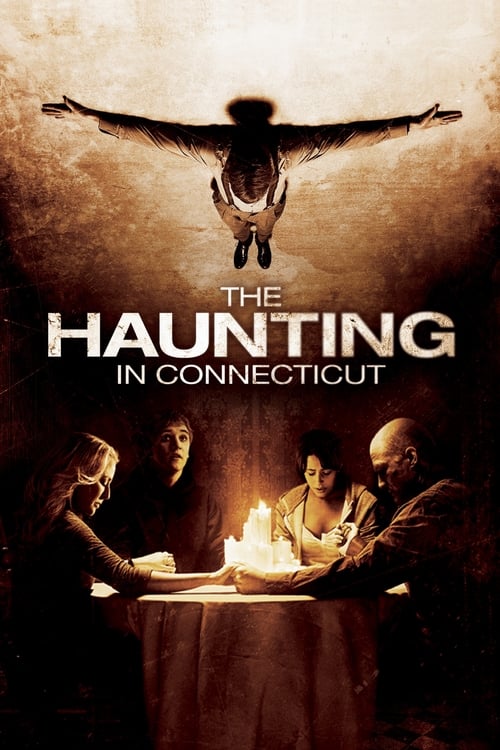
The Haunting in Connecticut (2009)
Directed by Peter Cornwell
No — The Haunting in Connecticut is not woke, scoring 3 out of 100 on our wokeness meter.
The Haunting in Connecticut arrives from 2009, a year when horror still understood that its primary obligation was to make audiences jump and then send them home.
Consciousness Markers
Virginia Madsen anchors the film as a determined matriarch, but this is standard maternal-protagonist horror fare rather than any articulated feminist agenda.
The cast is uniformly white, with no diverse or non-traditional casting choices made in service of representation.
There are no LGBTQ+ characters, themes, or subtext anywhere in the film.
The film engages no racial themes or commentary whatsoever.
No environmental or climate-related content appears in the film.
There is no economic critique or eat-the-rich messaging; the antagonist is a demonic spirit, not a system.
The film's treatment of the son's cancer is a plot device for dread, not a body-positivity statement.
No neurodivergence themes are present; the medium Jonah's abilities are framed as supernatural, not neurological.
The 'based on true events' framing is a horror marketing convention, not a revisionist reframing of history for ideological purposes.
The film makes no attempt to lecture the audience on social or political matters; it is content to deliver jump scares.
Why it received this score
The Haunting in Connecticut arrives from 2009, a year when horror still understood that its primary obligation was to make audiences jump and then send them home. Peter Cornwell's feature debut concerns the Campbell family, who relocate to a Victorian former funeral parlor so that their cancer-stricken son Matt might live closer to his experimental treatments. The film proceeds through a familiar procession of apparitions, carved symbols, and crematory dread. It is competent, atmospheric, and entirely uninterested in the cultural conversations that would dominate the following decade. It wants only to scare us, and occasionally it does.
On the matter of representation, the cast is uniformly white and the film makes no gesture toward inclusive or non-traditional casting. There are no LGBTQ+ characters or subtext, no racial commentary, no environmental concern, and no economic critique. The antagonist is a demonic entity, not a system, and the film has no interest in framing its horrors as metaphors for capital. Matt's illness functions as a device for dread, not as a statement about bodies or their worth. A medium named Jonah wields supernatural abilities, which the film treats as occult phenomena, not as a neurological condition to be celebrated. The based on a true story label is a marketing convention, borrowed from a 1992 book whose own author later distanced himself from its accuracy. This is not historical revisionism in service of an ideology. It is simply a haunted house.
Virginia Madsen anchors the proceedings as Sara, a determined matriarch holding a fracturing family together. Her performance carries warmth and authority, and the film benefits from it. Whether this constitutes any articulated feminist program is doubtful. A mother protecting her children is ancient territory, older than cinema, and the film offers no argument beyond maternal instinct. There is no lecture here, no sermon, no moment where the audience is instructed on how to think. The film is content to deliver its scares and retreat. In an era that would soon demand meaning from every frame, this one asks for nothing but a darkened room. It is, in its modest way, a relief.
Analysis generated by our Consciousness Algorithm
Part of


Synopsis
When the Campbell family moves to upstate Connecticut, they soon learn that their charming Victorian home has a disturbing history: not only was the house a transformed funeral parlor where inconceivable acts occurred, but the owner's clairvoyant son Jonah served as a demonic messenger, providing a gateway for spiritual entities to crossover.
Questions about The Haunting in Connecticut
Is The Haunting in Connecticut woke?
No — The Haunting in Connecticut is not woke, scoring 3 out of 100 on our wokeness meter. That earns it a verdict of Ultra Based.
Does The Haunting in Connecticut have any woke elements?
Very few. None of the 10 markers reaches 30, the level where a marker counts as present; the highest is Feminist Agenda at 5.
How does The Haunting in Connecticut compare to other 2009 movies?
It ranks #194 of the 230 films from 2009 we've scored; their average is 14. The wokest is Home (79).
How is the Woke Score calculated?
An AI-assisted process researches the film and its reception, scores it 0–100 on ten markers, then combines those into one 0–100 Woke Score. It measures a specific set of 2020s cultural themes, not film quality.